$10M
Estimated Net Worth
As of 2024 • medium confidence
Financial Breakdown
Asset Distribution
Assets vs Liabilities
Assets
Liabilities
Disclaimer: These financial estimates are based on publicly available information and should be considered approximate. Last updated: 12/29/2025
Biography
Introduction: The Soldier Who Ruled Mali
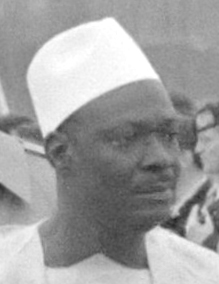
Moussa Traoré† stands as one of the most consequential and controversial figures in the modern history of Mali. As the Ex-President of Mali from 1968 to 1991, he presided over the nation for 23 years, a period marked by initial hope, prolonged authoritarian Military Rule, economic hardship, and ultimately, a dramatic downfall. A lieutenant in the Malian army, Traoré rose to prominence not through the ballot box but through a bloodless coup d'état that overthrew the socialist regime of Mali's founding father, Modibo Keïta. His tenure represents a pivotal chapter in West African Politics & Government, illustrating the complexities of post-colonial state-building and the instability wrought by prolonged autocracy. For over two decades, Moussa Traoré† was the central political force in Mali, navigating Cold War geopolitics, devastating droughts, and rising public discontent until a pro-democracy uprising forced his exit.
Early Life & Education: From Kayes to the Military
Moussa Traoré† was born on September 25, 1936, in the region of Kayes, then part of French Sudan. Hailing from a modest background, his early life was shaped in the waning years of colonial rule. Unlike many of the intellectual founders of independent Mali, Traoré's path to power was forged through military discipline. He pursued his primary and secondary education in Mali before his ambitions led him to a military career, a common avenue for social mobility in the post-colonial context.
His formative training took place at the prestigious military academy of Fréjus in France. This education provided him with not only technical military skills but also exposure to structured command and strategic thinking. Upon returning to his homeland, which had achieved independence as Mali in 1960 under President Modibo Keïta, Traoré continued his military training at the École Interarmes in Kati, Mali. He steadily climbed the ranks of the newly formed Malian army, eventually becoming a lieutenant. It was during this period that he grew increasingly disillusioned with Keïta's one-party socialist state, the US-RDA, which was grappling with economic mismanagement, famine, and political repression. This discontent among the military cadre would set the stage for his decisive political entry.
Career & Major Achievements: The Long Reign (1968-1991)
The career of Moussa Traoré† is almost synonymous with his rule over Mali. On November 19, 1968, leading the Comité Militaire de Libération Nationale (CMLN), Lieutenant Traoré orchestrated a bloodless coup that toppled the regime of Modibo Keïta. The coup was initially popular, promising to correct the economic failures and political excesses of the previous government.
The Consolidation of Power
After suspending the constitution and dissolving the National Assembly, Traoré consolidated power. He initially served as Head of State and Chairman of the CMLN. In 1969, he survived an attempted coup by his fellow officers, which allowed him to further purge rivals and centralize authority. For the first decade, he ruled strictly as a military leader, focusing on stabilizing the country and navigating the severe Sahelian droughts of the early 1970s.
Transition to Civilian Rule and the UDPM
In a move to legitimize his regime, Moussa Traoré† oversaw a return to civilian rule—in name only. In 1979, a new constitution was approved, and he founded the sole legal political party, the Union Démocratique du Peuple Malien (UDPM). He was subsequently elected president, a position he would "win" again in 1985 in uncontested, single-party elections. This period saw the formalization of his authoritarian system, with the UDPM controlling all aspects of political life and a powerful security apparatus suppressing dissent.
Economic Policies and International Relations
Traoré's government shifted Mali away from Keïta's radical socialism towards a more pragmatic, albeit still state-controlled, economic model. He cultivated crucial relationships with Western powers, notably France and the United States, as well as with the Soviet Union, securing foreign aid. Key achievements included:
- The construction of the Bamako-Sénou International Airport.
- The establishment of the University of Bamako (later the University of Sciences, Techniques and Technologies of Bamako).
- Major infrastructure projects like the Markala Dam on the Niger River, aimed at improving irrigation.
The Path to Overthrow
By the late 1980s, discontent was boiling over. Austerity measures, coupled with demands for political freedom inspired by global democratic movements, fueled opposition. In 1990, the emergence of Tuareg rebellions in the north further strained the regime. The final catalyst was the brutal suppression of pro-democracy demonstrations in March 1991, leading to the massacre of over 100 protesters in Bamako. This event triggered a new military coup led by General Amadou Toumani Touré on March 26, 1991, which ended the 23-year rule of Moussa Traoré†.
Personal Life, Downfall & Legacy
Moussa Traoré† was married to Mariam Traoré, who was a prominent First Lady. Following his overthrow, he faced a dramatic reversal of fortune. He and his wife were arrested, tried, and in 1993, sentenced to death for political crimes and economic repression. These sentences were later commuted to life imprisonment, and in 2002, he was pardoned and released by President Alpha Oumar Konaré in the spirit of national reconciliation.
He lived in relative quietude in Bamako until his death on September 15, 2020, at the age of 83. The legacy of Moussa Traoré† is deeply contested. To some, he is remembered as a stabilizing force who guided Mali through difficult droughts and Cold War politics and built key national infrastructure. To many more, his legacy is that of a dictator whose prolonged Military Rule stifled democracy, institutionalized corruption, and used violent repression to maintain power. His overthrow paved the way for Mali's first democratic transition in 1992, but the country's continued political instability also has roots in the authoritarian systems he entrenched. His life story remains an essential study in the challenges of governance and leadership in post-colonial Mali.
Net Worth & Business Ventures
Accurately quantifying the net worth of Moussa Traoré† is challenging due to the opaque nature of his regime's finances. During his 23-year rule, Mali's economy was characterized by significant state control and allegations of endemic corruption. It was widely believed by opposition groups and international observers that Traoré and his inner circle benefited personally from their positions of power, amassing wealth through control of state enterprises and patronage networks. However, no definitive public records or conclusive legal findings ever fully detailed his personal assets. After his overthrow, his government was accused of massive economic mismanagement. Unlike some autocrats, Traoré did not have widely known, significant private business ventures separate from the state; his wealth was intrinsically tied to his political control. His later life, following his pardon and release from prison, was not marked by displays of great affluence, and he lived a largely private life without the vast business empires associated with some other former rulers.
Net Worth Analysis
As a former military ruler of Mali, a low-income country, his wealth was not publicly documented but was likely derived from his time in power, with estimates typically in the millions, not billions.
Quick Stats
Related People
Aaron Motsoaledi
LP; Minister of Home Affairs
Abane Ramdane†
FLN Leader & Strategist
Abdalla Hamdok
Ex-Prime Minister
Abdallah Kigoda
Ex-Minister of Natural Resources