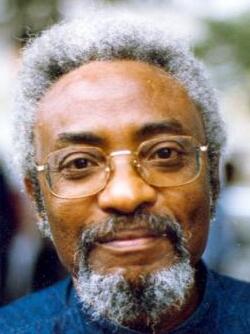
Biography
Introduction: The Founding Father of a Nation
In the annals of African liberation history, the name Mário Pinto de Andrade† stands as a pillar of intellectual resistance and political foresight. As the principal founder and first President of the Movimento Popular de Libertação de Angola (MPLA), he laid the ideological and organizational groundwork for one of Africa's most significant anti-colonial movements. While later political narratives often overshadow his contributions, Mário Pinto de Andrade† was the essential catalyst who unified disparate nationalist groups into a coherent force against Portuguese rule. His legacy extends far beyond Angola; he was a central figure in the Pan-Africanist movement, a prolific poet and intellectual, and a theorist whose ideas on culture and liberation influenced a continent. This biography explores the life of the man who helped conceive a nation, yet whose complex journey saw him both at the helm of power and in critical opposition.
Early Life & Education: The Making of an Intellectual Revolutionary
Mário Coelho Pinto de Andrade was born on August 21, 1928, in Golungo Alto, in the Portuguese colony of Angola. Born into a family of assimilated African intellectuals (the *assimilados*), he gained access to a Portuguese education, a privilege granted to very few. His academic brilliance was evident early, leading him to Lisbon, Portugal, in the late 1940s to study Philology at the University of Lisbon. It was in the metropole's capital that his political consciousness was forged.
Lisbon in the 1950s was a crucible for future African leaders. Here, Mário Pinto de Andrade† connected with other students from the colonies, including Agostinho Neto (a fellow Angolan and poet) and Amílcar Cabral of Guinea-Bissau. He immersed himself in Marxist literature, anti-colonial theory, and the burgeoning Negritude movement led by Aimé Césaire and Léopold Sédar Senghor. Andrade himself became a significant literary voice, editing the seminal anthology "Antologia da Poesia Negra de Expressão Portuguesa" (1958). This formative period was not just about academic study; it was where he developed the core belief that cultural liberation was inseparable from political independence. The repression of the Portuguese secret police (PIDE) forced him to flee to Paris in 1954, where he continued his studies at the Sorbonne and deepened his networks within the global anti-colonial left.
Career & Major Achievements: Architect of the MPLA and Pan-African Voice
The career of Mário Pinto de Andrade† is a testament to his role as an organizer and theorist. His major achievements unfolded in rapid succession during the late 1950s and 1960s.
Founding the MPLA and Early Leadership
In December 1956, Mário Pinto de Andrade† was instrumental in merging several small nationalist groups—including the PCA (Angolan Communist Party) and the PLUA—to form the Movimento Popular de Libertação de Angola (MPLA). He served as its first President from 1960 to 1962, with Agostinho Neto as President of Honor. During this critical period, Andrade was the movement's international face, tirelessly lobbying for support across Africa and at the United Nations. He established the MPLA's headquarters in Conakry, Guinea, and secured crucial backing from independent African states. His intellectual rigor provided the MPLA with a sophisticated ideological framework that combined anti-imperialism, social revolution, and a commitment to multi-racialism, setting it apart from other Angolan movements.
Pan-African Leadership and Intellectual Work
Parallel to his work for Angola, Andrade was a giant of Pan-Africanism. He served as the Secretary-General of the Conferência das Organizações Nacionalistas das Colónias Portuguesas (CONCP), a unified front for liberation movements from all Portuguese colonies. In 1963, he played a key role in organizing the iconic "African Culture" conference in Cairo. His intellectual output was relentless; he wrote extensively on the relationship between culture and revolution, critiqued neocolonialism, and was a leading voice in defining a distinctly African path to socialism.
Internal Struggles and the Path to Opposition
The trajectory of Mário Pinto de Andrade† within the MPLA took a dramatic turn in the early 1960s. Internal disagreements over strategy, leadership style, and ideological direction led to a power struggle. In 1962, a faction within the MPLA, supported by many external cadres, moved to replace Andrade with Agostinho Neto as President. This shift marginalized Andrade, who grew increasingly critical of Neto's leadership and what he perceived as a move toward authoritarianism within the movement. After the MPLA's ascension to power following the Alvor Agreement in 1975 and Angolan independence, Andrade's criticisms only intensified. He eventually went into exile and, in the late 1970s, helped form the Revista de Angola (Angola Review) and later a small opposition group, continuing to advocate for democratic socialism from afar.
Personal Life & Legacy: The Poet and the Prophet
Beyond the political sphere, Mário Pinto de Andrade† was a man of profound culture. A polyglot who spoke several European and African languages, his first love was poetry and literature. His personal life was intertwined with the struggle; he was married to fellow activist and writer Sarah Maldoror, a French-Guadeloupean filmmaker who directed the seminal film "Sambizanga" (1972) about the Angolan liberation struggle. His personal interests in philosophy, linguistics, and art informed his unique political perspective, one that always centered African agency and cultural identity.
The legacy of Mário Pinto de Andrade† is complex and multifaceted. He passed away on August 26, 1990, in London. While the MPLA government he helped create has often minimized his role in official historiography, historians and scholars recognize him as the indispensable intellectual founder. His legacy is that of the "revolutionary intellectual"—a thinker who could build institutions and articulate a vision for a liberated Africa. He championed a Pan-Africanism that was both pragmatic and idealistic, and his critiques of one-party states and the dangers of post-colonial power structures remain eerily prescient. Today, he is remembered not just as an Angolan hero, but as a continental theorist whose ideas on culture, liberation, and unity continue to resonate.
Net Worth & Business: The Revolutionary's Means
Discussing net worth in the traditional sense is largely inapplicable to Mário Pinto de Andrade†. His life was dedicated to political struggle and intellectual pursuit, not personal wealth accumulation. As a leader of a liberation movement in exile, he lived on the support of host nations, stipends from allied states, and the solidarity of the international left. There are no records of personal business ventures or significant assets. His "wealth" was measured in influence, intellectual capital, and the respect he commanded across the African diaspora. Any financial resources he accessed were channeled directly into the operational needs of the MPLA and CONCP. In his later years, he sustained himself through academic work, writing, and likely the support of networks built over a lifetime of activism. The true estate of Mário Pinto de Andrade† is his enduring contribution to political thought and the foundational role he played in the birth of the nation of Angola.
Key Facts & Timeline
- Birth: August 21, 1928, Golungo Alto, Angola.
- 1956: Co-founds the MPLA, serves as its first President (1960-1962).
- 1958: Publishes "Antologia da Poesia Negra de Expressão Portuguesa".
- 1961-1975: Serves as Secretary-General of the CONCP, leading Pan-African coordination.
- 1975: Angola gains independence under MPLA leadership.
- Late 1970s: Forms opposition groups critical of the MPLA government.
- Death: August 26, 1990, in London, United Kingdom.
- Legacy: Recognized as the key intellectual and organizational founder of the MPLA and a major Pan-African theorist.
Frequently Asked Questions
What is Mário Pinto de Andrade†'s estimated net worth?
Net worth details for Mário Pinto de Andrade† are currently being updated.
What is Mário Pinto de Andrade†'s role and nationality?
Mário Pinto de Andrade† is a MPLA Founder from Angola.
How did Mário Pinto de Andrade† make their money?
Mário Pinto de Andrade† built their fortune primarily through Mário Pinto de Andrade was a political revolutionary and intellectual, not a business figure; he died in 1990 and left no known significant personal fortune..
How old is Mário Pinto de Andrade†?
Mário Pinto de Andrade† was born in 1928 (98 years old).
Which category is Mário Pinto de Andrade† listed under?
Mário Pinto de Andrade† is featured under the Politics & Government category on NetWorth Africa.
How is Mário Pinto de Andrade†'s net worth calculated?
NetWorth Africa estimates financial valuations using publicly available stock equity holdings, company ownership records, real estate assets, and verified market data.
Net Worth Analysis
Mário Pinto de Andrade was a political revolutionary and intellectual, not a business figure; he died in 1990 and left no known significant personal fortune.
Quick Stats
Related People
Aaron Motsoaledi
LP; Minister of Home Affairs • South Africa
Abane Ramdane†
FLN Leader & Strategist • Algeria
Abdalla Hamdok
Ex-Prime Minister • Sudan
Abdallah Kigoda
Ex-Minister of Natural Resources • Tanzania