Financial Breakdown
Asset Distribution
Assets vs Liabilities
Assets
Liabilities
Disclaimer: These financial estimates are based on publicly available information and should be considered approximate. Last updated: 12/30/2025
Biography
Introduction: The Economist at the Nation's Helm
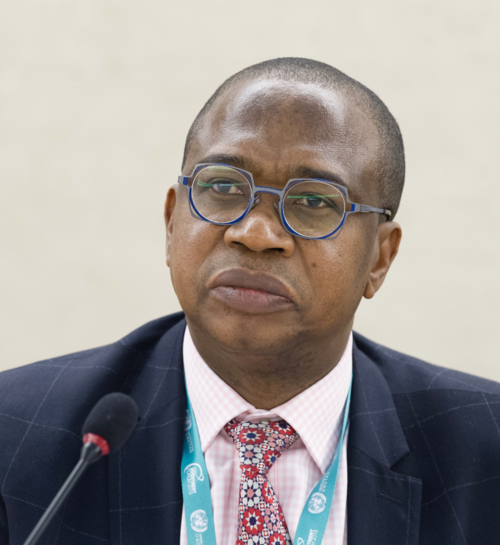
Professor Mthuli Ncube stands as one of the most pivotal figures in contemporary Zimbabwean Politics & Government. Appointed as the Minister of Finance and Economic Development in September 2018, Ncube brought a world of international financial expertise to the daunting task of stabilizing Zimbabwe's troubled economy. His role is notable not only for its high-profile challenges but also for his unique background as a distinguished academic and investment banker before entering the political arena. A key achievement that marked his early tenure was the introduction of the Transitional Stabilisation Programme (TSP) in October 2018, a critical reform agenda aimed at fiscal consolidation, monetary reform, and attracting foreign investment. As the architect of Zimbabwe's fiscal policy, Mthuli Ncube directly influences the nation's journey towards economic recovery and sustainable growth, making his biography essential to understanding modern Zimbabwean economics.
Early Life & Education: Forging an Academic Path
Mthuli Ncube was born in 1963 in what was then Southern Rhodesia. His early years were shaped against the backdrop of a country moving towards independence, which would later inform his perspectives on development and economic sovereignty. Demonstrating academic prowess from a young age, Ncube's educational journey laid a formidable foundation for his future career.
He pursued higher education with a focus on quantitative disciplines, earning a Bachelor of Science in Mathematics from the University of Zimbabwe. His passion for economics and finance led him to further his studies abroad. Ncube obtained a Master of Science in Mathematical Finance and a PhD in Mathematical Finance from the University of Cambridge in the United Kingdom, cementing his expertise in complex economic modeling and financial theory. This strong academic grounding in mathematics and finance distinguished him from many of his peers and provided the technical toolkit he would later employ in both the private and public sectors. His formative experiences as a scholar in some of the world's leading institutions equipped him with a global, technocratic outlook that he would later bring to the Zimbabwean treasury.
Career & Major Achievements: From Academia to the Cabinet
The career of Mthuli Ncube is a tapestry woven across academia, international finance, and high-level public policy. Before his ministerial appointment, he built a formidable reputation outside of direct Politics & Government.
Academic and Financial Leadership
Ncube served as a Professor of Public Policy at the University of Oxford and was the Head of the School of Finance and Banking at the University of the Witwatersrand in South Africa. His most prominent pre-political role was as the Vice President and Chief Economist of the African Development Bank (AfDB) from 2010 to 2018. At the AfDB, he oversaw the bank's research on Africa's economic development and was instrumental in creating innovative financial instruments like the AfDB's inaugural R 17.8 Billion "Diaspora Bond" proposal. He also authored the influential African Financial Markets Index.
Tenure as Minister of Finance
Appointed by President Emmerson Mnangagwa, Mthuli Ncube entered office facing hyperinflation, currency instability, and significant debt arrears. His major policy initiatives have included:
- The Transitional Stabilisation Programme (TSP 2018-2020): A reform blueprint focusing on fiscal austerity, restructuring state-owned enterprises, and improving ease of doing business.
- Currency Reforms: The introduction of the Zimbabwean Real Time Gross Settlement (RTGS) Dollar in 2019, later renamed simply the Zimbabwe Dollar, in an attempt to end multi-currency dollarization and restore monetary policy control.
- Fiscal Consolidation: Efforts to reduce the budget deficit, including controversial measures like a 2% electronic transaction tax (Intermediated Money Transfer Tax) introduced in October 2018.
- Engagement with International Creditors: Leading Zimbabwe's arrears clearance and debt resolution process with international financial institutions and the Paris Club, culminating in the launch of the Zimbabwe Arrears Clearance and Debt Resolution Process in December 2022 in Harare.
His tenure has been characterized by a bold, reformist agenda, though not without criticism regarding the pace of change and the social impact of austerity measures. Despite challenges, Mthuli Ncube has maintained a focus on formalizing the economy, digitalization, and crafting the National Development Strategy 1 (NDS1: 2021-2025) as the successor to the TSP.
Personal Life & Legacy: Beyond the Balance Sheet
Outside the demanding world of finance, Mthuli Ncube is known to be a private individual with a strong intellectual bent. His personal interests are deeply connected to his professional life; he is a prolific writer and researcher with numerous academic publications on financial markets, economic development, and public policy in Africa. This scholar-minister persona is a defining part of his legacy, emphasizing data-driven decision-making in Zimbabwe's governance.
While much of his philanthropy is channeled through his public role, his legacy is intrinsically tied to his efforts to modernize Zimbabwe's fiscal framework. Whether through the promotion of financial technology (fintech) or the push for greater transparency in government accounts, Ncube aims to leave behind systems rather than just short-term solutions. His lasting impact will likely be judged on the success of the structural reforms he has championed and their ability to create a more resilient and inclusive economy for Zimbabwe. His journey from Cambridge scholar to the cabinet table represents a unique experiment in applying technocratic expertise to the complex political economy of a developing nation.
Net Worth & Business Ventures
As a sitting Minister of Finance and former high-ranking official at major international institutions, Mthuli Ncube's financial standing is a topic of public interest, though precise details are not officially disclosed. His net worth is believed to stem primarily from his successful career prior to entering government. His tenure as Vice President of the African Development Bank and as a professor at prestigious universities would have commanded significant international salaries and allowances. Additionally, his work in investment banking earlier in his career and royalties from academic publications contribute to his financial portfolio.
Unlike some political figures, Ncube is not widely known for owning large, conspicuous business ventures within Zimbabwe. His public profile is that of a technocrat and policy maker. Upon assuming the role of Minister of Finance, he would have been required to declare his assets in accordance with Zimbabwean government ethics guidelines, but such declarations are typically not made public. His financial narrative is thus largely framed by his professional earnings in academia and international development finance, rather than private commercial enterprise.
Biography compiled from credible public sources including profiles from the African Development Bank, Zimbabwe Ministry of Finance, and international news reports covering Zimbabwean economic policy.
Frequently Asked Questions
What is Mthuli Ncube's estimated net worth?
Mthuli Ncube has an estimated net worth of R 81.0 Million.
What is Mthuli Ncube's role and nationality?
Mthuli Ncube is a Minister of Finance from Zimbabwe.
How did Mthuli Ncube make their money?
Mthuli Ncube built their fortune primarily through Mthuli Ncube is a public servant and academic; his wealth is not publicly listed on major billionaire indexes, and significant wealth accumulation is unlikely given Zimbabwe's economic context and his career in government and academia..
How old is Mthuli Ncube?
Mthuli Ncube was born in 1963 (63 years old).
Which category is Mthuli Ncube listed under?
Mthuli Ncube is featured under the Politics & Government category on NetWorth Africa.
How is Mthuli Ncube's net worth calculated?
NetWorth Africa estimates financial valuations using publicly available stock equity holdings, company ownership records, real estate assets, and verified market data.
Net Worth Analysis
Mthuli Ncube is a public servant and academic; his wealth is not publicly listed on major billionaire indexes, and significant wealth accumulation is unlikely given Zimbabwe's economic context and his career in government and academia.
Quick Stats

Related People

Aaron Motsoaledi
LP; Minister of Home Affairs • South Africa

Abane Ramdane†
FLN Leader & Strategist • Algeria
Abdalla Hamdok
Ex-Prime Minister • Sudan
Abdallah Kigoda
Ex-Minister of Natural Resources • Tanzania