$5M
Estimated Net Worth
As of 2024 • medium confidence
Financial Breakdown
Asset Distribution
Assets vs Liabilities
Assets
Disclaimer: These financial estimates are based on publicly available information and should be considered approximate. Last updated: 12/31/2025
Biography
Introduction: The Architect of a Sonic Revolution
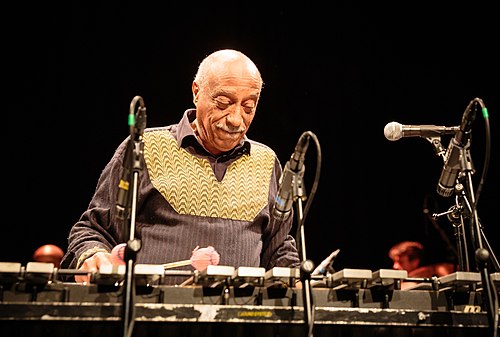
In the vast landscape of global Entertainment and music, few figures have single-handedly defined an entire genre. Mulatu Astatke stands as a towering exception. Revered worldwide as the "Father of Ethio-jazz," Astatke is the pioneering composer, arranger, and vibraphonist who masterfully fused traditional Ethiopian melodies with the harmonic sophistication of Western jazz, Latin rhythms, and Afro-funk. Born in Ethiopia in 1943, his journey from the highlands of East Africa to the prestigious halls of Western conservatories and back again created a unique musical lexicon. His key achievement is not merely a collection of recordings but the creation of a distinct, sophisticated, and emotionally resonant sound that has captivated audiences for over five decades, influencing generations of musicians and putting Ethiopian music firmly on the world map.
The global rediscovery of Mulatu Astatke's work in the late 1990s and 2000s, notably through the Éthiopiques compilation series and his contributions to the Jim Jarmusch film Broken Flowers, introduced his hypnotic compositions to a new generation. Today, he is celebrated as a national treasure in Ethiopia and an international icon of innovative cross-cultural artistry.
Early Life & Education: A Foundation Across Continents
Mulatu Astatke was born on December 19, 1943, in the western Ethiopian city of Jimma. Displaying an early aptitude for music, his path was set when he became one of the first Ethiopian students to study abroad in the musical field during the post-war era. His educational journey became a crucial crucible for his future sound.
In the early 1960s, he traveled to London, initially to study engineering. However, his passion for music prevailed. He enrolled at the Trinity College of Music, studying clarinet, percussion, and vibraphone. It was here that he was first deeply exposed to jazz. But Astatke's quest for knowledge was insatiable. He moved to the United States, a bold and rare move for an African musician at the time, to continue his studies. He attended the Berklee College of Music in Boston in 1958, making history as the first African student to graduate from the prestigious institution. Later, he also studied at the New York School of Music and Columbia University.
Formative Experiences in the 1960s New York Scene
Living in New York in the late 1960s was a transformative period. Astatke immersed himself in the city's vibrant jazz and Latin scenes, playing alongside greats and absorbing the sounds of Latin jazz, modal jazz (particularly the work of Miles Davis and John Coltrane), and Afro-Cuban rhythms. He began to experiment, asking a revolutionary question: what would happen if he layered the pentatonic (five-note) scales and haunting modes of traditional Ethiopian music with these complex Western harmonies and rhythms? This period of fusion and experimentation laid the complete groundwork for what would soon be christened Ethio-jazz.
Career & Major Achievements: Defining a Genre
Returning to Ethiopia in the early 1970s, Mulatu Astatke was poised for creativity. He formed his band, The Ethiopian Quintet, and later worked extensively with the famed Walias Band and the Ethiopian Police Orchestra. Addis Ababa was experiencing a golden age of music, and Astatke was at its innovative center. He began recording a series of groundbreaking albums, including Afro-Latin Soul (Volumes 1 & 2) and Mulatu of Ethiopia.
His sound was instantly recognizable: the melancholic, modal lines of the krar (Ethiopian lyre) or flute, the driving basslines of funk, the swinging rhythms of Latin percussion, and his own cool, melodic vibraphone solos floating over the top. Tracks like "Yèkèrmo Sèw," "Tezeta (Nostalgia)," and "Yègellé Tezeta" became classics.
Global Rediscovery and Cultural Impact
For years, Astatke's work, like much of Ethiopia's golden age output, was obscure outside of East Africa. This changed dramatically in 1998 with the launch of the Éthiopiques series by French label Buda Musique. Volume 4 of the series was dedicated entirely to Mulatu Astatke, curated from his 1970s recordings. The album became a cult sensation among DJs, collectors, and musicians worldwide.
The breakthrough to mainstream Western audiences came in 2005 when filmmaker Jim Jarmusch used several of Astatke's compositions in his film Broken Flowers, starring Bill Murray. The film's soundtrack served as a perfect introduction to Ethio-jazz's evocative mood. This exposure catapulted Astatke to international fame, leading to:
- Worldwide touring and collaborations with artists like The Heliocentrics, Questlove, and the Either/Orchestra.
- The recording of new acclaimed albums such as Inspiration Information (2009) with The Heliocentrics and Mulatu Steps Ahead (2010).
- Performances at major global festivals like Glastonbury and Roskilde.
- A featured role in the documentary Ethiopiques: Revolt of the Soul.
His major achievements are cemented by his role as a cultural ambassador. He founded the African Jazz Village in Addis Ababa, a hub for live music, and has tirelessly worked to establish modern music education in Ethiopia, including advocating for the first dedicated music school in the country's university system.
Personal Life, Legacy & Lasting Impact
While Mulatu Astatke is intensely private about his personal life, his dedication to his craft and his country is public and profound. He is known as a gentleman scholar of music—articulate, humble, and deeply intellectual about his artistic fusion. His personal interests extend beyond performance into the realms of musicology and instrument design; he has even modified traditional Ethiopian instruments to fit into his contemporary orchestral arrangements.
His philanthropic and educational efforts form a core part of his legacy. Astatke's vision for a formal music infrastructure in Ethiopia is driven by a desire to give future generations the structured training he had to seek abroad. He is a frequent lecturer and mentor, emphasizing the importance of understanding one's own cultural roots as a foundation for global innovation.
The Eternal Legacy of Ethio-jazz
The legacy of Mulatu Astatke is immeasurable. He did not just play jazz; he created a new branch on the musical tree of life. Ethio-jazz is now a standard genre in world music, studied and played globally. He inspired the entire "Ethio-jazz" revival scene, influencing countless artists across Entertainment spheres, from jazz and hip-hop (samples of his work are prolific) to indie rock and electronic music. In Ethiopia, he is a revered figure who preserved and modernized the nation's sonic heritage during times of great change. Globally, he demonstrated the profound artistic power of intelligent cultural synthesis, proving that traditional forms can evolve into something utterly modern and timeless.
Net Worth & Business Ventures
While the exact net worth of Mulatu Astatke is not publicly disclosed, his financial success is derived from a long and resurgent career spanning over 50 years. His income streams are multifaceted, typical of a respected musician of his stature. These include:
- Music Sales & Royalties: Revenue from his classic recordings on the Éthiopiques series, his collaborative albums, and extensive back catalog, amplified by digital streaming platforms.
- International Touring: As a headline act at major world music and jazz festivals and sold-out concert halls across Europe, North America, and beyond.
- Licensing & Sync Fees: The iconic use of his music in Broken Flowers and subsequent licensing for films, TV shows, and advertisements represents a significant source of income.
- Educational Work: Honorariums from lectures, workshops, and masterclasses at international institutions.
In terms of business ventures, Astatke's most notable is his foundational role in the African Jazz Village in Addis Ababa. More than just a venue, it is a cultural enterprise aimed at nurturing the local music scene. His business acumen is directed less towards personal wealth accumulation and more towards reinvesting in the musical ecosystem of his homeland, ensuring the growth and sustainability of the genre he created for future generations. His true wealth is measured in his enduring influence and the vibrant global community of musicians and fans who celebrate the sound of Ethio-jazz.
Sources & Further Reading: The biography of Mulatu Astatke is documented through various interviews, documentaries, and archival projects. Key sources include the Éthiopiques series (Buda Musique), the documentary film Ethiopiques: Revolt of the Soul, and numerous profiles from reputable publications like The Guardian, The New York Times, and NPR. Academic interest in his work is also growing, with studies on cross-cultural musicology often citing his pioneering contributions.
Net Worth Analysis
Mulatu Astatke is a pioneering and highly respected musician, but his wealth is derived from artistic work, not business ownership, and he is not listed on any billionaire or major wealth ranking.
Quick Stats
Related People

2Baba (Innocent Idibia)
Veteran Artist & Activist

Aar Maanta
Singer & Composer

Abdel Aziz al-Mubarak
Oud Master
Abdel Halim Hafez†
Legend; “Nightingale”; “The Dark-Skinned Nightingale”