Financial Breakdown
Asset Distribution
Assets vs Liabilities
Assets
Disclaimer: These financial estimates are based on publicly available information and should be considered approximate. Last updated: 12/29/2025
Biography
Introduction: A Statesman from the Sahara
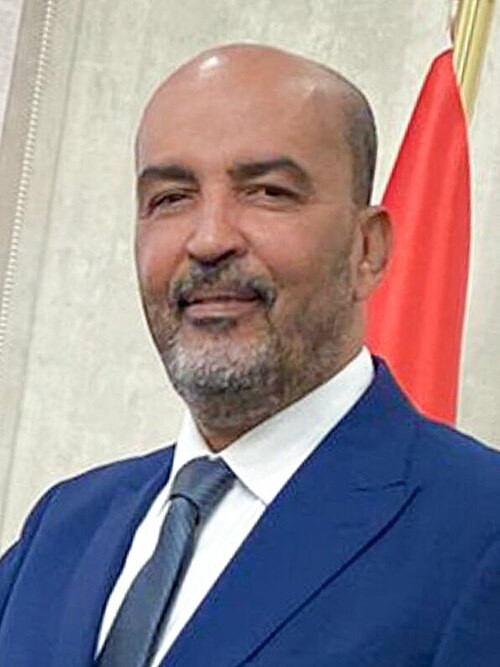
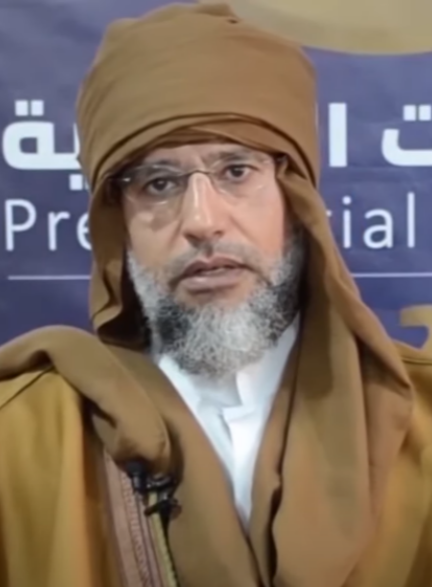
In the complex and often turbulent landscape of post-Gaddafi Libyan Politics & Government, Musa al-Koni stands out as a significant figure representing the nation's southern regions and advocating for national unity. Born in 1956 in the vast Sahara Desert, al-Koni rose to prominence as a diplomat, academic, and key political actor. His most notable role came as a member of Libya's Presidential Council from 2016 to 2017, a body established under the United Nations-brokered Libyan Political Agreement (LPA) to lead the country's executive authority. As a Tuareg from the Fezzan region, his appointment was a strategic effort to integrate Libya's long-marginalized south into the central political framework. Musa al-Koni's career is a testament to the challenges of state-building in Libya, highlighting the critical need for inclusive governance that bridges the nation's stark geographic and tribal divides.
Early Life and Education: Forging Identity in the Desert
Musa al-Koni was born in 1956 in the remote desert of southwestern Libya, an area known as the Fezzan. Growing up as a member of the Tuareg community, a historically nomadic Berber people, he was deeply immersed in the traditions and social structures of the Sahara. This early environment instilled in him a profound understanding of the unique challenges—such as isolation, limited infrastructure, and economic neglect—faced by Libya's southern populations. His formative years were shaped by the stark realities of desert life, which later fueled his political advocacy for regional development and inclusion.
Pursuing higher education, al-Koni demonstrated an early drive that took him beyond the desert. He attended the University of Tripoli, where he earned a bachelor's degree. His academic journey then led him to the United States, a path that would significantly influence his worldview. He obtained a Master's degree in Anthropology from the University of Illinois and later a PhD in the same field from Michigan State University in the 1990s. His doctoral research focused on the social and economic systems of Saharan communities, providing him with an academic framework to analyze the very society he hailed from. This blend of intimate lived experience and rigorous scholarly training equipped Musa al-Koni with a unique perspective, preparing him for a future role at the intersection of culture, diplomacy, and national politics.
Career and Major Achievements: From Diplomacy to the Presidential Council
The career of Musa al-Koni is marked by a transition from academia and diplomacy to the pinnacle of Libya's Executive Presidency. Before the 2011 revolution, he served as a diplomat for the Gaddafi regime, notably holding the position of Deputy Ambassador to the Arab League. However, he broke with the regime during the uprising, aligning himself with the opposition. Following Gaddafi's fall, al-Koni became an influential voice for the Tuareg and for the Fezzan region, emphasizing that a stable Libya could not be built without the full participation of the south.
Key Diplomatic and Advocacy Roles
In the chaotic aftermath of the revolution, al-Koni engaged in numerous track-II diplomacy initiatives and tribal mediation efforts. He was a founding member of the National Dialogue Preparatory Commission, demonstrating his commitment to a peaceful political process. His deep regional knowledge made him a crucial interlocutor on issues of cross-border security, migration, and tribal conflict resolution in the Sahara.
Tenure on the Libyan Presidential Council
The most significant chapter in his political career began on December 17, 2015, when he was officially named as one of nine members of the new Presidential Council under the UN-led Skhirat Agreement. He was sworn in on January 2, 2016. As a council member, Musa al-Koni was tasked with representing southern Libya and was seen as a vital link to powerful tribal networks and local militias. His key achievements and focus areas during his tenure included:
- Championing Southern Inclusion: He consistently advocated for the economic and political rights of the Fezzan, pushing for national resources to be directed toward development in the south.
- Security Mediation: Leveraging his tribal connections, he worked to de-escalate conflicts in southern Libya and mitigate the influence of smuggling and extremist groups.
- International Representation: As part of the Council, he engaged with foreign governments and international organizations to present the Council as the legitimate executive authority of Libya.
However, his tenure was fraught with the immense difficulties of governing a fractured nation. Frustrated by the persistent political deadlock, the lack of tangible progress, and the Council's inability to assert its authority nationwide, Musa al-Koni resigned from his position on January 2, 2017—exactly one year after taking office. His resignation statement highlighted the failure of the political agreement and warned of the risks of civil war and partition, a stark and prescient critique of the ongoing crisis.
Personal Life, Legacy, and Lasting Impact
Outside the political arena, Musa al-Koni is known as an intellectual and a man deeply connected to his cultural heritage. His personal interests are rooted in the academic fields he mastered: anthropology, Saharan history, and the study of nomadic societies. He is a published author and commentator, often analyzing Libyan and Sahelian affairs through a socio-cultural lens. This scholarly approach has informed his political philosophy, which emphasizes grassroots reconciliation and understanding over top-down imposition of authority.
The legacy of Musa al-Koni is complex. He is viewed by many as a principled figure who brought the neglected issues of southern Libya to the forefront of the national conversation. His resignation was a powerful symbolic act that underscored the profound failures of the post-2011 political transition. While his time on the Presidential Council was short-lived, he established a critical precedent: that any future sustainable government in Libya must include fair representation and address the grievances of the Fezzan. His warnings about the dangers of marginalization continue to resonate, making him a enduring reference point in discussions about Libyan federalism, decentralization, and national unity.
Net Worth and Business Ventures
Unlike some political figures in the region, Musa al-Koni is not widely known for significant private business ventures or substantial personal wealth derived from commerce. His professional life has been primarily in the public and academic sectors. His financial profile is consistent with a career spent in diplomacy, academia, and public service. There are no publicly available records or credible reports indicating a high personal net worth or ownership of major business enterprises. His influence stems from his intellectual capital, tribal standing, and political role rather than from economic power. This distinction sets him apart in the Libyan political scene and aligns with his image as a representative of a marginalized region rather than an economic elite.
For further information on the Libyan Political Agreement and the structure of the Presidential Council, credible sources such as the United Nations Support Mission in Libya (UNSMIL) provide official documentation and context.
Frequently Asked Questions
What is Musa al-Koni's estimated net worth?
Musa al-Koni has an estimated net worth of $10.0 Million.
What is Musa al-Koni's role and nationality?
Musa al-Koni is a Presidential Council Member from Libya.
How did Musa al-Koni make their money?
Musa al-Koni built their fortune primarily through As a senior diplomat and political figure in Libya, his wealth is likely derived from his public role and influence rather than significant private business holdings, and he is not listed on any major billionaire rankings..
How old is Musa al-Koni?
Musa al-Koni was born in 1956 (70 years old).
Which category is Musa al-Koni listed under?
Musa al-Koni is featured under the Politics & Government category on NetWorth Africa.
How is Musa al-Koni's net worth calculated?
NetWorth Africa estimates financial valuations using publicly available stock equity holdings, company ownership records, real estate assets, and verified market data.
Net Worth Analysis
As a senior diplomat and political figure in Libya, his wealth is likely derived from his public role and influence rather than significant private business holdings, and he is not listed on any major billionaire rankings.
Quick Stats
Related People
Aaron Motsoaledi
LP; Minister of Home Affairs • South Africa
Abane Ramdane†
FLN Leader & Strategist • Algeria
Abdalla Hamdok
Ex-Prime Minister • Sudan
Abdallah Kigoda
Ex-Minister of Natural Resources • Tanzania