Financial Breakdown
Asset Distribution
Assets vs Liabilities
Assets
Disclaimer: These financial estimates are based on publicly available information and should be considered approximate. Last updated: 12/29/2025
Biography
Introduction: The Judge Who Led a Revolution
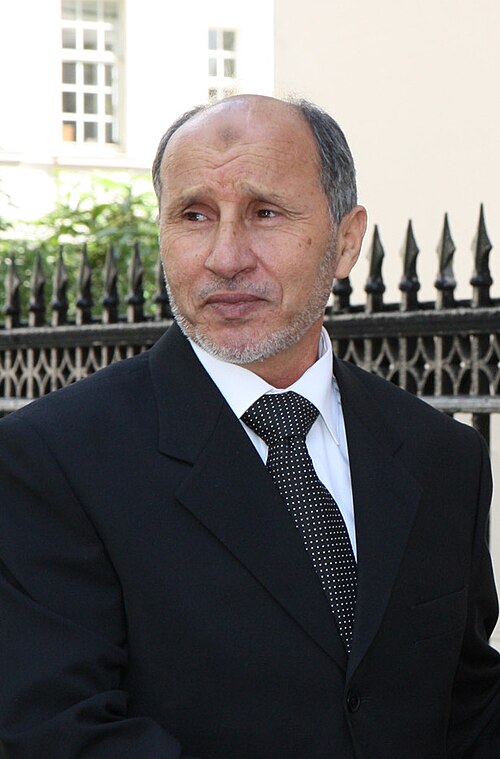
In the tumultuous landscape of modern Libya, few figures have occupied a role as pivotal and symbolic as Mustafa Abdul Jalil. As the first Chairman of the National Transitional Council (NTC), he emerged from the shadows of Muammar Gaddafi's regime to become the internationally recognized face of the 2011 Libyan Revolution. His journey from a respected judge within the system to the leader of the rebellion encapsulates the profound contradictions and hopes of that era. Mustafa Abdul Jalil's key achievement was unifying disparate rebel factions under a single political banner, the NTC, and successfully garnering crucial international recognition and support, which was instrumental in the overthrow of Gaddafi's 42-year rule. His tenure, though brief, marked Libya's fragile and hopeful first step from dictatorship toward an uncertain democratic future.
Early Life and Education: Foundations in Law and Justice
Mustafa Abdul Jalil was born in 1952 in the city of Al Bayda, located in eastern Libya. This region, known as Cyrenaica, has a long history of political dissent and was a center of the Senussi monarchy overthrown by Gaddafi in 1969. Growing up under the nascent revolutionary government, Jalil's early life was shaped by the new, often repressive, political realities of the country.
His academic path was firmly rooted in the study of law and Sharia. He attended the University of Libya in Benghazi, where he earned a degree in Law and Islamic Studies. This dual focus on secular and religious law would later define his judicial approach and public persona. After graduating, he embarked on a career within the Libyan judiciary, steadily rising through the ranks due to his reputation for integrity and deep knowledge of legal codes. For decades, Mustafa Abdul Jalil operated within the confines of Gaddafi's system, serving as a chief judge in various courts, including in the key cities of Bayda and Benghazi. This extensive experience gave him an intimate understanding of the regime's inner workings and legal manipulations, a knowledge that would prove vital during the revolution.
Career and Major Achievements: From Gaddafi's Judge to Revolutionary Chairman
Jalil's career within the Gaddafi regime culminated in his appointment as the Minister of Justice in 2007. In this role, he was known for attempting to implement modest reforms and for his occasional, quiet criticisms of certain government practices. However, his tenure was marked by increasing frustration with the regime's disregard for judicial independence and human rights.
The Breaking Point and Resignation
The defining moment for Mustafa Abdul Jalil came in February 2011, as the Arab Spring protests ignited in Benghazi. Following the violent crackdown on demonstrators, he publicly resigned from his post on February 21, 2011, in a bold act of defiance. In his resignation letter, he cited the government's use of excessive force against civilians and the obstruction of justice. This act transformed him overnight from an insider into a leading symbol of the opposition. His resignation carried significant weight, lending credibility and moral authority to the burgeoning protest movement.
Leading the National Transitional Council
As protests escalated into a full-scale armed rebellion, the need for a unified political leadership became urgent. On March 5, 2011, rebel groups and opposition figures announced the formation of the National Transitional Council in Benghazi and elected Mustafa Abdul Jalil as its Chairman. His selection was strategic:
- Credibility: His former high-ranking position lent the council legitimacy.
- Unifying Figure: As a moderate, religiously conservative yet legally-minded figure, he was acceptable to both secular liberals and Islamist factions within the opposition.
- International Liaison: His ministerial background made him a plausible interlocutor for foreign governments.
Under his leadership, the NTC achieved several critical milestones:
- International Recognition: He successfully lobbied for the NTC to be recognized as the "sole legitimate representative of the Libyan people" by over 30 countries, including France, the UK, and the United States, and by key bodies like the Arab League and the UN.
- Securing Foreign Aid: This recognition was essential for unlocking frozen regime assets and securing financial and military support for the rebel forces.
- Providing a Political Roadmap: The NTC, under Jalil, issued a "Constitutional Declaration" in August 2011, outlining a path to elections and a new constitution.
On October 23, 2011, three days after Gaddafi's capture and death, Mustafa Abdul Jalil formally declared Libya's liberation in a historic speech in Benghazi. He served as the de facto head of state until the handover of power to the newly elected General National Congress in August 2012.
Challenges and Controversies
His tenure was not without controversy. He faced criticism for his perceived inability to control the myriad militias that refused to disband after the war. Furthermore, some of his public statements, including one linking the lifting of restrictions on polygamy to the revolution's success, drew domestic and international criticism and highlighted the complex social tensions within post-Gaddafi Libya.
Personal Life, Legacy, and Lasting Impact
Known for his modest and austere demeanor, Mustafa Abdul Jalil often appeared in public wearing traditional Libyan attire and a simple turban, projecting an image of pious humility. This contrasted sharply with the flamboyant style of Gaddafi. Details of his personal life have been kept largely private, in keeping with his reserved character. He is reported to be married with several children.
The legacy of Mustafa Abdul Jalil is inextricably linked to the chaotic transition of Libya. He is widely credited with providing the crucial political leadership that helped the revolution succeed internationally. He steered the country through its initial, fragile post-Gaddafi phase and oversaw its first national elections in decades in July 2012. However, his legacy is also shadowed by the instability, factionalism, and conflict that engulfed Libya soon after his departure from office. Historians view him as a transitional figure—a man whose integrity and symbolic value were essential for overthrowing a dictator but whose skills were perhaps less suited to the Herculean task of building a stable state from the ruins of a 42-year dictatorship. He represents both the triumphant hope of the 2011 uprising and the immense difficulties of navigating the Politics & Government of a deeply fractured nation.
Post-Chairmanship and Net Worth
After handing over power in August 2012, Mustafa Abdul Jalil largely withdrew from the forefront of Libyan politics. He returned to Al Bayda and has maintained a low public profile, occasionally issuing statements or warnings about the country's political divisions. He has not held any official government position since his role as Ex-Chairman National Transitional Council concluded.
Unlike many figures in global Politics & Government, Mustafa Abdul Jalil is not associated with significant personal wealth or business ventures. His financial standing is considered modest, especially when compared to the vast fortunes amassed by Gaddafi family members and regime insiders. His career was spent almost entirely in public service, first as a judge and minister, and then as the unpaid head of a revolutionary council. There are no credible reports of him engaging in major business activities or possessing substantial assets. His net worth is not a subject of public record or significant speculation, aligning with his image as an austere and principled figure who entered the revolution from a position of moral authority rather than financial ambition.
Frequently Asked Questions
What is Mustafa Abdul Jalil's estimated net worth?
Mustafa Abdul Jalil has an estimated net worth of $10.0 Million.
What is Mustafa Abdul Jalil's role and nationality?
Mustafa Abdul Jalil is a Ex-Chairman National Transitional Council from Libya.
How did Mustafa Abdul Jalil make their money?
Mustafa Abdul Jalil built their fortune primarily through As a former senior government official and judge, his wealth is not from major business holdings; public sources suggest a net worth in the low millions, not billions..
How old is Mustafa Abdul Jalil?
Mustafa Abdul Jalil was born in 1952 (74 years old).
Which category is Mustafa Abdul Jalil listed under?
Mustafa Abdul Jalil is featured under the Politics & Government category on NetWorth Africa.
How is Mustafa Abdul Jalil's net worth calculated?
NetWorth Africa estimates financial valuations using publicly available stock equity holdings, company ownership records, real estate assets, and verified market data.
Net Worth Analysis
As a former senior government official and judge, his wealth is not from major business holdings; public sources suggest a net worth in the low millions, not billions.
Quick Stats

Related People

Aaron Motsoaledi
LP; Minister of Home Affairs • South Africa

Abane Ramdane†
FLN Leader & Strategist • Algeria

Abdalla Hamdok
Ex-Prime Minister • Sudan

Abdallah Kigoda
Ex-Minister of Natural Resources • Tanzania