Financial Breakdown
Asset Distribution
Assets vs Liabilities
Assets
Liabilities
Disclaimer: These financial estimates are based on publicly available information and should be considered approximate. Last updated: 12/31/2025
Biography
In the rich tapestry of Arts & Culture, few figures embody the confluence of creative expression and global diplomacy as profoundly as Mustapha Tlili. Born in 1937 in Tunisia, Tlili carved a unique path as a celebrated Novelist & Academic, whose life and work served as a vital bridge between the Arab world and the West. His significance lies not only in his poignant literary output but also in his decades-long career at the United Nations, where he championed intercultural dialogue. A trilingual intellectual, Tlili authored compelling novels in French that grappled with themes of exile, identity, and the clash of civilizations, earning him critical acclaim in Europe and beyond. His story is one of a man deeply rooted in his Tunisian heritage while engaging tirelessly with the global community, making him a pivotal figure in 20th-century Literature.
Early Life & Education: Forging a Global Perspective
Mustapha Tlili was born in 1937 in the city of El Kef, a historic town in northwestern Tunisia. Growing up in a country under French protectorate, Tlili was immersed in a bilingual and bicultural environment from a young age. This early exposure to the complex interplay between Arab and European influences would become a central motif in his future writing. His formative years were marked by the burgeoning Tunisian nationalist movement, which culminated in the country's independence in 1956—an event that undoubtedly shaped his consciousness of political and cultural sovereignty.
Tlili's intellectual promise was evident early on. He pursued higher education with vigor, first at the prestigious Sadiki College in Tunis. His academic journey then took him across the Mediterranean to France, where he studied at the Sorbonne in Paris. This move from North Africa to the European intellectual capital was a transformative experience, deepening his understanding of Western philosophy and literature while simultaneously sharpening his sense of his own Maghrebi identity. Fluent in Arabic, French, and later English, Tlili's education equipped him with the linguistic and conceptual tools to navigate and critique multiple worlds, setting the stage for his unique dual career as a storyteller and an international civil servant.
Career & Major Achievements: From the UN to the Literary Salon
Mustapha Tlili's professional life unfolded on two parallel, yet interconnected, tracks: his diplomatic work and his literary vocation.
A Distinguished Career at the United Nations
In 1964, Tlili joined the United Nations in New York City, beginning a long and influential tenure that would span over three decades. He held several key positions, most notably within the UN's Department of Public Information. His work focused on fostering dialogue between the UN and non-governmental organizations, and later, he played a crucial role in the "Alliance of Civilizations" initiative. Throughout his UN career, Mustapha Tlili was a steadfast advocate for mutual understanding between the Muslim world and the West, using his position to combat stereotypes and promote cultural exchange. This firsthand experience with international politics and cross-cultural friction provided rich material for his novels.
Literary Acclaim and Thematic Depth
Parallel to his diplomatic service, Tlili established himself as a formidable voice in Francophone literature. His novels, written primarily in French, are celebrated for their lyrical prose and profound exploration of displacement. Key works include:
- La Rage aux tripes (1975): His debut novel, which announced his major themes.
- Le Bruit dort (1978): A critically acclaimed work that solidified his reputation.
- Le Lion d'Afrique (1986): Perhaps his most famous novel, a powerful narrative that delves into the complexities of post-colonial African identity and the experience of exile in New York.
- Le Désert sans détour (1992) and Au pays de Tararanni (1998): Continued his nuanced examination of cultural intersection and memory.
His writing is characterized by a deep humanism and a melancholic reflection on the condition of the exile—the individual caught between a cherished homeland and a new, often alienating, environment. For his contributions to letters, Mustapha Tlili was honored with the prestigious Prix de l'Amitié Franco-Arabe in 1987 for Le Lion d'Afrique, among other accolades. His novels have been translated into multiple languages, extending his impact on a global scale.
The New York Forum for Literature and Thought
Demonstrating his commitment to intellectual fellowship, Tlili founded the New York Forum for Literature and Thought in 1991. This salon became a legendary gathering place in Manhattan, bringing together a diverse array of writers, artists, diplomats, and thinkers from around the world. For years, it served as a vibrant hub for conversation and debate, embodying Tlili's lifelong mission to build bridges through culture and ideas.
Personal Life, Legacy, and Lasting Impact
Outside his public roles, Mustapha Tlili was known as a gracious, erudite, and deeply thoughtful individual. He was a connoisseur of art and music, interests that complemented his literary sensibilities. While much of his adult life was spent in New York, he remained profoundly connected to Tunisia, often reflecting its landscapes and societal nuances in his work. He was not merely an observer of the diaspora experience; he lived it, crafting from his personal journey a universal commentary on belonging.
Tlili's legacy is multifaceted. As a Novelist & Academic, he expanded the scope of Francophone Maghrebi literature, moving beyond purely nationalist narratives to address the existential dilemmas of the global citizen. His prose offered Western readers an intimate, complex portrait of Arab and African subjectivity. As a diplomat and organizer, his legacy lives on in the countless dialogues he facilitated and the community of thinkers he nurtured at his New York Forum. Mustapha Tlili demonstrated that literature and diplomacy are not separate realms but complementary forces for human understanding. He passed away in 2017, leaving behind a body of work that continues to resonate in an increasingly interconnected yet divided world.
Contributions and Recognition
While the concept of "net worth" is often narrowly financial, Mustapha Tlili's true value lies in his immense cultural and intellectual capital. His career at the United Nations provided a stable foundation, but his primary "ventures" were in the realm of ideas. He was not a commercial writer or a business entrepreneur in the traditional sense. Instead, his enterprise was the cultivation of dialogue. His "assets" were his novels, which continue to be studied and admired, and the influential forum he created. The prizes he won, such as the Prix de l'Amitié Franco-Arabe, are testaments to the high esteem in which his literary work was held. The enduring relevance of his themes—migration, identity, and cross-cultural conflict—ensures that his contributions to Arts & Culture remain priceless and perpetually significant. For anyone exploring the literary landscape of Tunisia and the broader Arab world, the works and life of Mustapha Tlili are essential reading.
For further reading on Mustapha Tlili's work and the context of Tunisian literature, credible sources include academic databases like JSTOR, the United Nations archives for his diplomatic contributions, and publications from French literary presses such as Gallimard, which published several of his works.
Frequently Asked Questions
What is Mustapha Tlili's estimated net worth?
Mustapha Tlili has an estimated net worth of $5.0 Million.
What is Mustapha Tlili's role and nationality?
Mustapha Tlili is a Novelist & Academic from Tunisia.
How did Mustapha Tlili make their money?
Mustapha Tlili built their fortune primarily through As a novelist and academic, his wealth is derived from book sales, academic positions, and cultural contributions, not from major business holdings; he is not a public billionaire..
How old is Mustapha Tlili?
Mustapha Tlili was born in 1937 (89 years old).
Which category is Mustapha Tlili listed under?
Mustapha Tlili is featured under the Arts & Culture category on NetWorth Africa.
How is Mustapha Tlili's net worth calculated?
NetWorth Africa estimates financial valuations using publicly available stock equity holdings, company ownership records, real estate assets, and verified market data.
Net Worth Analysis
As a novelist and academic, his wealth is derived from book sales, academic positions, and cultural contributions, not from major business holdings; he is not a public billionaire.
Quick Stats
Related People
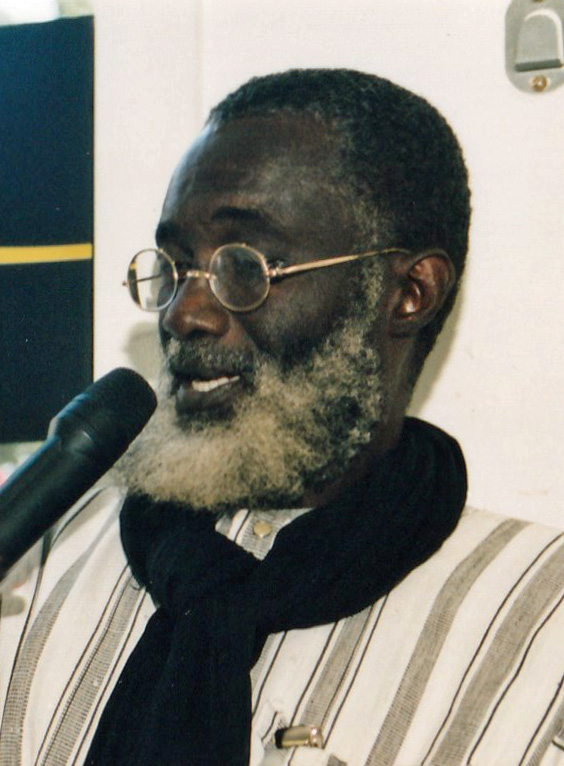
Abasse Ndione
Novelist & Playwright • Senegal
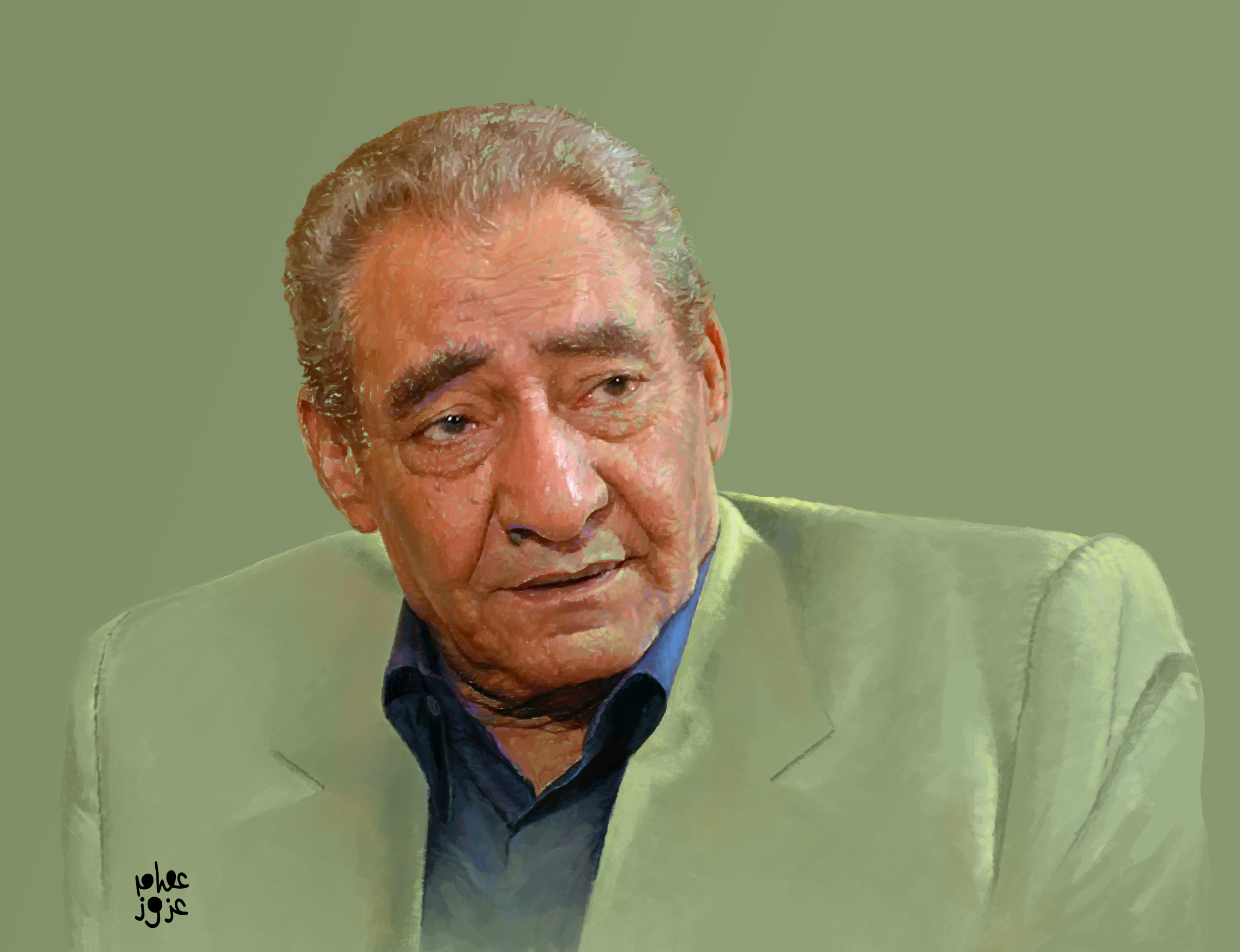
Abdel Rahman al-Abnudi†
Poet (Egypt-Sudan) • Sudan
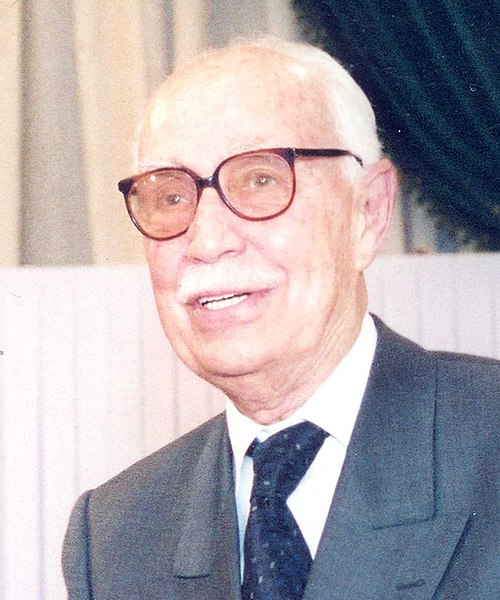
Abdelkrim Ghallab†
Novelist & Journalist • Morocco
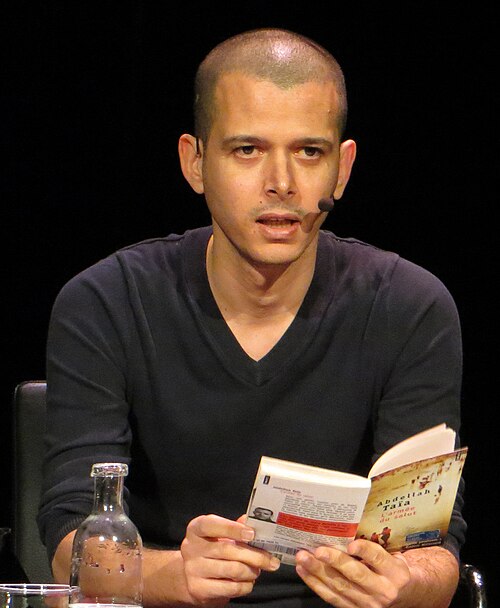
Abdellah Taïa
Novelist & Filmmaker • Morocco