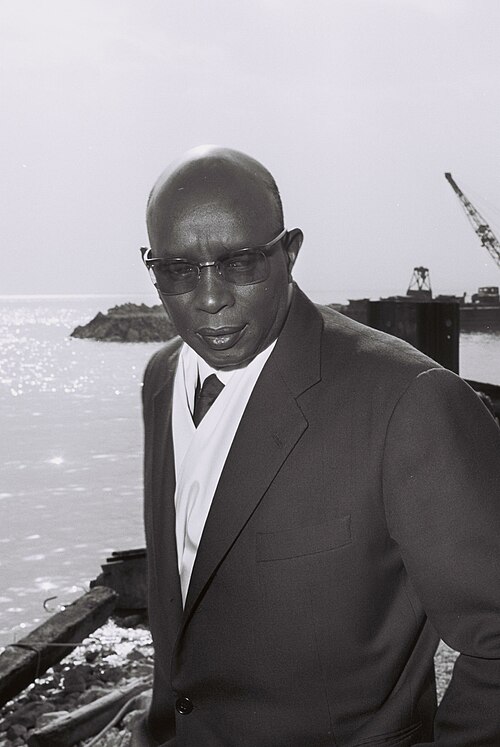
Biography
Introduction: The Monarch of a Changing Nation
Mwami Mwambutsa IV† stands as a pivotal and tragic figure in the annals of East African history. As the Last King of Burundi, his reign (1915-1966) spanned an extraordinary period of transformation, from the era of German and Belgian colonial rule to the tumultuous dawn of independence. Born in 1912, Mwambutsa IV ascended to the throne of the Kingdom of Burundi as a young child, making his one of the longest reigns in modern African monarchy. His life and rule were defined by the immense challenge of navigating traditional kingship, colonial subjugation, and the fierce political rivalries that erupted in the post-colonial state. His key, albeit fraught, achievement was shepherding Burundi to formal independence in 1962, though his inability to control the violent ethnic and political tensions that followed ultimately led to his exile and the monarchy's abolition.
Early Life & Education: A Throne in Childhood
Mwambutsa IV was born in 1912 in Nyabiyogi, as the son of King Mutaga IV Mbikije. His early life was marked by profound instability and tragedy. Following the assassination of his father in 1915, the three-year-old Mwambutsa was named king. His regnal name, Mwambutsa, meaning "the one who does not kill," was chosen in hope of ending the cycle of royal violence. Given his youth, the kingdom was administered by a regency council led initially by his mother, Queen Ngenzahago, and later by other chiefs, under the watchful eye of the colonial authorities.
His education was a blend of traditional Tutsi royal upbringing and Western instruction imposed by the Belgian administrators, who had taken control of Burundi (part of Ruanda-Urundi) after World War I. He studied at the Groupe Scolaire d'Astrida (now Groupe Scolaire Officiel de Butare) in neighboring Rwanda, an elite school designed to create a class of indigenous leaders loyal to the colonial structure. This dual education placed Mwami Mwambutsa IV† at a cultural crossroads, instilling in him an understanding of Western systems while he was also expected to uphold the sacred, centuries-old customs of the Burundian monarchy, known as the Mwami.
Career & Major Achievements: Reign Over Revolution
The career of Mwami Mwambutsa IV† was his reign, a complex tenure that can be divided into distinct phases: colonial subject, constitutional monarch, and exiled figurehead.
The Colonial Era (1915-1962)
For most of his life, Mwambutsa IV's power was severely constrained. The Belgian authorities ruled indirectly but firmly, using the monarchy as an instrument of control. His role was largely ceremonial, though he remained a vital symbol of national unity for the Burundian people, encompassing Tutsi, Hutu, and Twa ethnic groups. During this period, his major achievement was survival and the maintenance of the monarchy's symbolic stature amidst colonial manipulation and internal court intrigues.
The Path to Independence (1962)
As the winds of change swept across Africa in the late 1950s, Burundi moved towards self-rule. Mwambutsa IV navigated this transition carefully. On July 1, 1962, the Kingdom of Burundi achieved full independence from Belgium, with Mwami Mwambutsa IV† as its sovereign head of state. This moment marked the zenith of his reign, the culmination of a 47-year journey to sovereign kingship. He established a constitutional monarchy, with political power shared among competing parties, primarily the Tutsi-dominated UPRONA and the Hutu-led People's Party.
Independence and Instability (1962-1966)
The post-independence period quickly devolved into crisis. Burundi was engulfed by the same ethnic tensions that plagued neighboring Rwanda. Key events that defined the end of his rule include:
- The Assassination of Prime Minister Ngendandumwe (1965): The killing of the first Hutu prime minister, Pierre Ngendandumwe, exacerbated ethnic hostilities.
- The Hutu Uprising of 1965: Following controversial elections, a Hutu-led coup attempt was brutally suppressed by the Tutsi-led army, leading to widespread violence and the execution of many Hutu politicians.
- Constitutional Crisis: Mwambutsa IV, often criticized for indecisiveness, dissolved the government and failed to appoint a new prime minister, creating a power vacuum.
Fearing for his safety amid the chaos, Mwami Mwambutsa IV† fled to the Democratic Republic of Congo in March 1966, and then to Switzerland. He never returned to Burundi.
The End of the Monarchy
In his absence, his teenage son, Crown Prince Charles Ndizeye, deposed him in a July 1966 coup, declaring himself King Ntare V. This reign was shockingly brief. In November 1966, Prime Minister Michel Micombero staged a second coup, abolished the monarchy, and declared Burundi a republic, ending over four centuries of Burundian kingship. Mwambutsa IV thus became the Last King of Burundi.
Personal Life & Legacy: The Exiled King
The personal life of Mwami Mwambutsa IV† was marred by political strife and family tragedy. He was married multiple times, in accordance with royal tradition. His later years in exile in Geneva, Switzerland, were spent in relative obscurity and poverty, a stark contrast to his royal status. He was a patron of Burundian culture and a symbol of a lost unity, but he lived to see his kingdom vanish and his son, Ntare V, killed upon a forced return to Burundi in 1972.
Mwambutsa IV died in Geneva on March 26, 1977. His legacy is profoundly complex. He is remembered as:
- The king who presided over Burundi's independence.
- A unifying symbol whose authority was eroded by colonial and post-colonial forces beyond his full control.
- A monarch whose reign ultimately failed to prevent the descent of Burundi into decades of catastrophic ethnic conflict and civil war.
Today, Mwami Mwambutsa IV† remains a significant figure in historical studies of Burundi and African monarchy. His life story is a poignant chapter in the Entertainment category of global monarchy, illustrating the dramatic and often tragic intersection of tradition, colonialism, and modern statehood.
Net Worth & Royal Patrimony
Assessing the net worth of a traditional monarch like Mwami Mwambutsa IV† is challenging, as it was tied to the patrimony of the Burundian crown rather than personal business ventures. During his reign, the royal court controlled significant lands and resources. However, the colonial administration managed much of the country's economy. After independence, state resources were formally separated from the royal treasury. His exile led to a dramatic reversal of fortune. From the wealth associated with kingship, Mwambutsa IV spent his final years in Switzerland with limited means, reportedly supported by a modest stipend and the help of acquaintances. The abolition of the monarchy in 1966 led to the seizure of all royal assets by the state, leaving the Last King of Burundi without a financial base. His legacy, therefore, is not one of commercial business success, but of the lost cultural and political capital of an ancient institution.
This biography was constructed using historical accounts of Burundi's transition to independence and the role of its monarchy. For further reading, consult academic sources on the history of the Kingdom of Burundi and its integration into the colonial and post-colonial systems of Central Africa.
Frequently Asked Questions
What is Mwami Mwambutsa IV†'s estimated net worth?
Net worth details for Mwami Mwambutsa IV† are currently being updated.
What is Mwami Mwambutsa IV†'s role and nationality?
Mwami Mwambutsa IV† is a Last King of Burundi from Burundi.
How did Mwami Mwambutsa IV† make their money?
Mwami Mwambutsa IV† built their fortune primarily through Mwami Mwambutsa IV was the deposed king who died in 1977; he did not accumulate modern personal wealth and his historical assets are not applicable to a 2024 net worth estimate..
How old is Mwami Mwambutsa IV†?
Mwami Mwambutsa IV† was born in 1912 (114 years old).
Which category is Mwami Mwambutsa IV† listed under?
Mwami Mwambutsa IV† is featured under the Entertainment category on NetWorth Africa.
How is Mwami Mwambutsa IV†'s net worth calculated?
NetWorth Africa estimates financial valuations using publicly available stock equity holdings, company ownership records, real estate assets, and verified market data.
Net Worth Analysis
Mwami Mwambutsa IV was the deposed king who died in 1977; he did not accumulate modern personal wealth and his historical assets are not applicable to a 2024 net worth estimate.
Quick Stats
Related People

2Baba (Innocent Idibia)
Veteran Artist & Activist • Nigeria

Aar Maanta
Singer & Composer • Somalia
Abdel Aziz al-Mubarak
Oud Master • Sudan
Abdel Halim Hafez†
Legend; “Nightingale”; “The Dark-Skinned Nightingale” • Egypt