Biography
Introduction: The Paramount Sovereign
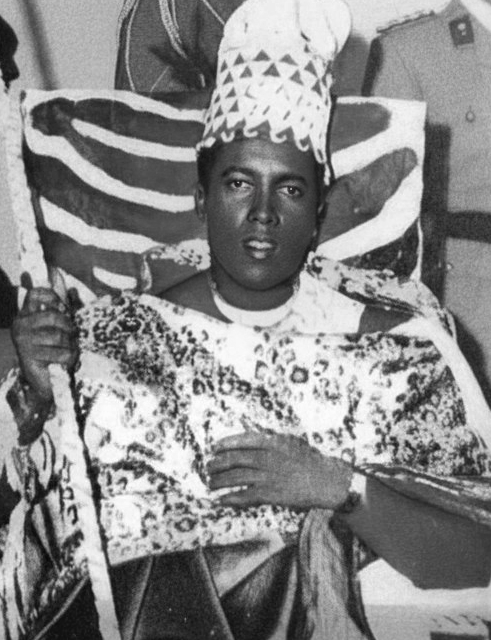
In the annals of East African history, the name Mwami Ntare IV Rutaganzwa† stands as a symbol of strength, expansion, and cultural consolidation. As the fourth king to bear the regnal name "Ntare," meaning "Lion," he ruled the Kingdom of Burundi during a pivotal period in the mid-18th century, approximately from the 1720s until his death around 1767. His reign is often considered one of the most significant in the pre-colonial era, marking the zenith of Burundi's territorial expansion and military power. Mwami Ntare IV is notable not only for his political and military acumen but also for his role in shaping the nation's cultural and social fabric, a legacy that resonates in the realms of traditional Entertainment, royal rituals, and historical storytelling. His key achievement lies in dramatically expanding the kingdom's borders, solidifying the authority of the Ganwa aristocracy, and establishing a centralized state that would endure for generations.
Early Life & Education: Forging a Future King
Born around 1720, Ntare IV Rutaganzwa entered a world of complex royal politics. He was the son of Mwami Mwezi III Ndagushimiye, and his birthright placed him at the center of the Burundian monarchy's intricate succession system. Unlike Western formal education, the education of a future Mwami in 18th century Burundi was holistic and immersive, focused on statecraft, military strategy, and cultural wisdom.
From a young age, Rutaganzwa would have been tutored by trusted advisors, known as Bashingantahe (singular: Umushingantahe), who were figures of immense integrity and knowledge. His formative experiences included:
- Military Training: Mastering the use of the spear, shield, and bow, and learning the tactics of warfare that would later define his reign.
- Historical & Genealogical Lore: Memorizing the lineage of the kings and the history of the kingdom, essential for legitimizing his rule.
- Diplomatic Etiquette: Understanding the complex relationships between the royal court (Ganwa), the pastoral Tutsi, the agricultural Hutu, and the indigenous Twa peoples.
- Spiritual Instruction: Learning the rituals associated with Kubandwa (the cult of Kiranga) and the royal sacred drums (Karyenda and Rukinzo), which were central to royal authority and national unity.
This rigorous preparation during his youth equipped Mwami Ntare IV Rutaganzwa† with the skills necessary to navigate and ultimately dominate the challenging landscape of an expanding kingdom.
Career & Major Achievements: The Lion's Expansion
The reign of Mwami Ntare IV Rutaganzwa† is synonymous with unprecedented territorial growth and state consolidation. Ascending to the throne in a period of relative stability, he leveraged this foundation to embark on a series of military campaigns that would redefine the map of the region.
Military Conquests and Territorial Expansion
Ntare IV is famously credited with expanding the Kingdom of Burundi to its greatest historical extent. His campaigns were primarily directed eastward and northward. He led his armies, organized around a core of elite warriors, to conquer and incorporate neighboring chiefdoms and regions. Key expansions included pushing the kingdom's frontiers towards what is now central Tanzania and consolidating control around the northeastern shores of Lake Tanganyika. This not only increased the kingdom's wealth in cattle and land but also its population, integrating new communities under the Burundi crown.
Administrative and Political Consolidation
Beyond mere conquest, Mwami Ntare IV was a skilled administrator. To manage his vast new territories, he implemented a system of governance reliant on provincial governors, often appointed from among his sons or loyal Ganwa nobles. This decentralized authority while maintaining ultimate loyalty to the throne. He strengthened the role of the Bashingantahe as counselors and judges, formalizing a system of conflict resolution that extended royal justice throughout the realm. His reign saw the solidification of the ubugabire (client-patron) system, which structured socio-economic relationships around the distribution of cattle, thereby weaving a web of loyalty and obligation that supported the monarchy.
Cultural Patronage and Royal Ritual
In the context of Entertainment and culture, the court of Mwami Ntare IV would have been a vibrant center. Royal rituals, which blended governance with performance, were key to his authority. The sacred drums, the ikinimba royal dance, and epic poetry praising the king's lineage and deeds were all forms of state-sponsored Entertainment that reinforced social order and royal prestige. By patronizing these arts, Ntare IV embedded his legacy into the cultural memory of the nation. His military exploits became the subject of ibitekerezo (historical narratives) and songs, performed by abavumy (bardic historians), ensuring his story was told and retold for generations.
Personal Life & Legacy: The Man Behind the Crown
While historical records from 18th century Burundi are primarily oral and focus on public deeds, the personal life of Mwami Ntare IV Rutaganzwa† is understood through the lens of royal tradition. As a polygamous monarch, he would have had multiple wives, a practice that forged political alliances with powerful families across the kingdom. His children, particularly his sons, played crucial roles in his administrative system, governing provinces but also sowing the seeds for future succession disputes—a common challenge in the Burundian monarchy.
His legacy is profound and multifaceted. Politically, he left behind a kingdom at its peak geographical size and influence. The administrative structures he reinforced provided a model for his successors. Culturally, he is remembered as a quintessential "Lion King," a warrior and unifier whose era is often romanticized as a golden age. In modern Burundi, Ntare IV remains a potent national symbol. His name adorns schools, streets, and public buildings. More importantly, he lives on in the country's rich oral tradition, where tales of Ntare IV Rutaganzwa† continue to serve as a source of national identity, pride, and historical Entertainment, bridging the 18th century with the present day.
Net Worth & Historical Economic Power
Applying modern concepts like "net worth" to an 18th-century African monarch requires understanding the period's economic foundations. The wealth and power of Mwami Ntare IV were not measured in currency but in control of vital resources and social capital. His economic supremacy was absolute and rooted in the following:
- Cattle (Ibikoko): The primary measure of wealth. The king owned vast herds, distributed to loyal subjects through the ubugabire system, creating a network of economic dependence and loyalty.
- Land (Ubutaka): All land was ultimately under the dominion of the Mwami. His conquests directly translated into increased agricultural and pastoral land, enriching the kingdom's productive capacity.
- Tribute System: Conquered regions and all subjects paid tribute to the royal court in the form of agricultural produce, livestock, handicrafts, and labor.
- Control of Trade: While limited, regional trade in items like salt, iron tools, and pottery would have been influenced by the royal court, with the Mwami benefiting from its flow.
Therefore, the "business ventures" of Mwami Ntare IV Rutaganzwa† were the kingdom itself. His asset portfolio was the entirety of Burundi—its people, land, and livestock. His successful military campaigns were, in essence, aggressive market expansions, securing the resources that cemented his status as the wealthiest and most powerful individual in the kingdom's history up to that point. This economic model sustained the monarchy and funded the cultural Entertainment and rituals that glorified his reign.
Net Worth Analysis
Mwami Ntare IV Rutaganzwa was a historical monarch who ruled in the 18th century and is deceased, therefore he has no contemporary net worth.
Quick Stats
Related People

2Baba (Innocent Idibia)
Veteran Artist & Activist

Aar Maanta
Singer & Composer

Abdel Aziz al-Mubarak
Oud Master

Abdel Halim Hafez†
Legend; “Nightingale”; “The Dark-Skinned Nightingale”