Financial Breakdown
Asset Distribution
Assets vs Liabilities
Assets
Disclaimer: These financial estimates are based on publicly available information and should be considered approximate. Last updated: 12/31/2025
Biography
Introduction: The Pen as a Weapon Against Injustice
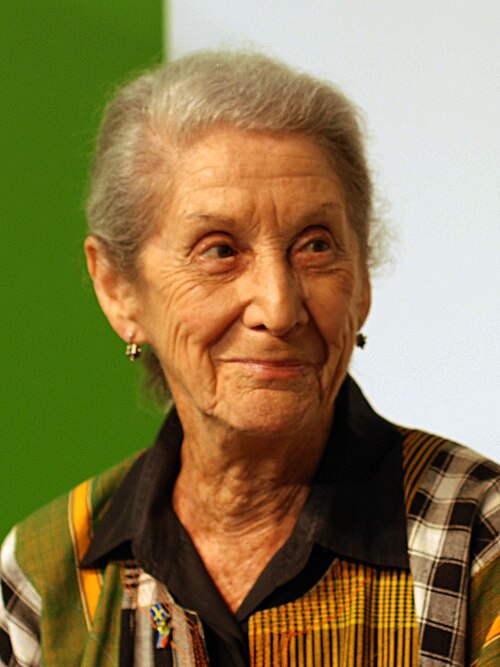
Nadine Gordimer† stands as one of the most formidable literary figures of the 20th century, a writer whose profound body of work became inextricably linked with the political and moral struggle against apartheid. A white South African who became one of the system's most piercing critics, Nadine Gordimer† used her fiction and non-fiction to expose the brutal realities and psychological complexities of life under state-sanctioned racial segregation. Her key achievement was being awarded the Nobel Prize in Literature in 1991, a monumental recognition that hailed her as a writer "who through her magnificent epic writing has been—in the words of Alfred Nobel—of very great benefit to humanity." More than just a storyteller, Nadine Gordimer† was an essential Anti-Apartheid Voice, whose courage and insight helped shape global understanding of South Africa's turmoil and its path toward justice.
Early Life & Education: Formative Years in a Divided Land
Nadine Gordimer was born on November 20, 1923, in Springs, a mining town near Johannesburg in the then Transvaal Province. Her father, Isidore Gordimer, was a Jewish immigrant watchmaker from Lithuania, and her mother, Nan Myers, was of British descent. From an early age, Gordimer was attuned to the stark divisions of her society. A childhood heart condition led her mother to withdraw her from social activities, and she turned to books and observation, becoming a keen chronicler of the world around her. Her formal education was unconventional; she was largely home-schooled and attended a convent school for a period. She briefly attended the University of the Witwatersrand but did not complete a degree.
Her true education came from voracious reading and the lived experience of South Africa's racial hierarchy. Witnessing the injustices faced by the Black majority from her privileged position as a white child sparked a deep-seated sense of moral outrage. She published her first story at the age of 15 in a Johannesburg magazine. These formative experiences—of being an observer, of ill health, and of early literary success—forged a writer uniquely positioned to dissect the nuances of power, fear, and complicity. By her early twenties, her stories were appearing in prestigious American and British publications, setting the stage for a career dedicated to exploring the human condition within the oppressive framework of apartheid.
Career & Major Achievements: Chronicling the Soul of a Nation
Nadine Gordimer's† literary career spanned over six decades, producing 15 novels, over 200 short stories, and numerous volumes of essays. Her early works, like the novel The Lying Days (1953), explored the awakening social consciousness of white characters. As apartheid laws tightened, her writing grew more politically engaged and formally complex. Masterpieces such as Burger's Daughter (1979) and July's People (1981) are seminal works of world Arts & Culture. Burger's Daughter, published during a state of emergency and banned by the apartheid government, examines the legacy of activism through the daughter of a martyred revolutionary. July's People imagines a violent revolution that forces a liberal white family to rely on their Black servant, July, for survival—a devastating role-reversal that questioned the very foundations of white South African identity.
Confrontation with Censorship and Global Recognition
Gordimer's unwavering commitment to truth made her a target of the apartheid regime. Several of her books were banned, a fact she wore as a badge of honor. Despite the risks, she remained in South Africa, believing it was essential to witness and write from within the heart of the conflict. She was a founding member of the Congress of South African Writers and a close friend of Nelson Mandela's defense attorneys, even helping edit Mandela's famous "I Am Prepared to Die" speech. Her international acclaim grew with awards like the Booker Prize for The Conservationist (1974), but the pinnacle was the 1991 Nobel Prize in Literature. The award came as apartheid was being dismantled, recognizing her not only as a brilliant artist but as a crucial moral compass.
Post-Apartheid Literary Vigilance
After the first democratic elections in 1994, Gordimer continued to write with critical vigilance. Her later novels, such as The House Gun (1998) and No Time Like the Present (2012), tackled the new challenges of a democratic South Africa: crime, corruption, HIV/AIDS, and the unresolved legacies of the past. She remained an outspoken intellectual, advocating for social justice and criticizing the failures of the African National Congress (ANC) government when she felt it betrayed its democratic principles. This demonstrated that her allegiance was never to a party, but to the ideals of human dignity and freedom.
Personal Life & Legacy: The Private Citizen and Public Icon
Nadine Gordimer was married twice: first to Gerald Gavron in 1949, with whom she had a daughter, and then to Reinhold Cassirer in 1954, a renowned art dealer with whom she had a son. Their marriage lasted until his death in 2001. Gordimer was known for a relatively private personal life, eschewing the trappings of celebrity. Her home in Johannesburg was a place of work and intellectual engagement. Beyond writing, she was deeply involved in the anti-apartheid movement, providing support and a platform for banned Black writers. She was also a passionate advocate for HIV/AIDS awareness and treatment access in the 2000s.
The legacy of Nadine Gordimer† is monumental. She transformed the political novel into a profound exploration of intimate human relationships under pressure. Her work serves as an indelible historical record and a timeless inquiry into morality, identity, and love across racial divides. She inspired generations of writers globally and remains a towering figure in postcolonial literature. Her passing on July 13, 2014, was mourned worldwide, but her words continue to resonate, offering crucial insights into the ongoing struggles for justice and equality, not just in South Africa, but everywhere.
Net Worth & Literary Estate
While Nadine Gordimer† was undoubtedly successful, her primary focus was never on amassing wealth but on her art and activism. Her financial success came from decades of international bestsellers, prestigious prize money (including the Nobel Prize's significant award), and royalties from translations into over 40 languages. She lived comfortably but modestly. Unlike some authors, she was not known for significant business ventures outside of her writing. Her true "estate" is her literary and intellectual legacy. The management of her copyrights, publications, and archives is handled by her literary estate and publishers, ensuring her works remain in print and continue to educate and inspire future generations. The value of her contribution to Arts & Culture is immeasurable, far exceeding any monetary figure.
Key Facts & Related Keywords
- Full Name: Nadine Gordimer†
- Born: November 20, 1923, Springs, Transvaal, South Africa
- Died: July 13, 2014, Johannesburg, South Africa
- Nobel Prize: Awarded the Nobel Prize in Literature in 1991.
- Notable Works: Burger's Daughter, July's People, The Conservationist, The Lying Days.
- Activism: Key Anti-Apartheid Voice, member of the African National Congress (ANC).
- Legacy: A defining figure in South African Literature and global Arts & Culture.
For further reading on her life and works, consult resources from the Nobel Prize organization or academic publications on South African literature.
Frequently Asked Questions
What is Nadine Gordimer†'s estimated net worth?
Nadine Gordimer† has an estimated net worth of $5.0 Million.
What is Nadine Gordimer†'s role and nationality?
Nadine Gordimer† is a Nobel Laureate & Anti-Apartheid Voice from South Africa.
How did Nadine Gordimer† make their money?
Nadine Gordimer† built their fortune primarily through Nadine Gordimer was a renowned author and activist, not a businessperson; her wealth derived from literary prizes, book sales, and speaking engagements, not corporate holdings..
How old is Nadine Gordimer†?
Nadine Gordimer† was born in 1923 (103 years old).
Which category is Nadine Gordimer† listed under?
Nadine Gordimer† is featured under the Arts & Culture category on NetWorth Africa.
How is Nadine Gordimer†'s net worth calculated?
NetWorth Africa estimates financial valuations using publicly available stock equity holdings, company ownership records, real estate assets, and verified market data.
Net Worth Analysis
Nadine Gordimer was a renowned author and activist, not a businessperson; her wealth derived from literary prizes, book sales, and speaking engagements, not corporate holdings.
Quick Stats


Related People
Abasse Ndione
Novelist & Playwright • Senegal
Abdel Rahman al-Abnudi†
Poet (Egypt-Sudan) • Sudan
Abdelkrim Ghallab†
Novelist & Journalist • Morocco
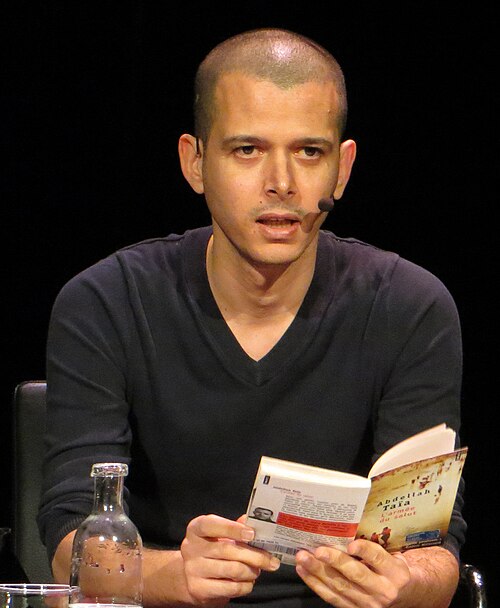
Abdellah Taïa
Novelist & Filmmaker • Morocco