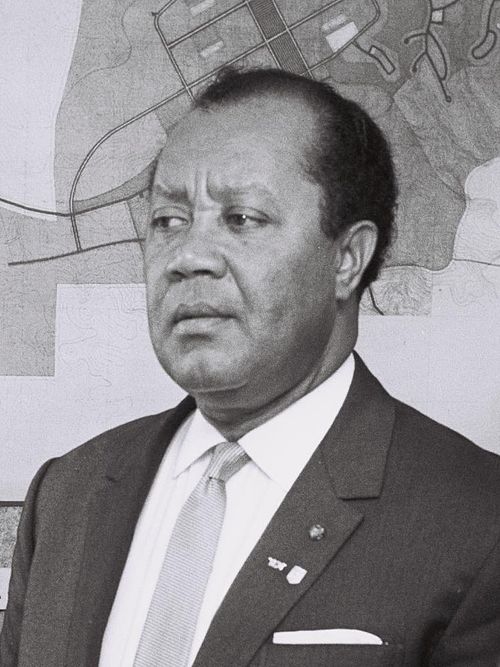
Biography
Introduction: A Pivotal Figure in Togolese Politics
Nicolas Grunitzky† stands as a central, yet often transitional, figure in the modern political history of Togo. As the nation's Second President, his tenure from 1963 to 1967 was defined by the immense challenge of stabilizing a country reeling from its first military coup and the assassination of its founding president, Sylvanus Olympio. Born in 1913 to a German father and a Togolese mother, Grunitzky's mixed heritage and political philosophy positioned him as a potential unifier in a deeply divided post-colonial landscape. His key achievement was his initial attempt to forge a government of national reconciliation, bringing together rival political factions in the fragile aftermath of the 1963 upheaval. The story of Nicolas Grunitzky† is not just one of executive leadership, but a narrative about the precarious nature of power, the legacy of colonialism, and the early struggles for democratic consolidation in West Africa.
Early Life & Education: A Bridge Between Worlds
Nicolas Grunitzky was born on April 5, 1913, in Atakpamé, in the German protectorate of Togoland. His unique familial background—a German colonial administrator father and a Togolese mother from the influential Akébou royal family—granted him a bicultural perspective that would later influence his political approach. Following Germany's defeat in World War I, Togoland was split into British and French mandates under the League of Nations. Grunitzky found himself in the French-administered sector.
His education was elite and colonial, shaping his worldview. He attended primary school in Atakpamé before pursuing secondary studies at the prestigious École William Ponty in Senegal, a training ground for many future West African leaders. He furthered his engineering education in France, graduating from the École spéciale des Travaux publics in Paris. This technical background distinguished him from many contemporaries who emerged from legal or administrative careers. Returning to Togo in the 1930s, he worked as a public works engineer, gaining practical experience and building a network among the emerging educated class. This period was formative, immersing him in the growing tensions between the pro-independence movements and the French colonial administration, as well as the internal rivalries between the southern coastal elites and the northern populations.
Career & Major Achievements: The Path to the Presidency
Grunitzky's political career began in the era of decolonization. Initially, he was not a radical separatist but advocated for gradual autonomy within the French Union. In 1951, he was elected to the French National Assembly as Togo's representative, a role he held until 1958. He founded the Togolese Progress Party (PTP), which found its support base primarily in the north, countering the more southern, radical independence drive of Sylvanus Olympio's Committee of Togolese Unity (CUT).
Premiership and Exile
As France moved towards granting Togo independence, a crucial UN-supervised referendum in 1956 offered autonomy. Grunitzky's PTP, favoring continued close ties with France, won, and he became Prime Minister of the Autonomous Republic of Togo in 1956. However, this victory was contested. Full independence elections in 1958 were won decisively by Olympio's CUT. Olympio became Prime Minister and led Togo to full sovereignty on April 27, 1960. Nicolas Grunitzky†, defeated, went into voluntary exile in neighboring Dahomey (now Benin).
A Reluctant President Installed by Coup
The pivotal moment for Grunitzky arrived on January 13, 1963, when President Sylvanus Olympio was assassinated in Africa's first post-independence military coup, led by Sergeant (later General) Étienne Gnassingbé Eyadéma. The military insurgents, needing a civilian figure with political credibility, recalled Nicolas Grunitzky† from exile and installed him as the Second President of the Republic. His appointment was ratified by a controversial national referendum later that year.
As President, Grunitzky's major achievement was his immediate effort at national reconciliation. He formed a broad-based coalition government, even appointing Antoine Meatchi, a political rival from the north, as Vice President. He championed a constitution that, unlike Olympio's, allowed for a multi-party system. His government focused on economic development and maintaining strong ties with France, securing crucial foreign aid.
Challenges and Overthrow
Despite his intentions, Grunitzky's presidency was plagued by instability. The coalition was fractious, and regional tensions persisted. More critically, his government never fully controlled the army, which remained the true power broker. Economic difficulties and political infighting weakened his administration. On January 13, 1967—exactly four years after the coup that brought him to power—the military, again led by Eyadéma, staged a bloodless coup while Grunitzky was abroad receiving medical treatment. Eyadéma dissolved the National Assembly and suspended the constitution, effectively ending the Grunitzky presidency and beginning his own decades-long rule.
Personal Life & Legacy: The Unifier's Complicated Impact
Personally, Nicolas Grunitzky† was known as a moderate, intellectual, and a gentleman politician, often described as more of a technocrat than a fiery nationalist. His marriage connected him to other West African political families. Following his overthrow, he returned to exile, this time in Ivory Coast, where he lived quietly until his death on September 27, 1969, in a tragic car accident in Paris.
The legacy of Nicolas Grunitzky† in Togolese Politics & Government is complex and subject to debate. He is often viewed as a well-meaning but ultimately weak leader who was a puppet of the military, unable to escape the shadow of the coup that installed him. However, a more nuanced perspective acknowledges his genuine attempts at reconciliation and inclusive governance during an exceptionally volatile period. His presidency represents a brief, failed experiment in multi-party democracy sandwiched between two long-lasting, authoritarian regimes. In the history of Togo, he remains a symbol of the transitional turmoil of the early post-independence years, a leader whose fate underscored the profound challenges of civilian control over the military and nation-building in a newly sovereign African state.
Net Worth & Business Ventures: The Engineer's Foundation
Unlike many later African leaders, Nicolas Grunitzky† did not amass significant personal wealth through his political office. His financial foundation was built primarily before his presidency, stemming from his professional career as a trained civil engineer. Prior to entering full-time politics, he was involved in public works projects and likely had business interests connected to his technical expertise and family connections. His period in government, particularly his exile-laden premiership and turbulent presidency, was not marked by notable personal commercial ventures or allegations of grand corruption. His lifestyle was considered relatively modest for a head of state. The primary economic impact of his tenure was at the national policy level, focusing on infrastructure development and maintaining the Franco-Togolese economic relationship. Therefore, while not a business magnate, Grunitzky's economic legacy is tied to his technocratic approach to national development during his time in office.
Sources & Further Reading: Key information in this biography is synthesized from reputable historical sources on Togolese and West African political history, including the Encyclopædia Britannica, academic analyses of post-colonial Togo, and historical profiles from African biography archives. For specific details on the 1963 coup and constitutional changes, references were drawn from documented historical records of the period.
Frequently Asked Questions
What is Nicolas Grunitzky†'s estimated net worth?
Net worth details for Nicolas Grunitzky† are currently being updated.
What is Nicolas Grunitzky†'s role and nationality?
Nicolas Grunitzky† is a Second President from Togo.
How did Nicolas Grunitzky† make their money?
Nicolas Grunitzky† built their fortune primarily through Nicolas Grunitzky was a former president of Togo who died in 1969, and there is no credible information about a contemporary net worth for him..
How old is Nicolas Grunitzky†?
Nicolas Grunitzky† was born in 1913 (113 years old).
Which category is Nicolas Grunitzky† listed under?
Nicolas Grunitzky† is featured under the Politics & Government category on NetWorth Africa.
How is Nicolas Grunitzky†'s net worth calculated?
NetWorth Africa estimates financial valuations using publicly available stock equity holdings, company ownership records, real estate assets, and verified market data.
Net Worth Analysis
Nicolas Grunitzky was a former president of Togo who died in 1969, and there is no credible information about a contemporary net worth for him.
Quick Stats
Related People
Aaron Motsoaledi
LP; Minister of Home Affairs • South Africa
Abane Ramdane†
FLN Leader & Strategist • Algeria
Abdalla Hamdok
Ex-Prime Minister • Sudan
Abdallah Kigoda
Ex-Minister of Natural Resources • Tanzania