Financial Breakdown
Asset Distribution
Assets vs Liabilities
Assets
Disclaimer: These financial estimates are based on publicly available information and should be considered approximate. Last updated: 12/29/2025
Biography
Introduction: A Pillar of Beninese Democracy
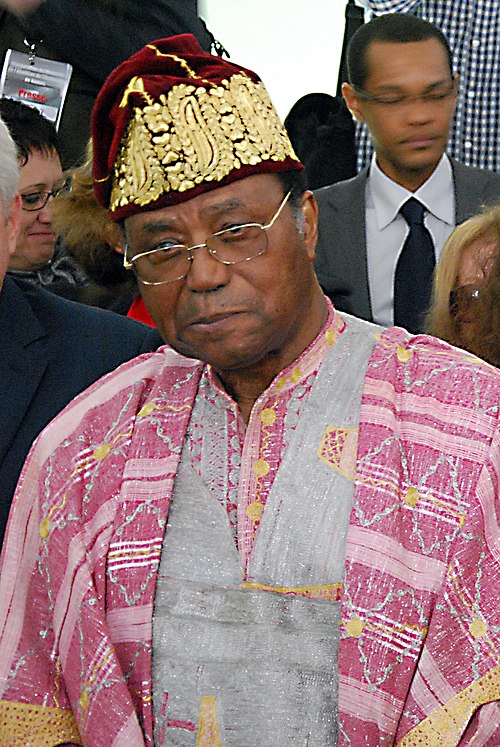
Nicéphore Soglo stands as a seminal figure in the modern political history of Benin, renowned as the leader who guided the nation from Marxist-Leninist dictatorship to a pluralistic democracy. Serving as the President of Benin from 1991 to 1996, his tenure represents a foundational period in the country's democratic evolution. His rise to power was directly tied to the historic National Conference of the Living Forces of the Nation in 1990, a peaceful revolutionary event that made Benin a beacon of democratic hope in Africa. As the first democratically elected president following the conference, Nicéphore Soglo was tasked with the monumental challenge of implementing economic reforms, stabilizing institutions, and setting a new course for the nation. His legacy is intrinsically linked to the concepts of Democratic Leadership and Democratic Transition, marking him as a pivotal actor in one of Africa's most successful political transformations.
Early Life & Education: Formative Years of a Future Statesman
Nicéphore Soglo was born on November 29, 1934, in the coastal city of Lomé, which was then part of French Togoland (present-day Togo). He hailed from a prominent family with roots in the Beninese city of Ouidah. His early education took place in Benin (then Dahomey) and Senegal, exposing him to a broad West African intellectual milieu. Demonstrating academic promise, he pursued higher studies in France, a common path for the elite of Francophone Africa during the colonial era.
In France, Soglo immersed himself in the study of law and economics, graduating with a degree in Law from the University of Paris. He further distinguished himself by graduating from the prestigious École Nationale d'Administration (ENA) in Paris, the elite training ground for France's top civil servants and political leaders. This rigorous education equipped him with a deep understanding of public administration, economics, and governance. His formative years in France coincided with the peak of the movement for African independence, shaping his perspectives on sovereignty and statecraft. Upon completing his studies, he began a career in international civil service, which would lay the groundwork for his future in Beninese Politics & Government.
Career & Major Achievements: From Technocrat to President
Nicéphore Soglo's professional career began not in the political arena of Benin, but within international financial institutions. He served as a senior official at the International Monetary Fund (IMF) and the World Bank for nearly two decades. This experience provided him with unparalleled expertise in macroeconomic policy, structural adjustment, and international finance—a skillset that would later become crucial for his homeland.
The Path to the Presidency
Soglo's direct entry into Beninese politics was catalyzed by the nation's profound crisis in the late 1980s. The Marxist-Leninist regime of President Mathieu Kérékou had bankrupted the country, leading to widespread social unrest. In a groundbreaking move, Kérékou convened the National Conference of the Living Forces of the Nation in February 1990. Soglo, respected as an apolitical technocrat with impeccable international credentials, was chosen as the conference's prime minister, tasked with leading a transitional government. His successful management of this delicate period led to the drafting of a new constitution and the scheduling of multiparty elections.
Presidency (1991-1996) and Democratic Reforms
In the landmark 1991 presidential election, Nicéphore Soglo, running as an independent but supported by a coalition of parties, defeated the incumbent Mathieu Kérékou. His victory symbolized the triumph of the democratic movement. As President, his major achievements included:
- Institutionalizing Democracy: Establishing the foundational institutions of the new republic, including an independent electoral commission and a constitutional court.
- Economic Liberalization: Implementing sweeping economic reforms to transition Benin from a state-controlled to a market-oriented economy. This involved privatizing parastatals, encouraging private investment, and restoring fiscal discipline.
- International Re-engagement: Leveraging his international experience to rebuild relationships with Western nations and financial institutions, securing crucial aid and debt relief.
- Press Freedom: Overseeing a significant expansion of civil liberties, including a vibrant and free press, which became a hallmark of Benin's democracy.
However, his presidency faced significant challenges, including social discontent over austerity measures, accusations of aloofness, and rising political opposition. In the 1996 election, in a historic moment for African democracy, he peacefully conceded defeat to his former rival, Mathieu Kérékou, after a narrow electoral loss. This smooth transfer of power cemented Benin's reputation as a mature democracy.
Post-Presidency and Continued Influence
After his defeat, Nicéphore Soglo remained a central figure in Beninese politics. He founded the Benin Renaissance Party (RB) and served as the Mayor of Cotonou, Benin's economic capital, from 2003 to 2015. As mayor, he focused on urban development and infrastructure projects. He also ran unsuccessfully for the presidency in 2001 and 2006, always advocating for his vision of governance and development. His enduring presence ensured that democratic accountability remained a constant feature of the political landscape.
Personal Life, Legacy, and Lasting Impact
Nicéphore Soglo is married to Rosine Vieyra Soglo, a prominent political figure in her own right who served as a minister and vice-president of the Constitutional Court. Their union represents one of Benin's most influential political partnerships. Known for his intellectual demeanor and formal style, Soglo is often perceived as a technocrat more comfortable with policy than populist politics.
The legacy of Nicéphore Soglo is fundamentally the legacy of Benin's democratic dawn. He is widely credited with:
- Providing stable and competent leadership during a fragile transitional period.
- Establishing the economic policy framework that, despite later challenges, set Benin on a path of growth.
- Demonstrating that power in Africa could be transferred peacefully through the ballot box, setting a powerful example for the continent.
While later years saw democratic backsliding in Benin, the foundational period of the early 1990s, presided over by Soglo, remains a golden era of political freedom and hope. His life's work is a testament to the role of enlightened leadership in navigating a nation through profound political transformation.
Net Worth & Business Ventures
As a former international civil servant and head of state, Nicéphore Soglo's financial standing is a subject of less public detail compared to career businessmen. There are no officially verified public figures for his net worth. His primary career wealth was likely accumulated during his long tenure at the IMF and World Bank, positions that command significant salaries. After his presidency, his income would have derived from a state pension, his salary as Mayor of Cotonou, and potentially from investments or private consultancy related to his expertise in economics and governance.
Unlike some African leaders, Soglo is not widely known for extensive personal business ventures or a vast commercial empire. His public image has remained that of a public servant and technocrat. Any business interests are considered private, and he has largely been associated with the public sector and political life rather than overt commercial entrepreneurship. His financial legacy is thus more closely tied to his public service and the economic policies he implemented for Benin rather than personal business wealth.
This biography is compiled from historical records and reputable sources on modern African political history, including accounts of Benin's National Conference and democratic transition.
Frequently Asked Questions
What is Nicéphore Soglo's estimated net worth?
Nicéphore Soglo has an estimated net worth of $5.0 Million.
What is Nicéphore Soglo's role and nationality?
Nicéphore Soglo is a Ex-President; Ex-President (1991-1996) from Benin.
How did Nicéphore Soglo make their money?
Nicéphore Soglo built their fortune primarily through As a former president and public servant of Benin, his wealth is not on the scale of major African industrial billionaires and is more typical of a high-level political figure in the region..
How old is Nicéphore Soglo?
Nicéphore Soglo was born in 1934 (92 years old).
Which category is Nicéphore Soglo listed under?
Nicéphore Soglo is featured under the Politics & Government category on NetWorth Africa.
How is Nicéphore Soglo's net worth calculated?
NetWorth Africa estimates financial valuations using publicly available stock equity holdings, company ownership records, real estate assets, and verified market data.
Net Worth Analysis
As a former president and public servant of Benin, his wealth is not on the scale of major African industrial billionaires and is more typical of a high-level political figure in the region.
Quick Stats
Related People

Aaron Motsoaledi
LP; Minister of Home Affairs • South Africa

Abane Ramdane†
FLN Leader & Strategist • Algeria

Abdalla Hamdok
Ex-Prime Minister • Sudan

Abdallah Kigoda
Ex-Minister of Natural Resources • Tanzania