Biography
Introduction: A Key Figure in Libya's Post-Revolution Legislature
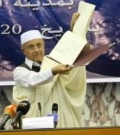
Nouri Abusahmain is a prominent Libyan political figure best known for his tenure as the President of the General National Congress (GNC), Libya's legislative authority in the turbulent years following the 2011 revolution that ousted Muammar Gaddafi. Serving from June 2013 to August 2014, Nouri Abusahmain presided over one of the most challenging periods in modern Libyan history, navigating deep political fractures, militia violence, and the nation's fraught transition to democracy. His leadership, often aligned with Islamist-leaning blocs within the congress, placed him at the heart of Libya's power struggles. As the Ex-GNC President, his term was marked by significant events, including the controversial "Libyan Dawn" operation and the eventual dissolution of the GNC itself. Understanding the role of Nouri Abusahmain is essential to comprehending the complexities of Libya's Politics & Government landscape in the post-Gaddafi era.
Early Life and Education: Formative Years in Libya
Nouri Abusahmain was born in 1956 in the city of Zuwara, a coastal Amazigh (Berber) community in northwestern Libya. Growing up in a nation under the nascent rule of King Idris and later the authoritarian regime of Muammar Gaddafi, Abusahmain's early life was shaped by the cultural and political dynamics of a country rich in resources but tightly controlled. Details about his immediate family and childhood are relatively scarce in public records, a common theme for many Libyan figures who rose to prominence after the 2011 uprising.
His academic and professional path before politics was rooted in law and human rights. Nouri Abusahmain pursued higher education, earning a law degree, which laid the foundation for his future career. He established himself as a human rights lawyer, a profession that inherently positioned him in opposition to the Gaddafi regime's frequent abuses. This background in legal advocacy provided him with a framework for understanding governance, justice, and the rule of law—concepts that would become central to Libya's transition. His experiences as a lawyer defending individuals against state power undoubtedly influenced his political perspectives and his approach to legislative leadership during a period when establishing a functional legal state was Libya's paramount challenge.
Career and Major Achievements: Steering Libya's Post-Revolution Congress
Following the fall of Tripoli in 2011 and the death of Gaddafi, Libya embarked on a difficult path to build new state institutions. The General National Congress (GNC) was elected in July 2012 as an interim parliamentary body tasked with drafting a new constitution and guiding the country to elections. Nouri Abusahmain emerged as a significant figure within this body, representing the Zuwara district.
Election to the GNC Presidency
In a pivotal moment on June 25, 2013, Nouri Abusahmain was elected President of the GNC, succeeding Mohammed Magariaf. His election was seen as a victory for the Islamist-leaning bloc in the congress, including parties like the Justice and Construction Party (the political arm of the Muslim Brotherhood in Libya) and independents sympathetic to their cause. He secured 96 votes against his opponent's 80, indicating the deeply divided nature of the assembly from the outset of his presidency.
Navigating Political and Military Crises
Abusahmain's tenure was immediately engulfed by crisis. The summer of 2013 saw widespread protests and blockades of oil facilities, crippling the nation's economy. Security deteriorated rapidly, with powerful militias operating with impunity. A major test came in May 2014, when renegade General Khalifa Haftar launched "Operation Dignity," a military campaign against Islamist militias in Benghazi, which he labeled as terrorists. This action further polarized the country.
The most defining event under his leadership was the June 2014 election for the House of Representatives (HoR), intended to replace the GNC. The election results were disputed, with low turnout and accusations of illegitimacy, particularly from Islamist factions who fared poorly. When the new HoR convened in the eastern city of Tobruk for security reasons, the outgoing GNC, under Nouri Abusahmain, refused to disband. Backed by a coalition of militias known as "Libyan Dawn," which had taken control of Tripoli, the GNC reconvened in the capital and appointed a "national salvation" government, creating two rival parliaments and administrations. This formalized the political and geographical split between Tripolitania in the west and Cyrenaica in the east that would plague Libya for years.
End of Term and the Skhirat Agreement
By August 2014, with the country in a state of civil war, Nouri Abusahmain's term as GNC president effectively ended as the body was superseded by the newly reconvened old congress. He continued to be a symbolic figure for the Tripoli-based faction. However, following UN-led peace talks, the Libyan Political Agreement was signed in Skhirat, Morocco, in December 2015. This agreement created the Presidency Council and the Government of National Accord (GNA), intended to unify the rival institutions. As part of this deal, the GNC and the HoR were meant to be replaced, formally ending Abusahmain's official role in the legislature. His legacy is intrinsically tied to this period of dual authority and legislative conflict.
Personal Life, Legacy, and Lasting Impact
Unlike many high-profile politicians, Nouri Abusahmain has maintained a notably private personal life. There is little public information about his family, spouse, or children. His public image was consistently that of a reserved, legally-minded figure, often seen in traditional Libyan attire and a distinctive black turban. His interests, as inferred from his career, appear centered on legal frameworks, constitutional processes, and the political empowerment of his Amazigh community and Islamist political currents.
The legacy of Nouri Abusahmain is complex and contested. Supporters view him as a steadfast leader who defended the legitimacy of an elected body against what they perceived as an attempted coup by forces aligned with the old regime. They credit him with upholding a political vision for Libya that included a broad spectrum of factions. Critics, however, hold him partly responsible for the country's collapse into civil war in 2014, arguing that his alliance with "Libyan Dawn" militias to maintain power in Tripoli entrenched the division of the state and empowered armed groups over democratic process.
Historically, his presidency symbolizes the failure of Libya's first post-Gaddafi legislative body to peacefully transfer power and establish a monopoly on the use of force. The events of 2014 set a precedent for militia influence in politics that continues to challenge Libyan stability. As an Ex-GNC President, Abusahmain remains a key reference point for understanding how ideological and regional rivalries within the Politics & Government sphere derailed Libya's transition.
Net Worth and Business Ventures
There is no verifiable or publicly disclosed information regarding the personal net worth or private business ventures of Nouri Abusahmain. His professional life before 2011 was dedicated to human rights law, a field not typically associated with significant personal wealth accumulation, especially within the constraints of Gaddafi's Libya. Unlike some Libyan politicians and officials alleged to have profited from state resources or conflict, Abusahmain has not been the subject of prominent international investigations or reports concerning illicit wealth.
His period in high office was during a time of state collapse and economic crisis, with oil revenues plummeting due to blockades. It is therefore widely assumed that his financial status is not comparable to that of long-serving officials in oil-rich stable states. Any assessment of his finances remains speculative, as the primary focus on Nouri Abusahmain has always been his political role and decisions rather than his personal wealth. His influence is measured in political, not financial, capital within the fractured landscape of Libyan power.
Frequently Asked Questions
What is Nouri Abusahmain's estimated net worth?
Nouri Abusahmain has an estimated net worth of R 161.9 Million.
What is Nouri Abusahmain's role and nationality?
Nouri Abusahmain is a Ex-GNC President from Libya.
How did Nouri Abusahmain make their money?
Nouri Abusahmain built their fortune primarily through As a former political leader in Libya with no known major business holdings or inclusion on billionaire lists, his wealth is estimated based on his political role and typical assets in the region..
How old is Nouri Abusahmain?
Nouri Abusahmain was born in 1956 (70 years old).
Which category is Nouri Abusahmain listed under?
Nouri Abusahmain is featured under the Politics & Government category on NetWorth Africa.
How is Nouri Abusahmain's net worth calculated?
NetWorth Africa estimates financial valuations using publicly available stock equity holdings, company ownership records, real estate assets, and verified market data.
Net Worth Analysis
As a former political leader in Libya with no known major business holdings or inclusion on billionaire lists, his wealth is estimated based on his political role and typical assets in the region.
Quick Stats

Related People

Aaron Motsoaledi
LP; Minister of Home Affairs • South Africa

Abane Ramdane†
FLN Leader & Strategist • Algeria

Abdalla Hamdok
Ex-Prime Minister • Sudan

Abdallah Kigoda
Ex-Minister of Natural Resources • Tanzania