Financial Breakdown
Asset Distribution
Assets vs Liabilities
Assets
Liabilities
Disclaimer: These financial estimates are based on publicly available information and should be considered approximate. Last updated: 12/31/2025
Biography
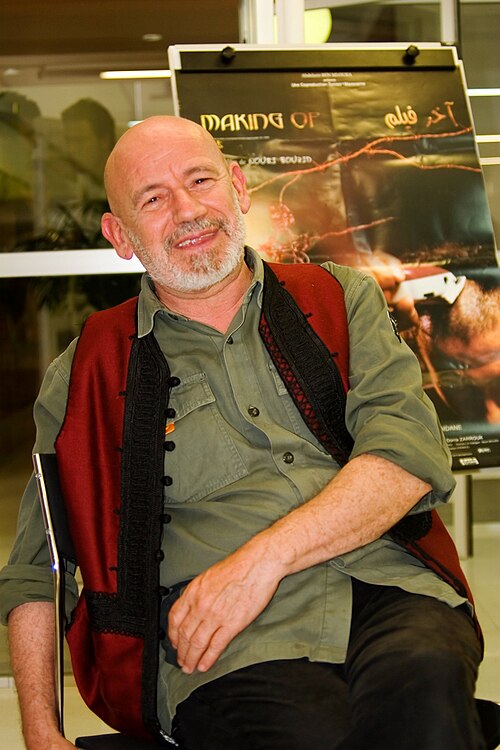
In the landscape of global Arts & Culture, few figures have shaped the voice of a region's cinema as profoundly as Nouri Bouzid. Born in 1945 in Sfax, Tunisia, Bouzid has carved an indelible legacy as a fearless Director & Screenwriter, whose works dared to confront the most pressing and often taboo social and political issues of the Arab world. Emerging in the 1980s, his films marked a radical departure, introducing a new wave of cinematic realism and psychological depth that challenged both colonial narratives and post-independence disillusionment. Often cited as the father of the "New Arab Cinema," Nouri Bouzid's influence extends far beyond his filmography; he is a mentor, a political prisoner turned artist, and a critical intellectual whose narratives on identity, sexuality, and freedom have inspired generations of filmmakers across the Maghreb and the Middle East. His 1986 debut, Man of Ashes, remains a landmark achievement, boldly setting the tone for a career dedicated to artistic courage and uncompromising vision.
Early Life & Education: Forging a Rebel's Perspective
The formative years of Nouri Bouzid were instrumental in shaping the rebellious and introspective nature of his future films. Growing up in a Tunisia under French colonial rule, he witnessed the tumultuous transition to independence in 1956. His passion for storytelling was ignited early, not in cinema halls, but through the traditional Arabic shadow theatre and the vibrant oral culture of his surroundings. However, his path to becoming a Director & Screenwriter was neither straightforward nor easy.
Academic Pursuits and Political Awakening
In the 1960s, Bouzid pursued studies in Paris at the prestigious Institut des hautes études cinématographiques (IDHEC), immersing himself in the theoretical and practical foundations of filmmaking. This period exposed him to European cinematic movements, but more importantly, it coincided with a era of global political fervor. He became deeply involved with the Tunisian radical left and the Palestinian cause, ideologies that would later permeate his work. Upon returning to Tunisia, his political activities led to his arrest in the early 1970s. Nouri Bouzid endured five and a half years of imprisonment (1973-1979) under the Bourguiba regime—a harrowing experience that became a crucible for his artistic identity. During his incarceration, he reportedly conceived stories and scripts, transforming his suffering into a wellspring for future narratives about oppression, resistance, and the human spirit.
Career & Major Achievements: Architect of a New Cinema
Following his release from prison, Nouri Bouzid channeled his experiences directly into his art, embarking on a career that would redefine Tunisia's cinematic language. He began by writing screenplays for other directors, including the notable The Ambassadors (1977) by Naceur Ktari. But it was his own directorial debut that announced a seismic shift.
Landmark Debut and Defining Themes
In 1986, Rih essed (Man of Ashes) premiered, sending shockwaves through the Arab film community. The film bravely tackled the subjects of male homosexuality, childhood trauma, and patriarchal authority—themes virtually unheard of in mainstream Arab cinema at the time. Its unflinching realism and complex character studies established Bouzid's signature style: a focus on fractured individuals struggling against societal constraints. This was followed by a series of critically acclaimed films that solidified his reputation:
- Golden Horseshoes (1989): Explored the disillusionment of a former political prisoner, mirroring Bouzid's own life, and his difficult reintegration into a society he no longer recognized.
- Bezness (1992): A provocative examination of sex tourism and economic exploitation in Tunisia, questioning moral hypocrisy and the commodification of the body.
- The Silence of the Palace (1994) (Screenwriter): Though directed by Moufida Tlatli, this seminal film, for which Bouzid wrote the screenplay, is a cornerstone of his legacy. It gave a powerful voice to women's oppression and resilience in the pre-independence era.
- Bent Familia (1997) & Clay Dolls (2002): Continued his exploration of gender dynamics, sexuality, and the search for personal freedom in a conservative society.
Impact and Recognition
The work of Nouri Bouzid did more than win awards at international festivals like Cannes and Venice. It fundamentally expanded the possibilities of storytelling in Arab cinema. He moved away from folkloric or purely political allegory, introducing nuanced psychological portraits and a modernist narrative fragmentation. His influence is evident in the works of subsequent renowned directors from the region. Furthermore, he contributed to the institutional growth of film in Tunisia, mentoring young talents and participating in initiatives to develop the industry. His career is a testament to the power of cinema as a tool for critical social introspection within the realm of Arts & Culture.
Personal Life, Legacy, and Lasting Impact
Outside of his direct filmmaking, Nouri Bouzid is known as an intellectual and a teacher. He has been involved in film education, sharing his knowledge and rigorous approach to craft with aspiring filmmakers. His personal life, particularly his time as a political prisoner, remains a shadow that informs the gravity and authenticity of his themes. He is a figure who embodies the struggle for artistic freedom, having faced censorship and controversy throughout his career, yet never yielding his critical perspective.
The legacy of Nouri Bouzid is multifaceted. He is, first and foremost, a foundational pillar of contemporary Maghrebi cinema. He broke taboos and gave cinematic form to the intimate conflicts of identity, desire, and political despair. By centering the marginalized—the ex-prisoner, the prostitute, the traumatized child, the silenced woman—he performed a radical act of cultural representation. His films serve as essential historical and social documents of late 20th-century Tunisia, capturing the tensions between tradition and modernity, individual and collective. Today, as new generations of Arab filmmakers continue to push boundaries, they walk on a path significantly cleared by the courage and artistry of Nouri Bouzid. His body of work ensures his place not just as a great Tunisian Director & Screenwriter, but as a towering figure in world cinema.
Net Worth & Business Ventures
As is common with many revered auteurs in world cinema, particularly those working within the often financially constrained independent and national film industries of the Arab world, the precise net worth of Nouri Bouzid is not publicly disclosed. His career has been built primarily within the sphere of artistic and cultural production rather than commercial blockbuster filmmaking. His films, while critically acclaimed and influential, operate within the economy of film festivals, state-funded initiatives (like the Tunisian Ministry of Culture), and international co-productions common in European and Arab cinema.
His "business," so to speak, is his art and his intellectual capital. Nouri Bouzid's primary ventures beyond directing have been in screenwriting for other filmmakers and engaging in film education and mentorship. Any financial success is intrinsically linked to the cultural value and grants associated with his projects, rather than traditional box-office revenue. Therefore, while not a commercial magnate, his wealth is measured in his immense cultural capital—his enduring influence on Arts & Culture, his role in shaping Tunisia's cinematic heritage, and the profound respect he commands within global film circles. His true value lies in the legacy of groundbreaking work that continues to inspire and challenge audiences and creators worldwide.
Sources and further reading on Nouri Bouzid's life and work can be found through academic film journals, profiles from international film festivals like the Cannes Film Festival, and institutions dedicated to Arab cinema such as the Institut du Monde Arabe.
Frequently Asked Questions
What is Nouri Bouzid's estimated net worth?
Nouri Bouzid has an estimated net worth of $1.0 Million.
What is Nouri Bouzid's role and nationality?
Nouri Bouzid is a Director & Screenwriter from Tunisia.
How did Nouri Bouzid make their money?
Nouri Bouzid built their fortune primarily through As a celebrated but non-commercial film director and screenwriter from Tunisia, his wealth is derived from artistic work, not business ventures, and he is not on any billionaire list..
How old is Nouri Bouzid?
Nouri Bouzid was born in 1945 (81 years old).
Which category is Nouri Bouzid listed under?
Nouri Bouzid is featured under the Arts & Culture category on NetWorth Africa.
How is Nouri Bouzid's net worth calculated?
NetWorth Africa estimates financial valuations using publicly available stock equity holdings, company ownership records, real estate assets, and verified market data.
Net Worth Analysis
As a celebrated but non-commercial film director and screenwriter from Tunisia, his wealth is derived from artistic work, not business ventures, and he is not on any billionaire list.
Quick Stats
Related People
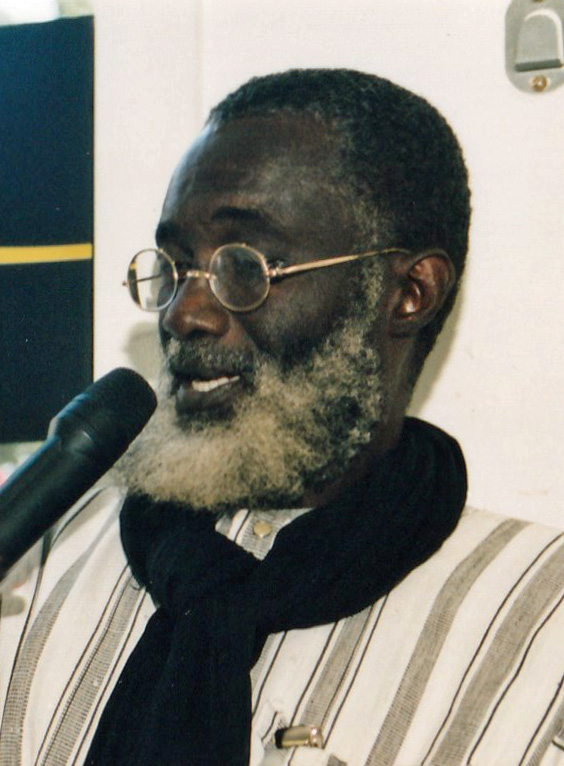
Abasse Ndione
Novelist & Playwright • Senegal
Abdel Rahman al-Abnudi†
Poet (Egypt-Sudan) • Sudan
Abdelkrim Ghallab†
Novelist & Journalist • Morocco
Abdellah Taïa
Novelist & Filmmaker • Morocco