Financial Breakdown
Asset Distribution
Assets vs Liabilities
Assets
Disclaimer: These financial estimates are based on publicly available information and should be considered approximate. Last updated: 12/31/2025
Biography
Introduction: The Conscience of a Nation
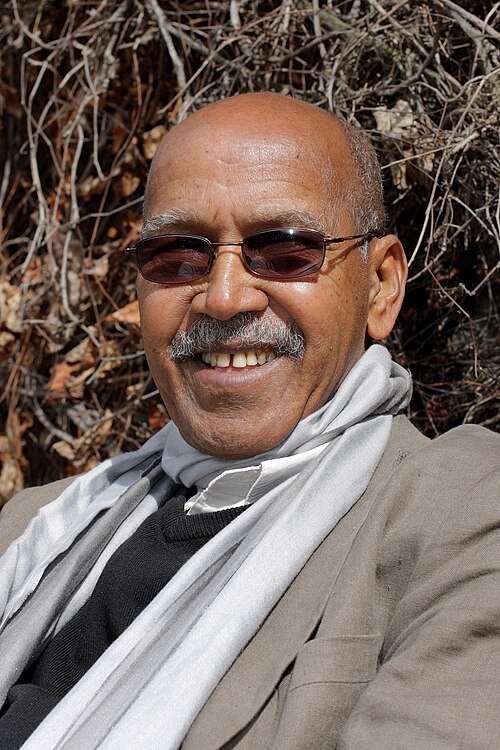
Nuruddin Farah stands as one of the most significant and eloquent literary figures to emerge from the African continent. A Somali novelist, playwright, and essayist, his name is synonymous with profound storytelling that captures the complex socio-political landscape of his homeland. Born in 1945 in Baidoa, Somalia, Farah has dedicated his life and work to exploring themes of dictatorship, exile, family, gender, and the shattered post-colonial state. His international acclaim was cemented in 1998 when he was awarded the prestigious Neustadt International Prize for Literature, often regarded as a precursor to the Nobel. Often described as the "conscience of Somalia," Nuruddin Farah's novels serve as a powerful, enduring chronicle of a nation's trauma and resilience, making him an indispensable figure in world Arts & Culture.
Early Life & Education: Formative Years in a Changing Somalia
Nuruddin Farah's early life was shaped by the linguistic and cultural diversity of the Horn of Africa. He was born in what was then Italian Somaliland and grew up in the Ogaden region of Ethiopia, which fostered his multilingual abilities in Somali, Amharic, and English. His father was a merchant and his mother an oral poet, from whom he likely inherited a deep appreciation for narrative and language. The family moved to Mogadishu in the early 1960s, a period of burgeoning Somali nationalism and independence.
Farah's education began in local schools, followed by studies at the University of Punjab in Chandigarh, India, where he earned a degree in philosophy and literature. This period abroad was transformative, exposing him to a wider world of ideas and solidifying his path as a writer. Returning to Somalia in the early 1970s, he taught at the university level. However, his literary career was launched under a shadow. His first novel, "From a Crooked Rib" (1970), a groundbreaking work about the subjugation of women in Somali society, was published just as the military regime of Siad Barre was tightening its grip on power. His second novel, "A Naked Needle" (1976), critiqued the regime more directly, forcing Farah into a life of exile that would last for over two decades.
Career & Major Achievements: A Trilogy of Exile and Acclaim
Nuruddin Farah's career is defined by his monumental novel sequences, written from exile across continents—including Nigeria, The Gambia, Sudan, India, the United States, Germany, and South Africa. His magnum opus is often considered the "Variations on the Theme of an African Dictatorship" trilogy, comprising Sweet and Sour Milk (1979), Sardines (1981), and Close Sesame (1983). This powerful series dissects the psychological and social impacts of tyrannical rule, establishing his reputation as a fearless critic of authoritarianism.
The "Blood in the Sun" Trilogy and International Recognition
In the 1990s, as Somalia descended into civil war, Farah responded with another acclaimed trilogy, "Blood in the Sun." This series, including Maps (1986), Gifts (1992), and Secrets (1998), delves into themes of identity, dislocation, and the personal costs of national collapse. Maps, in particular, is celebrated for its innovative narrative structure exploring the Ogaden conflict. It was during this period that the literary world formally recognized his genius. In 1998, he was awarded the Neustadt International Prize for Literature, a jury-based award often called the "American Nobel." The prize citation hailed him as a writer "who has, despite great obstacles, continued to be the voice and the conscience of a people."
Sustained Literary Output and Global Impact
Farah's productivity has remained remarkable into the 21st century. His later novels, including Links (2003), Knots (2007), Crossbones (2011), and North of Dawn (2018), continue to grapple with the aftermath of war, piracy, religious extremism, and the enduring experience of diaspora. His work has been translated into over twenty languages, bringing the Somali experience to a global audience. His influence extends beyond the page; he is a frequent speaker and essayist on issues of freedom, migration, and the role of the writer in society. Key achievements include:
- Winner of the Neustadt International Prize for Literature (1998).
- Recipient of the Kurt Tucholsky Prize (1991) for persecuted writers.
- Finalist for the Man Booker International Prize (2011) for his body of work.
- Awarded the Premio Cavour in Italy for Links.
- His novels are studied in universities worldwide as essential postcolonial and world literature texts.
Personal Life & Legacy: The Writer in Exile
Nuruddin Farah's personal life is inextricably linked to his status as a permanent exile. He has lived in numerous countries, a reality reflected in the transnational perspectives of his characters. He has been married multiple times and has children. Despite decades away, Somalia remains the central character in all his work. He has described writing as an act of "trespassing" into forbidden territories, a way to reclaim and reimagine his homeland from afar. Farah is known for his intellectual rigor, quiet demeanor, and unwavering commitment to humanist principles.
His legacy is multifaceted. Within Literature, he is credited with virtually creating the modern Somali novel in English, giving narrative form to a nation's agony and beauty. For Somalia, he has preserved a cultural memory and provided critical commentary during its darkest hours. Globally, he stands as a testament to the power of literature to confront injustice, bridge cultural divides, and affirm human dignity. As a Neustadt Prize Winner, he occupies a place among the most respected literary voices of our time, ensuring that the story of Somalia is heard on the world stage.
Net Worth & Literary Career
While specific details of Nuruddin Farah's net worth are private, as is typical for literary figures, his financial success stems primarily from his prolific writing career. Income sources include:
- Book Royalties & Advances: As a globally published author with a significant backlist of acclaimed novels, royalties from worldwide sales and translations form a core part of his earnings.
- Literary Prizes: Awards like the Neustadt Prize (which includes a $50,000 award) and others have provided substantial financial recognition and support for his work.
- Academic Positions: Farah has held various fellowships and teaching positions at universities worldwide, including in the U.S., South Africa, and Germany, contributing to his income.
- Speaking Engagements & Contributions: As a distinguished intellectual, he is a sought-after speaker at literary festivals, conferences, and academic institutions.
For further reading on Nuruddin Farah's work and accolades, reputable sources include the Neustadt Prize website, profiles from literary organizations like PEN America, and academic databases covering African literature.
Frequently Asked Questions
What is Nuruddin Farah's estimated net worth?
Nuruddin Farah has an estimated net worth of $2.0 Million.
What is Nuruddin Farah's role and nationality?
Nuruddin Farah is a Novelist & Neustadt Prize Winner from Somalia.
How did Nuruddin Farah make their money?
Nuruddin Farah built their fortune primarily through As a celebrated but not commercially blockbuster literary novelist, his wealth is derived from book sales, prizes, and academic positions, not business ventures, placing him in the millionaire range..
How old is Nuruddin Farah?
Nuruddin Farah was born in 1945 (81 years old).
Which category is Nuruddin Farah listed under?
Nuruddin Farah is featured under the Arts & Culture category on NetWorth Africa.
How is Nuruddin Farah's net worth calculated?
NetWorth Africa estimates financial valuations using publicly available stock equity holdings, company ownership records, real estate assets, and verified market data.
Net Worth Analysis
As a celebrated but not commercially blockbuster literary novelist, his wealth is derived from book sales, prizes, and academic positions, not business ventures, placing him in the millionaire range.
Quick Stats

Related People
Abasse Ndione
Novelist & Playwright • Senegal
Abdel Rahman al-Abnudi†
Poet (Egypt-Sudan) • Sudan
Abdelkrim Ghallab†
Novelist & Journalist • Morocco
Abdellah Taïa
Novelist & Filmmaker • Morocco