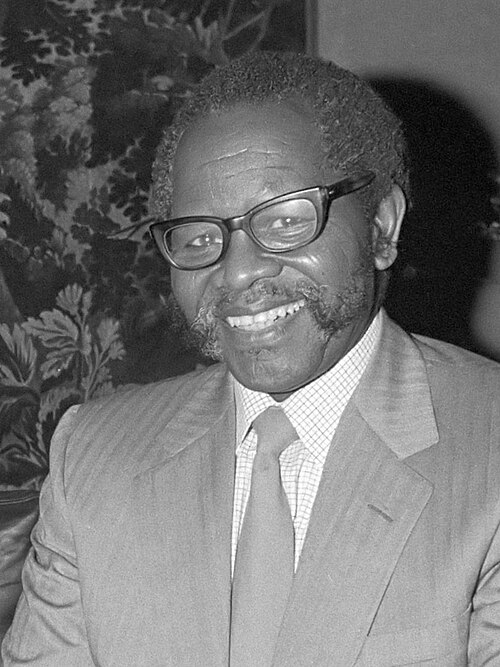
Biography
Introduction: The Architect of International Resistance
Oliver Tambo† stands as one of the most pivotal figures in the struggle against apartheid in South Africa. As the Ex-ANC President in Exile for over three decades, he was the international face and strategic leader of the liberation movement while the organization was banned within its own country. His key achievement was single-handedly rebuilding and sustaining the African National Congress (ANC) from abroad, transforming it from a beleaguered liberation movement into a globally recognized government-in-waiting. Tambo's unparalleled diplomatic skill mobilized international sanctions against the apartheid regime, cultivated a generation of activists, and maintained the moral and organizational coherence of the ANC. His leadership, marked by intellectual rigor, unwavering principle, and profound humility, ensured the survival of the struggle and paved the way for the eventual negotiation of South Africa's freedom.
Early Life & Education: Forging a Foundation
Oliver Reginald Tambo was born on October 27, 1917, in the rural village of Nkantolo in the Bizana district of the Eastern Cape, then part of the Transkei. Hailing from a modest peasant family that valued education, his early life was steeped in the traditions of the amaMpondo people and the Methodist Christian faith, both of which deeply influenced his values of community service and moral integrity. A brilliant student, he won a scholarship to the prestigious St. Peter's Secondary School in Johannesburg, a mission school that produced many future black leaders.
In 1938, he enrolled at the University of Fort Hare, the premier institution for black Southern Africans. Here, his political consciousness was ignited. He co-founded the ANC Youth League in 1944 alongside Nelson Mandela and Walter Sisulu, advocating for a more militant and mass-based approach to replace the ANC's older, petitionary tactics. Tambo graduated with a Bachelor of Science degree in 1941 and, after a brief teaching stint, pursued law. In 1952, he and Mandela established South Africa's first black-owned law practice, Mandela and Tambo, in Johannesburg, which provided affordable legal aid to victims of apartheid laws and became a hub of resistance activity.
Career & Major Achievements: Leading the Struggle from Afar
Oliver Tambo's rise within the ANC was rapid. He served as Secretary-General and later as Deputy President. However, his most defining role began in 1960. In the aftermath of the Sharpeville Massacre, the ANC was banned. The organization's leadership made the critical decision to send Oliver Tambo† abroad to establish an external mission and mobilize international opposition to apartheid. This marked the beginning of his unprecedented tenure as the Ex-ANC President in Exile.
Rebuilding the ANC in Exile
From his base first in London and then across Africa, Tambo undertook the monumental task of rebuilding the shattered organization. His achievements in this role were multifaceted:
- International Diplomacy: He tirelessly traversed the globe, addressing the United Nations, meeting with world leaders, and lobbying for comprehensive economic, cultural, and sports sanctions against the apartheid state. He was instrumental in getting the UN to recognize apartheid as a "crime against humanity."
- Military & Organizational Structure: As President of the ANC (from 1969) and of the Revolutionary Council, he oversaw the development of Umkhonto we Sizwe (MK), the ANC's armed wing, while always emphasizing that armed struggle was a necessity forced upon them, not a preference.
- Education & Nurturing Leadership: He established ANC schools and camps in sympathetic countries to educate thousands of exiled South African youth, ensuring the movement retained its intellectual and moral core. Figures like Thabo Mbeki were groomed under his guidance.
- Unifying the Movement: Tambo skillfully managed alliances with the South African Communist Party (SACP) and maintained relationships with a diverse international community, from socialist bloc nations to Western democracies, all while keeping the ANC's broad church philosophy intact.
The Strategic Visionary
Tambo's leadership was not merely about survival; it was strategic and forward-looking. In 1985, he delivered the iconic "Kabwe Conference" address in Zambia, which outlined the path forward, including the potential for negotiation when conditions were right. He famously stated the aim was "to make South Africa ungovernable and apartheid unworkable." His 1987 document, "Constitutional Guidelines for a Democratic South Africa," provided a clear vision for a non-racial, united, and democratic future, forming the bedrock of the country's eventual 1996 Constitution. After the unbanning of the ANC in 1990, he returned home to a hero's welcome and was elected National Chairperson of the ANC, playing a crucial role in the transition until his retirement due to ill health.
Personal Life & Legacy: The Moral Compass
Despite the immense pressures of exile, Oliver Tambo† was known for his gentle demeanor, sharp intellect, and deep personal integrity. He was a devoted family man, married to Adelaide Tambo, a formidable activist in her own right. Their partnership was a cornerstone of his strength during the long, difficult years of separation from home. His personal interests included music, theology, and a deep love for his culture, which he saw as a source of resilience.
Oliver Tambo's legacy is profound and enduring. He is remembered as the ANC leader who held the movement together through its darkest hours. His legacy includes:
- The International Isolation of Apartheid: His diplomatic crusade made apartheid a global pariah.
- A Culture of Inclusive Leadership: He modeled a leadership style based on consultation, intellectual debate, and collective decision-making.
- The Foundation for Democracy: His constitutional thinking directly shaped post-apartheid South Africa.
His passing on April 24, 1993, just as South Africa stood on the brink of democracy, was a profound loss. Nelson Mandela called him "the greatest hero of our people." Today, South Africa's international airport, numerous institutions, and awards bear his name, cementing his status as a founding father of the nation.
Net Worth & Business: A Life of Sacrifice
Discussing Oliver Tambo† in terms of personal net worth or business ventures is antithetical to the story of his life. He epitomized a life of sacrifice for a political cause. His early legal practice with Mandela was not a path to wealth but a tool for resistance and community service, often providing pro bono work. During his 30 years in exile, he and his family lived modestly on stipends provided by the ANC and the support of host nations and movements. He accumulated no personal fortune; his "wealth" was the respect and loyalty he commanded globally and the freedom of his people. Any financial considerations were always directed towards funding the movement's operations, educational programs, and diplomatic missions. His legacy is one of principled commitment, demonstrating that his value and impact were measured in political and moral capital, not financial assets.
Sources: The Oliver Tambo Foundation; African National Congress historical documents; Mandela, N. "Long Walk to Freedom"; SA History Online.
Frequently Asked Questions
What is Oliver Tambo†'s estimated net worth?
Net worth details for Oliver Tambo† are currently being updated.
What is Oliver Tambo†'s role and nationality?
Oliver Tambo† is a EC; Ex-ANC President in Exile; M from South Africa.
How did Oliver Tambo† make their money?
Oliver Tambo† built their fortune primarily through Oliver Tambo was a political leader and activist, not a businessperson, and he passed away in 1993. His wealth was not significant and his legacy is political, not financial..
How old is Oliver Tambo†?
Oliver Tambo† was born in 1917 (109 years old).
Which category is Oliver Tambo† listed under?
Oliver Tambo† is featured under the Politics & Government category on NetWorth Africa.
How is Oliver Tambo†'s net worth calculated?
NetWorth Africa estimates financial valuations using publicly available stock equity holdings, company ownership records, real estate assets, and verified market data.
Net Worth Analysis
Oliver Tambo was a political leader and activist, not a businessperson, and he passed away in 1993. His wealth was not significant and his legacy is political, not financial.
Quick Stats
Related People
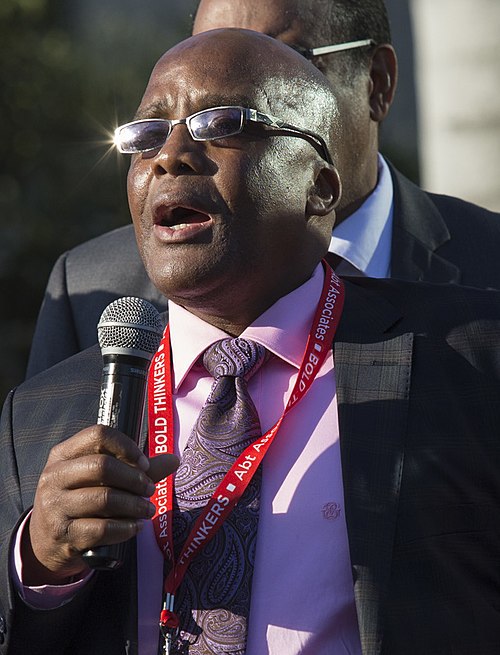
Aaron Motsoaledi
LP; Minister of Home Affairs • South Africa
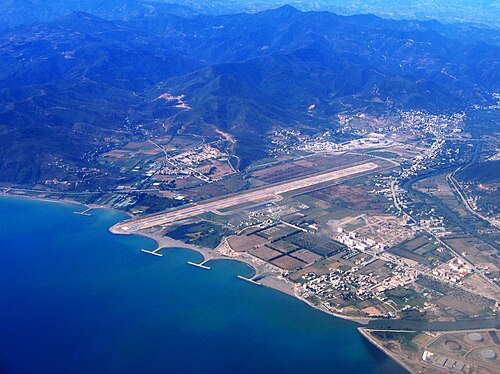
Abane Ramdane†
FLN Leader & Strategist • Algeria
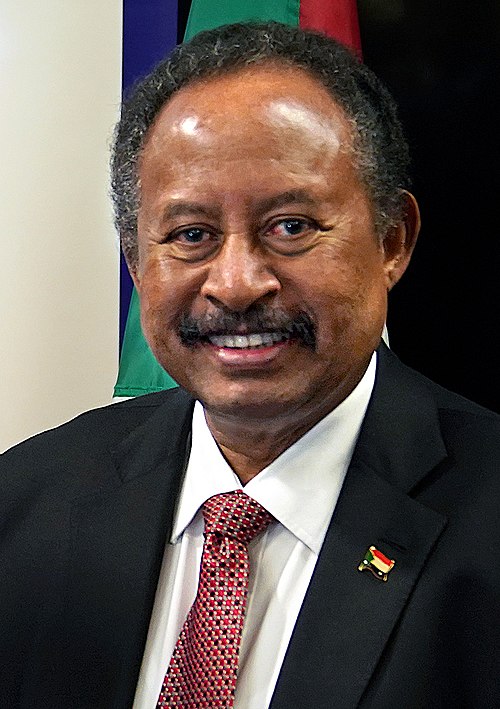
Abdalla Hamdok
Ex-Prime Minister • Sudan
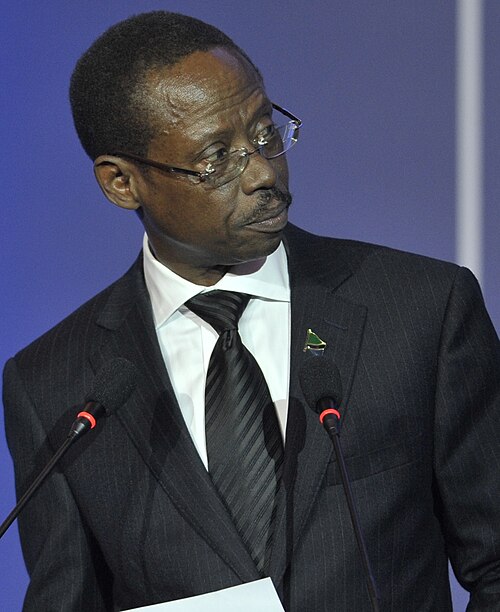
Abdallah Kigoda
Ex-Minister of Natural Resources • Tanzania