$900M
Estimated Net Worth
As of 2024 • low confidence
Financial Breakdown
Asset Distribution
Assets vs Liabilities
Assets
Liabilities
Disclaimer: These financial estimates are based on publicly available information and should be considered approximate. Last updated: 12/29/2025
Biography
Introduction: The Authoritarian Leader of Sudan
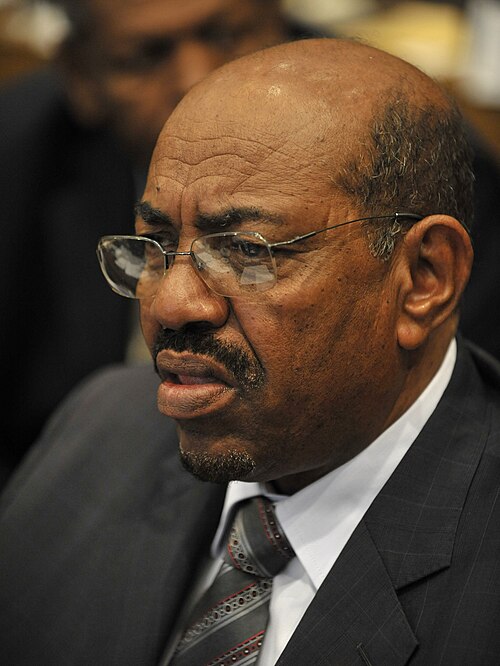
Omar al-Bashir† was a Sudanese military officer and politician who served as the Ex-President of Sudan for three decades, from 1989 until his ousting in 2019. His rule represents one of the longest and most controversial periods in modern Sudanese history. Rising to power through a military coup, Omar al-Bashir† became a dominant figure in the Politics & Government of not only Sudan but also the broader African and Arab worlds. His tenure was defined by the imposition of a hardline Islamist agenda, protracted civil wars, international isolation, and, ultimately, a popular revolution. A key, albeit grim, achievement of his regime was the secession of South Sudan in 2011, which reshaped the map of Africa. This biography explores the life, career, and complex legacy of the man who led Sudan through periods of intense conflict and transformation.
Early Life & Education: The Making of a Soldier
Omar Hassan Ahmad al-Bashir† was born on January 1, 1944, in the small village of Hosh Bannaga, near Shendi, in northern Sudan. He hailed from a humble, agriculturally based family belonging to the Ja'alin tribe, an Arabized Nubian group. His early life was rooted in the rural, conservative Muslim culture of the Nile Valley, an experience that would later influence his political ideology. Seeking a structured career path, the young Omar al-Bashir† chose the military, a common avenue for social mobility in post-colonial Sudan.
He joined the Sudanese Army in 1960. His formal military education was extensive and formative:
- He graduated from the Sudanese Military Academy in Khartoum in 1966.
- He furthered his military studies abroad, attending the Egyptian Military Academy in Cairo.
- He also underwent training at a military college in Jordan.
His formative experiences as a soldier were shaped by combat. He served as a paratrooper and saw action in the 1973 Yom Kippur War alongside Egyptian forces against Israel. Within the Sudanese army, he rose through the ranks during the tumultuous presidency of Gaafar Nimeiry. The political instability and economic decline of the 1980s, coupled with the ongoing civil war in the south, deeply influenced his worldview, fostering a belief in the necessity of a strong, Islamist-oriented military rule to unify and purify the nation.
Career & Major Achievements: Seizure of Power and Decades of Rule
The career of Omar al-Bashir† is inextricably linked to his seizure of power and the subsequent consolidation of authoritarian control. On June 30, 1989, as a brigadier general, he led the "Revolution of National Salvation," a bloodless military coup that overthrew the democratically elected but dysfunctional government of Prime Minister Sadiq al-Mahdi. He immediately abolished the government, suspended the constitution, and declared a state of emergency.
The Early Regime and Islamization
Al-Bashir initially chaired the Revolutionary Command Council for National Salvation. By 1993, he dissolved the council and appointed himself President of the Republic. His rule was from the outset a partnership with the National Islamic Front (NIF), led by the ideologue Hassan al-Turabi. The regime aggressively pursued the Islamization of the state and society, instituting Sharia law nationwide, which intensified the civil war with the predominantly Christian and animist south. This conflict, lasting from 1983 to 2005, resulted in an estimated two million deaths.
International Isolation and the Darfur Genocide
The early 2000s marked a period of profound international crisis for the al-Bashir regime. In 2003, a rebellion erupted in the western region of Darfur. The government's response, employing the Janjaweed militias, was brutal. The resulting humanitarian catastrophe—featuring mass killings, rape, and displacement—led the United States to label it a genocide. In a historic and unprecedented move, the International Criminal Court (ICC) issued arrest warrants for Omar al-Bashir† in 2009 and 2010 on charges of war crimes, crimes against humanity, and genocide. This made him the first sitting head of state to be indicted by the ICC, casting a long shadow over his presidency and deepening Sudan's isolation.
Major Political Milestones
Despite the turmoil, his tenure saw significant political events:
- The Comprehensive Peace Agreement (2005): Ended the North-South civil war and granted Southern Sudan autonomy, leading to a referendum.
- Secession of South Sudan (2011): Following an overwhelming vote for independence, South Sudan became a sovereign state, fundamentally altering Sudan's geography and economy by taking with it the majority of the country's oil reserves.
- Economic Struggles: The loss of oil revenue, combined with longstanding U.S. sanctions and systemic corruption, plunged Sudan into severe economic hardship, characterized by hyperinflation and widespread shortages of basic goods.
Personal Life & Legacy: A Controversial Figure
Personally, Omar al-Bashir† was known for a modest public demeanor, often appearing in military uniform or traditional Sudanese dress. He was married twice; his second wife, Widad Babiker Omer, was a prominent public figure during his presidency. He had no children. His interests were reportedly limited, with a focus on military affairs and political strategy. Unlike some leaders, he was not associated with significant public philanthropy; state-led social projects were often framed within the regime's Islamist ideology.
The legacy of Omar al-Bashir† is one of profound contradiction and tragedy. For his supporters, primarily within the military, security apparatus, and some Islamist circles, he was a strong leader who upheld Islamic values and national sovereignty against Western pressure. For the vast majority of Sudanese and the international community, however, his legacy is defined by authoritarianism, internal conflict, and economic ruin. The Darfur genocide remains a dark stain on his record. His overthrow in April 2019 by the Sudanese military following months of massive, youth-led pro-democracy protests demonstrated the ultimate failure of his rule to meet the aspirations of the Sudanese people. His departure opened a fragile and contested transition toward civilian rule, with the country grappling with the deep-seated political and economic systems he entrenched over 30 years.
Net Worth & Business Ventures
While precise figures are shrouded in secrecy, Omar al-Bashir† and his inner circle were widely accused of amassing significant personal wealth during his decades in power, often at the expense of the Sudanese state. The economic hardship endured by ordinary citizens stood in stark contrast to the opulence alleged within the regime's elite. Following his ouster, Sudanese authorities investigated his finances. In December 2019, a Sudanese court convicted Omar al-Bashir† on charges of corruption and illicit possession of foreign currency, sentencing him to two years in a correctional facility. Prosecutors found large sums of cash, including approximately $130 million in various currencies, in his residence. These funds were alleged to be proceeds from the illicit sale of state resources and foreign aid, highlighting a pattern of systemic corruption that defined his government's relationship with the national economy. His financial dealings remain a subject of ongoing legal scrutiny in Sudan.
Note: This biography is constructed for historical and educational reference. Omar al-Bashir† remains a figure of intense legal and historical debate. For further information on the ICC indictments, refer to the International Criminal Court's case page. For details on Sudan's transition, consult reputable news and historical sources.
Net Worth Analysis
Estimates are unreliable and range widely; he is widely believed to have embezzled billions in state funds, but his personal, traceable assets are not publicly verified at that scale. The figure is a conservative estimate based on reports of seized assets and corruption charges.
Quick Stats
Related People
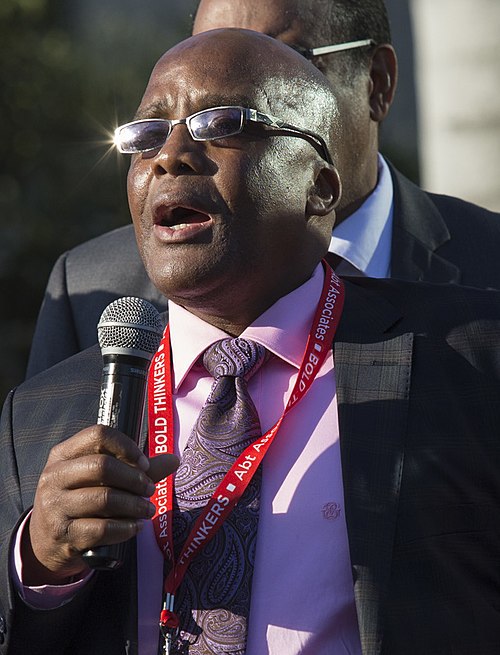
Aaron Motsoaledi
LP; Minister of Home Affairs
Abane Ramdane†
FLN Leader & Strategist
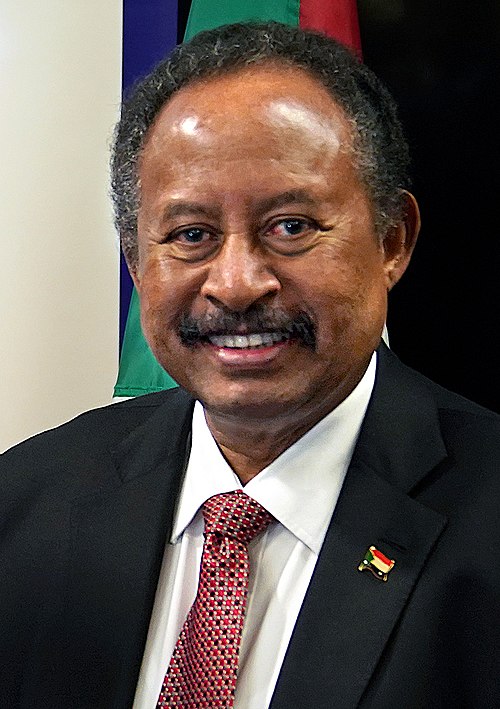
Abdalla Hamdok
Ex-Prime Minister
Abdallah Kigoda
Ex-Minister of Natural Resources