Biography
Introduction: A Revolutionary Figure in Libyan Politics & Government
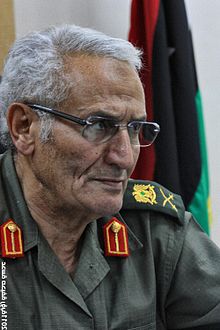
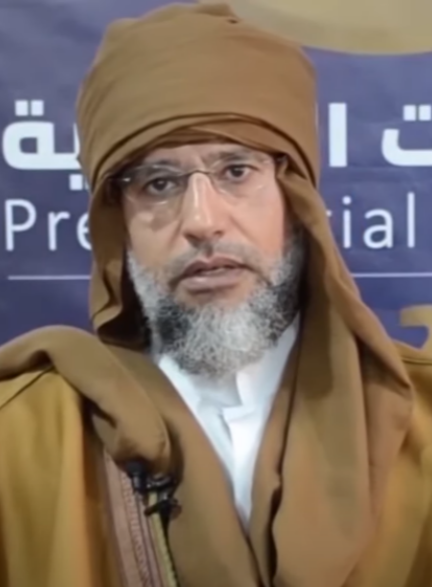
Omar al-Hariri stands as a pivotal figure in modern Libyan history, renowned for his dual role as a military leader and a key political figure during the nation's most turbulent period. Born in 1944, his life's trajectory was irrevocably intertwined with Libya's struggle for liberation and subsequent state-building efforts. He is most notably recognized as the Ex-Defense Minister of the National Transitional Council (NTC), the interim governing body that led Libya during and immediately after the 2011 revolution that overthrew Muammar Gaddafi. His appointment to this critical post in November 2011 was a testament to his revolutionary credentials and the trust placed in him to secure a nascent, fractured nation. The biography of Omar al-Hariri is not just a personal story but a lens through which to understand the challenges of post-revolutionary governance, defense restructuring, and the complex landscape of Libyan Politics & Government.
Early Life & Education: Formative Years in a Kingdom and a Revolution
Omar al-Hariri was born in 1944, during the era of the Kingdom of Libya under King Idris. Details of his early childhood and family background remain relatively private, a common trait for many Libyan officials of his generation. His formative years, however, were shaped by the rising tide of Arab nationalism and anti-colonial sentiment sweeping across North Africa and the Middle East. This political awakening led him to pursue a career in the military, a path chosen by many seeking to influence their nation's destiny.
His professional military education became the cornerstone of his early career. Omar al-Hariri attended the Libyan Military Academy, where he received formal officer training. Demonstrating early promise, he furthered his military education abroad, a privilege often reserved for promising cadets. He studied at the Frunze Military Academy in the Soviet Union (now the Combined Arms Academy of the Armed Forces of the Russian Federation), a prestigious institution that trained numerous foreign officers in advanced Soviet military doctrine and strategy. This education not only honed his tactical and strategic thinking but also exposed him to a global geopolitical perspective, contrasting sharply with the insular rule that would later define Gaddafi's Libya.
The 1969 Coup and Imprisonment
A defining, albeit harrowing, chapter in al-Hariri's early life was his involvement in the 1969 coup d'état led by Muammar Gaddafi. As a young army officer, Omar al-Hariri was among the group of "Free Officers" who overthrew King Idris. However, his alignment with the new regime was short-lived. He soon became disillusioned with Gaddafi's direction and his marginalization of other revolutionary figures. By the early 1970s, al-Hariri was perceived as a threat. He was subsequently arrested and spent a staggering 28 years as a political prisoner in Gaddafi's notorious Abu Salim prison and other detention centers. This prolonged imprisonment forged an unyielding resolve and cemented his status as a symbol of resistance against the Gaddafi dictatorship.
Career & Major Achievements: From Prisoner to Defense Minister
The career of Omar al-Hariri is a stark narrative of resilience, divided into two distinct phases: the long decades of imprisonment and his rapid ascent during the 2011 revolution.
Release and Return to the Forefront
Following international pressure and a process of "reconciliation," Omar al-Hariri was released from prison in the early 2000s. Despite his freedom, he remained under surveillance and was largely excluded from public life. This changed dramatically with the outbreak of the February 17th revolution in 2011. His historic credentials as an original Free Officer and a long-standing political prisoner made him an instantly respected figure among the rebels. The National Transitional Council (NTC), seeking legitimacy and experienced leadership, turned to him.
Leading Libya's Defense in a Critical Transition
In March 2011, the NTC appointed Omar al-Hariri as the head of its Military Council, tasking him with organizing the disparate rebel forces into a cohesive fighting force. His major challenge was unifying various militias, local brigades, and defected army units under a single command structure—a daunting task amid ongoing combat. His most significant political appointment came on November 22, 2011, when the newly formed interim government under Prime Minister Abdurrahim El-Keib named him as the Ex-Defense Minister of Libya. In this role, his primary achievements and challenges included:
- Overseeing Post-Conflict Security: Leading the Ministry in the immediate aftermath of Gaddafi's death, with the country awash with weapons and powerful militias.
- Demobilization and Integration: Initiating early, immensely difficult plans for the demobilization of revolutionary fighters and their integration into a new national army or civilian life.
- Establishing Ministerial Authority: Attempting to build a functional Ministry of Defense that could exert authority over regional and local military powers, a foundational struggle for the Libyan state.
- Navigating International Partnerships: Engaging with foreign governments and NATO to manage the legacy of international intervention and seek support for security sector reform.
His tenure was brief but critically important, setting the initial, albeit fragile, framework for Libya's national defense institutions. The immense difficulty of this task underscored the deep-seated challenges facing Libyan Politics & Government in the transition period.
Personal Life, Legacy, and Lasting Impact
Outside the intense sphere of military and politics, Omar al-Hariri maintained a private personal life. His immense personal sacrifice—losing nearly three decades to imprisonment—defined his public persona as a figure of endurance and principle. Unlike some revolutionary leaders, he was not associated with significant business interests or overt wealth accumulation, which bolstered his image as a dedicated public servant. His personal interests were largely overshadowed by his lifelong commitment to political and military affairs.
The legacy of Omar al-Hariri is complex. He is revered by many as a heroic figure who participated in two revolutionary moments—1969 and 2011—and paid a tremendous personal price. He symbolizes the continuity of Libya's struggle for accountable governance. However, his legacy is also intertwined with the subsequent failures of the post-2011 transition. The security challenges he confronted as Ex-Defense Minister, particularly the integration of militias, remained unresolved and escalated into further conflict, leading to Libya's protracted civil strife. His life story thus serves as a poignant narrative of revolutionary hope, the burdens of leadership in a fractured state, and the enduring difficulties of building stable national institutions in Libya. He passed away on November 14, 2015, in Morocco, leaving behind a contested but undeniably significant chapter in his nation's history.
Net Worth & Business Ventures
There is no publicly available or verified information indicating that Omar al-Hariri accumulated significant personal wealth or engaged in major private business ventures. His professional life was almost entirely dedicated to military service and political roles, first as a junior officer, then as a prisoner for 28 years, and finally as a high-ranking official in a transitional government. His period as Defense Minister was brief and occurred during a time of national crisis and institutional rebuilding, not a period typically associated with personal enrichment from office.
In the context of Libyan Politics & Government, where allegations of corruption and state capture have been rampant both during and after the Gaddafi era, the lack of prominent financial dealings associated with al-Hariri's name has contributed to his reputation as a relatively austere and ideologically motivated figure. His "wealth" was largely perceived as his historical legitimacy and moral authority, derived from his sacrifice and revolutionary role, rather than material assets. Any assessment of his net worth remains speculative and unsubstantiated by credible sources.
References and Further Reading
For those interested in learning more about the context of Omar al-Hariri's life and work, information can be found in reports from international organizations monitoring Libya's transition, historical analyses of the 2011 revolution, and archives from reputable global news agencies covering the appointments of the NTC. Key terms for research include: National Transitional Council Libya, 2011 Libyan Revolution, Libyan Defense Ministry post-Gaddafi, and Free Officers movement.
Frequently Asked Questions
What is Omar al-Hariri's estimated net worth?
Omar al-Hariri has an estimated net worth of $50.0 Million.
What is Omar al-Hariri's role and nationality?
Omar al-Hariri is a Ex-Defense Minister from Libya.
How did Omar al-Hariri make their money?
Omar al-Hariri built their fortune primarily through Omar al-Hariri was a military officer and briefly served as Defense Minister in a transitional government; his wealth is not publicly documented and is likely derived from his political-military career rather than major business holdings..
How old is Omar al-Hariri?
Omar al-Hariri was born in 1944 (82 years old).
Which category is Omar al-Hariri listed under?
Omar al-Hariri is featured under the Politics & Government category on NetWorth Africa.
How is Omar al-Hariri's net worth calculated?
NetWorth Africa estimates financial valuations using publicly available stock equity holdings, company ownership records, real estate assets, and verified market data.
Net Worth Analysis
Omar al-Hariri was a military officer and briefly served as Defense Minister in a transitional government; his wealth is not publicly documented and is likely derived from his political-military career rather than major business holdings.
Quick Stats
Related People
Aaron Motsoaledi
LP; Minister of Home Affairs • South Africa
Abane Ramdane†
FLN Leader & Strategist • Algeria
Abdalla Hamdok
Ex-Prime Minister • Sudan
Abdallah Kigoda
Ex-Minister of Natural Resources • Tanzania