$1B
Estimated Net Worth
As of 2024 • low confidence
Financial Breakdown
Asset Distribution
Assets vs Liabilities
Assets
Disclaimer: These financial estimates are based on publicly available information and should be considered approximate. Last updated: 12/29/2025
Biography
Introduction: The Architect of Modern Gabon
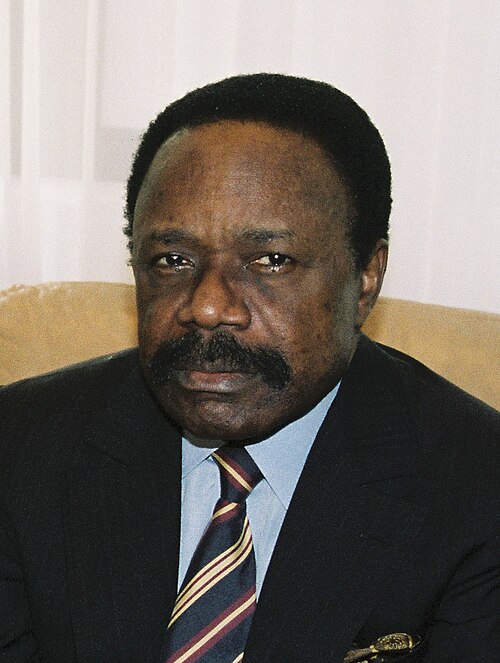
Omar Bongo Ondimba, known to the world as Omar Bongo†, was one of Africa's longest-serving heads of state, ruling the Central African nation of Gabon for an astonishing 42 years, from 1967 until his death in 2009. His tenure places him firmly within the Authoritarian Era of post-colonial African Politics & Government, characterized by a single-party state, vast personal wealth, and a delicate balancing act between Western interests and domestic control. As the Ex-President (1967-2009), Bongo's legacy is a complex tapestry of national stability and economic development woven with threads of political repression, systemic corruption, and a cult of personality. His rule was defined by leveraging Gabon's substantial oil wealth to build infrastructure, maintain a loyal patronage network, and position himself as an indispensable ally to France, the former colonial power.
Early Life & Education: From Humble Beginnings to the Political Stage
Born Albert-Bernard Bongo on December 30, 1935, in Lewai (since renamed Bongoville), in the southeastern province of Haut-Ogooué, Omar Bongo† came from the small Bateke ethnic group. His early life was modest, and he was initially educated in Brazzaville, the capital of the neighboring French Congo. After completing his secondary education, he briefly served in the French Air Force, an experience that broadened his horizons and connected him to the colonial military structure.
Upon returning to Gabon, then on the cusp of independence from France, Bongo entered the civil service. His formative experience in politics began under the nation's first president, Léon M'ba. Bongo's intelligence, loyalty, and administrative skill quickly caught M'ba's attention. He held various posts, including Director of the President's Cabinet and Minister of Information, before becoming Vice-President in 1966. This rapid ascent was crucial; when President Léon M'ba died on November 28, 1967, the 31-year-old Omar Bongo† constitutionally succeeded him, becoming one of the world's youngest heads of state. In 1973, he converted to Islam and changed his name to El Hadj Omar Bongo, a move seen as strengthening ties with the Muslim world and marking a personal transformation.
Career & Major Achievements: The Pillars of a 42-Year Reign
The career of Omar Bongo† is synonymous with the political history of modern Gabon. His rule can be divided into distinct phases, each reinforcing his control and shaping the nation's destiny.
Consolidation of Power and the Single-Party State
In the early years of his presidency, Bongo moved swiftly to eliminate political opposition. In 1968, he established the Gabonese Democratic Party (PDG) as the sole legal political party, formalizing a one-party state. This move centralized power and allowed him to co-opt or suppress potential rivals. The PDG became the engine of a vast patronage system, distributing oil revenues to secure the loyalty of the elite and the civil service. Throughout the Authoritarian Era, Bongo skillfully managed ethnic and regional tensions by including representatives from all major groups in his government, ensuring that no single faction could challenge his authority.
Economic Management and the "Oil Patronage" System
Gabon's economic fortune changed with the oil boom of the 1970s. Omar Bongo† used this windfall to launch ambitious infrastructure projects, including the Trans-Gabon Railway, modernizing the capital Libreville, and building hospitals and schools. This development fostered a perception of progress and stability. However, the economy became overwhelmingly dependent on oil, and vast sums of money were funneled into non-productive sectors and the personal accounts of the ruling clique. Despite the country's upper-middle-income status due to oil, wealth distribution remained highly unequal, with a significant portion of the population living in poverty.
Foreign Policy: The "Friend of France"
A cornerstone of Bongo's strategy was his unwavering alliance with France. He maintained exceptionally close military, economic, and political ties with Paris, a relationship often described as "Françafrique." In return for guaranteeing French access to Gabon's oil and other natural resources (like manganese and uranium), France provided military security and political backing for Bongo's regime. This symbiotic relationship ensured his political survival during times of internal and external pressure. He was also a respected mediator in several African conflicts, leveraging his longevity and connections to play a diplomatic role on the continent.
Managed Democratic Transition
Following the wave of democratization in Africa in the early 1990s, Omar Bongo† faced significant domestic and international pressure for reform. In 1990, he acquiesced to a national conference that ended the one-party system and introduced multi-party politics. However, this transition was carefully managed. He won the subsequent presidential elections in 1993, 1998, and 2005, though these polls were consistently marred by allegations of fraud, voter intimidation, and unfair use of state resources. The opposition was allowed to exist but was never permitted to genuinely threaten his hold on power.
Personal Life, Philanthropy & Legacy
Omar Bongo† was known for his flamboyant lifestyle, with a taste for luxury, fast cars, and expensive suits, which stood in stark contrast to the poverty of many Gabonese. His personal life was extensive; he was married multiple times and had over 30 acknowledged children, creating a vast family network that became deeply entrenched in Gabon's political and business spheres. His second wife, Edith Lucie Bongo, was the daughter of Denis Sassou Nguesso, President of the Republic of the Congo, strengthening a regional alliance.
His philanthropic efforts were often channeled through patronage. He was a major benefactor in his home region and funded various cultural and social projects, but these were typically framed as personal gifts from the president, reinforcing the patron-client relationship at the heart of his rule. The legacy of Omar Bongo† is profoundly dualistic. He is credited with providing Gabon with remarkable political stability for over four decades in a volatile region and overseeing significant modernization. Conversely, his reign institutionalized corruption, stifled genuine democracy, and failed to diversify the economy away from oil, leaving a challenging inheritance. His son, Ali Bongo Ondimba, succeeded him after a controversial election in 2009, continuing the Bongo dynasty until a coup in August 2023.
Net Worth & Business Ventures: The Wealth of a State
The personal wealth of Omar Bongo† was a subject of intense international scrutiny and controversy. As the Ex-President (1967-2009) of an oil-rich nation, he amassed a fortune estimated to be in the hundreds of millions, if not billions, of dollars. Investigations by NGOs and foreign media, such as the "Biens Mal Acquis" (Ill-Gotten Gains) inquiry in France, alleged that he and his family used state funds to acquire dozens of luxurious properties in France, including a mansion on the prestigious Rue de la Baume in Paris. The family also owned a fleet of luxury cars and was reported to have substantial holdings in various sectors. This immense wealth, seemingly disproportionate to his official salary, became the most potent symbol of the systemic corruption and lack of transparency that characterized his Authoritarian Era rule. For many observers, the line between the Gabonese state treasury and the Bongo family's finances was indistinct, defining an era where political power was the primary conduit to immense personal wealth.
For further reading on the political context of his rule, credible sources include the Encyclopædia Britannica and reports from international organizations like Human Rights Watch documenting the era's challenges.
Net Worth Analysis
Estimates of his wealth were highly speculative, with some reports suggesting over $1 billion in assets acquired during his presidency, but no definitive public valuation exists posthumously.
Quick Stats
Related People

Aaron Motsoaledi
LP; Minister of Home Affairs

Abane Ramdane†
FLN Leader & Strategist

Abdalla Hamdok
Ex-Prime Minister

Abdallah Kigoda
Ex-Minister of Natural Resources