Financial Breakdown
Asset Distribution
Assets vs Liabilities
Assets
Disclaimer: These financial estimates are based on publicly available information and should be considered approximate. Last updated: 12/31/2025
Biography
Introduction: The Heartbeat of a Nation
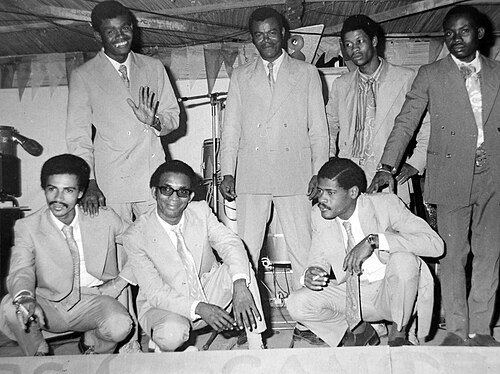
In the vibrant tapestry of Angolan music, few names resonate as profoundly as Os Kiezos. Formed in the 1960s, this iconic ensemble is not merely a band; they are a cultural institution, the very embodiment of Semba, Angola's most influential musical genre. As true Semba Legends (1960s–), their career spans decades of profound social and political change, during which their music provided a soundtrack of resilience, joy, and national identity. Their key achievement lies in their unparalleled ability to craft songs that are both timeless dances and poignant social commentaries, cementing their status as national treasures. The name Os Kiezos itself, derived from the Kimbundu word for "the pillars" or "the columns," perfectly signifies their role as the foundational support upon which modern Angolan popular music was built.
Early Life & Formation: Roots in a Changing Luanda
The story of Os Kiezos is inextricably linked to the neighborhoods of Angola's capital, Luanda, in the early 1960s. Unlike a biography of a single individual, the band's "early life" is a collective narrative of talented youths from areas like Sambizanga and Maianga. The group coalesced around founding members such as the late composer and vocalist Minguito (Sebastião João), whose poetic genius would become the band's hallmark. In an era of colonial rule, music served as a vital form of expression and community. These young artists were immersed in the rich musical traditions of their homeland—the rhythmic complexities of traditional Angolan styles, the melodic flow of Portuguese fado, and the emerging sounds of Congolese rumba.
Their "education" was the streets and the festive kizombas (neighborhood parties). It was here they honed their craft, learning to play guitars, percussion, and bass, blending these influences into a distinct sound. The formative experience for Os Kiezos and their generation was the struggle for independence, which culminated in 1975. Their music, even in these early days, began to capture the hopes and anxieties of a nation on the brink of monumental change. They weren't just forming a Semba Band; they were forging a voice for their people.
Career & Major Achievements: The Soundtrack of Independence and Beyond
The career of Os Kiezos is a journey through Angola's modern history. In the years surrounding independence, their popularity skyrocketed. They became the quintessential Semba Band (1960s–), with a sound characterized by intricate guitar work, a swaying rhythm section, and profoundly lyrical content. Minguito's songwriting was key, often using metaphor and everyday scenes to speak about love, social issues, and the challenges of a new nation.
Iconic Hits and Musical Mastery
Their discography is a treasure trove of classics that remain staples at any Angolan celebration. Songs like "Miúdo" and "Kazukuta" are masterclasses in storytelling and rhythm. Perhaps their most universally adored hit, "Mama," is a heartfelt tribute to mothers that transcends generations. The band's ability to maintain a consistent lineup for long periods contributed to their tight, unmistakable sound. They weren't just recording songs; they were documenting the Angolan experience, making them pivotal figures in the nation's Media & Journalism landscape in a cultural sense, broadcasting the people's narrative through melody and verse.
Resilience and Enduring Influence
Their career was not without challenges. The long civil war that followed independence affected all aspects of life in Angola, including the music scene. Despite this, Os Kiezos persevered, their music offering solace and a sense of normalcy. Their influence is immeasurable; they directly inspired subsequent genres like kizomba and modern Angolan pop. They served as mentors and benchmarks for countless artists who followed. Major achievements include:
- Releasing dozens of albums over a career spanning six decades.
- Performing to packed venues across Angola and the Lusophone world.
- Receiving numerous national awards and honors for their cultural contribution.
- Having their music sampled and covered by international artists, spreading Semba to global audiences.
Personal Life & Legacy: The Men Behind the Music
While Os Kiezos is a collective entity, the personal lives of its key members are woven into their music. Minguito, until his passing, was known as a humble yet sharp observer of society, whose lyrics often reflected the lives of ordinary Luandans. The band members, through their long careers, were seen as men of the people—accessible and deeply connected to their community. Their personal interests were reflected in their art: a love for their city, its traditions, and its stories.
The legacy of Os Kiezos is monumental. They are the guardians of a musical tradition, ensuring that Semba remains relevant and vibrant. Their songs are considered essential cultural heritage, taught to children and danced to by grandparents. They provided a unifying force for the Angolan diaspora worldwide, a sonic touchstone of home. In the realm of Music Heritage, their work is a primary source for understanding post-colonial Angolan society. Their legacy is not frozen in the past; it lives on every time a guitar plays the distinctive Os Kiezos rhythm at a family party or a concert hall, a testament to their eternal status as the foundational pillars of Angolan music.
Net Worth & Cultural Capital
Discussing the net worth of a legendary band like Os Kiezos in purely financial terms misses the broader picture. While successful record sales and performances over 60 years have undoubtedly provided a livelihood for its members, their true "wealth" is measured in cultural capital. They are priceless national assets. Their business, fundamentally, was the preservation and propagation of Angolan identity. In a modern context, their catalog represents significant intellectual property, with their classic hits generating royalties through radio play, streaming, and use in films and other media. Their ventures were always musical, focused on recording and touring to connect with their audience. The enduring demand for their music, both from older generations and new listeners discovering Semba, ensures that the value of their contribution—both cultural and commercial—continues to appreciate, solidifying their fortune as one of lasting influence and irreplaceable artistic heritage.
Frequently Asked Questions
What is Os Kiezos's estimated net worth?
Os Kiezos has an estimated net worth of $5.0 Million.
What is Os Kiezos's role and nationality?
Os Kiezos is a Band; Semba Band; Semba Band (1960s–); Semba Legends (1960s–) from Angola.
How did Os Kiezos make their money?
Os Kiezos built their fortune primarily through Os Kiezos is a legendary but historic musical group, not a business entity or individual billionaire; net worth is estimated based on cultural legacy and limited commercial royalties in the Angolan context..
Which category is Os Kiezos listed under?
Os Kiezos is featured under the Media & Journalism category on NetWorth Africa.
How is Os Kiezos's net worth calculated?
NetWorth Africa estimates financial valuations using publicly available stock equity holdings, company ownership records, real estate assets, and verified market data.
Net Worth Analysis
Os Kiezos is a legendary but historic musical group, not a business entity or individual billionaire; net worth is estimated based on cultural legacy and limited commercial royalties in the Angolan context.
Quick Stats




Related People
Abdou Elwahab Msa
Editor Al-Balad • Comoros

Abebe Gellaw
Founder ESAT • Ethiopia

Abraham Zere
Journalist & Press Freedom Advocate • Eritrea
Abraão Vicente
Digital Journalist • Cape Verde