Financial Breakdown
Asset Distribution
Assets vs Liabilities
Assets
Disclaimer: These financial estimates are based on publicly available information and should be considered approximate. Last updated: 12/31/2025
Biography
Introduction: A Key Figure in Libya's Turbulent Transition
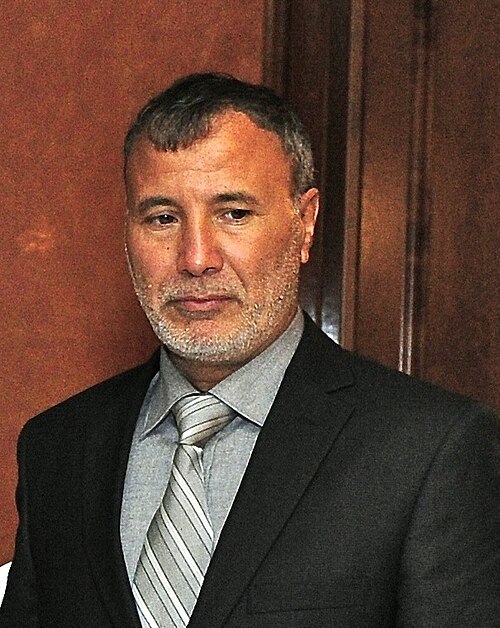
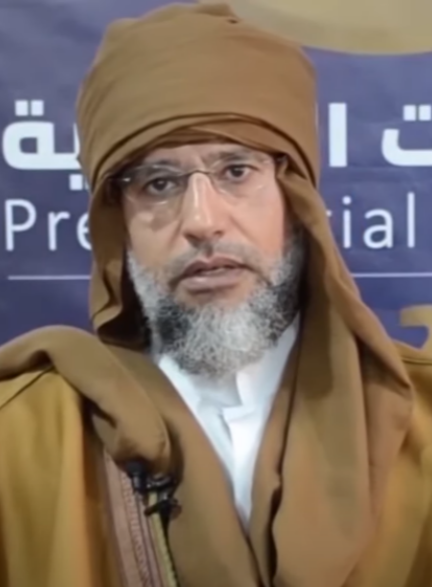
Osama al-Juwaili stands as a significant figure in modern Libyan Politics & Government, particularly within the nation's volatile defense and security sector. Born in 1965, Osama al-Juwaili rose to prominence as a military commander during the 2011 Libyan Revolution that overthrew the regime of Muammar Gaddafi. His most notable public role was serving as the Ex-Defense Minister of Libya, a position he held during a critical period of state-building and conflict in the transitional National Transitional Council (NTC) and subsequent governments. As a senior official from Zintan, a city whose militias played a decisive role in the revolution, al-Juwaili's career encapsulates the complex interplay between regional power, revolutionary legitimacy, and the immense challenge of forming a unified national army in post-Gaddafi Libya. His tenure was marked by efforts to assert central authority in a landscape dominated by armed brigades, making his biography essential to understanding Libya's fraught path after 2011.
Early Life & Education: Formative Years in Western Libya
Osama al-Juwaili was born in 1965 and hails from the city of Zintan in the Nafusa Mountains of western Libya. The al-Juwaili tribe is one of the major social and political forces in the region, a factor that would later heavily influence his authority and military support base. Details about his early childhood and secondary education are not extensively documented in public sources, a common theme for many Libyan officials who rose under the shadow of the Gaddafi regime.
His professional military education, however, is better recorded. Osama al-Juwaili graduated from the Libyan Military Academy, the primary institution for training army officers in the country. This formal training provided him with a conventional military foundation. Prior to the 2011 uprising, he served as an officer in the Libyan Arab Jamahiriya's armed forces, reaching the rank of colonel. His experience within the Gaddafi-era military structure gave him insights into its operations and weaknesses, knowledge he would later turn against the regime. The decades under Gaddafi's rule, characterized by the deliberate weakening of the national army to prevent coups, created a fragmented security environment. Al-Juwaili's formative years as an officer within this system undoubtedly shaped his understanding of the profound challenges involved in building a coherent national defense apparatus.
Career & Major Achievements: From Revolutionary Commander to Defense Minister
The career of Osama al-Juwaili can be divided into two pivotal phases: his leadership in the 2011 revolution and his tumultuous tenure in high government office.
Military Leadership in the 2011 Revolution
When protests escalated into a full-scale rebellion in February 2011, Osama al-Juwaili defected from the Gaddafi forces and quickly emerged as the chief military commander for the Zintan region. He became the head of the Zintan Military Council, transforming local volunteers and defectors into one of the most effective rebel fighting forces, known as the Zintan Brigades. Under his command, Zintani fighters achieved several strategic victories. Most notably, they played a crucial role in the capture of Tripoli's international airport and were instrumental in the seizure of Saif al-Islam Gaddafi, the deposed leader's son and heir apparent, in November 2011. This success cemented the power of the Zintan Brigades and elevated Osama al-Juwaili to a position of significant influence within the revolutionary coalition.
Tenure as Defense Minister and Political Challenges
In the aftermath of Gaddafi's fall, al-Juwaili transitioned from a military to a political role. In November 2011, he was appointed as the Defense Minister within the interim government led by Prime Minister Abdurrahim El-Keib. His appointment was a strategic move, aiming to integrate powerful revolutionary brigades into the fledgling state's formal security architecture. As Ex-Defense Minister, al-Juwaili's primary challenge was unifying the myriad of regional militias under the banner of a national army—a task that proved nearly impossible.
His tenure, which lasted until October 2012, was marked by:
- Attempts at Integration: Efforts to create a formal military structure that included revolutionary fighters.
- Persistent Factionalism: Continuous power struggles between militias from Zintan, Misrata, and other cities, each with their own leadership and agendas.
- Security Crises: Ongoing violence and clashes between rival groups, highlighting the limited control of the central ministry.
Despite these challenges, his role was historic as he was one of the first individuals to hold the defense portfolio in the new Libya. After leaving the ministerial post, Osama al-Juwaili remained an influential figure through the Zintan Military Council. He later served as Chief of Staff of the Libyan National Army (LNA) for a period under the command of General Khalifa Haftar, aligning with the eastern-based administration, before eventually distancing himself from that command structure. This move illustrates the shifting alliances and complex political landscape of post-revolutionary Libya.
Personal Life & Legacy: The Man Behind the Title
Unlike many public figures, Osama al-Juwaili has maintained a notably private personal life. Details about his family, spouse, and children are not widely publicized, a discretion likely rooted in both cultural norms and the security realities of being a high-profile figure in a conflict-prone state. His public image is almost entirely defined by his military and political roles—that of a pragmatic, regionally-backed commander from the mountains of western Libya.
His legacy is intrinsically tied to the fate of Libya itself. As a key revolutionary leader, Osama al-Juwaili is remembered for his effective military contributions to overthrowing Gaddafi. As the Ex-Defense Minister, however, his legacy is more ambiguous, reflecting the overwhelming difficulties of the task he faced. He represents the generation of revolutionary commanders who succeeded in toppling a dictatorship but struggled to build a stable, unified state in its place. His career underscores a central paradox in Libyan Politics & Government: the very regional militias that ensured the revolution's success became the primary obstacle to establishing a monopoly on the legitimate use of force. Whether viewed as a patriot navigating impossible circumstances or as a factional leader who could not transcend his origins, his impact on Libya's defense and political trajectory is undeniable.
Net Worth & Business Ventures
There is no verifiable or publicly available information regarding the personal net worth or private business ventures of Osama al-Juwaili. This lack of financial transparency is common among Libyan officials and militia leaders in the post-2011 environment. Unlike figures in some other nations, where military or political careers can lead to visible personal wealth, the economic landscape in Libya during and after the revolution has been chaotic, with state resources often contested by various groups.
It is understood that influence and power in contemporary Libya are often derived from control over armed groups, smuggling routes, and local patronage networks rather than from formal business empires in the traditional sense. As the head of the powerful Zintan Military Council, al-Juwaili's "capital" was primarily military and political. Any financial resources at his disposal would likely be intertwined with the logistics and funding of the brigades under his influence, rather than distinct personal assets. Therefore, any speculation on his net worth would be unsubstantiated. His primary documented engagement remains within the spheres of Politics & Government and defense, not in commercial enterprise.
Biography compiled from reputable news archives and reports on Libyan politics, including references from BBC Monitoring, Al Jazeera, and Libya Herald.
Frequently Asked Questions
What is Osama al-Juwaili's estimated net worth?
Osama al-Juwaili has an estimated net worth of $50.0 Million.
What is Osama al-Juwaili's role and nationality?
Osama al-Juwaili is a Ex-Defense Minister from Libya.
How did Osama al-Juwaili make their money?
Osama al-Juwaili built their fortune primarily through As a former military commander and politician in Libya's turbulent post-Gaddafi era, his wealth is likely tied to political influence and control of assets rather than transparent business holdings, with no evidence of billionaire status on international lists..
How old is Osama al-Juwaili?
Osama al-Juwaili was born in 1965 (61 years old).
Which category is Osama al-Juwaili listed under?
Osama al-Juwaili is featured under the Politics & Government category on NetWorth Africa.
How is Osama al-Juwaili's net worth calculated?
NetWorth Africa estimates financial valuations using publicly available stock equity holdings, company ownership records, real estate assets, and verified market data.
Net Worth Analysis
As a former military commander and politician in Libya's turbulent post-Gaddafi era, his wealth is likely tied to political influence and control of assets rather than transparent business holdings, with no evidence of billionaire status on international lists.
Quick Stats
Related People
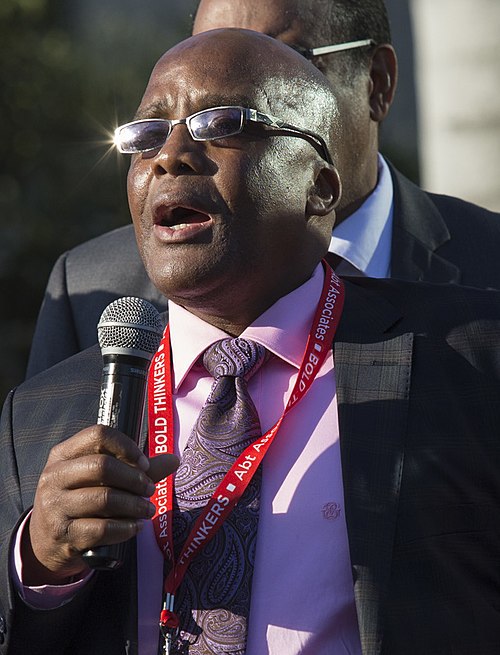
Aaron Motsoaledi
LP; Minister of Home Affairs • South Africa
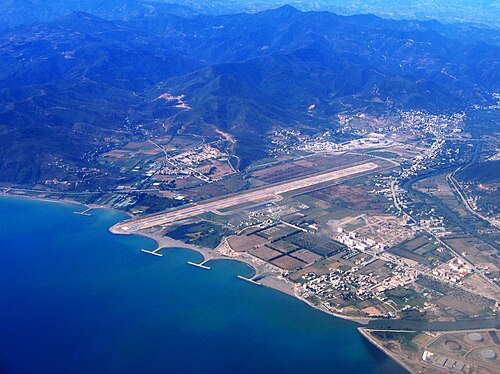
Abane Ramdane†
FLN Leader & Strategist • Algeria
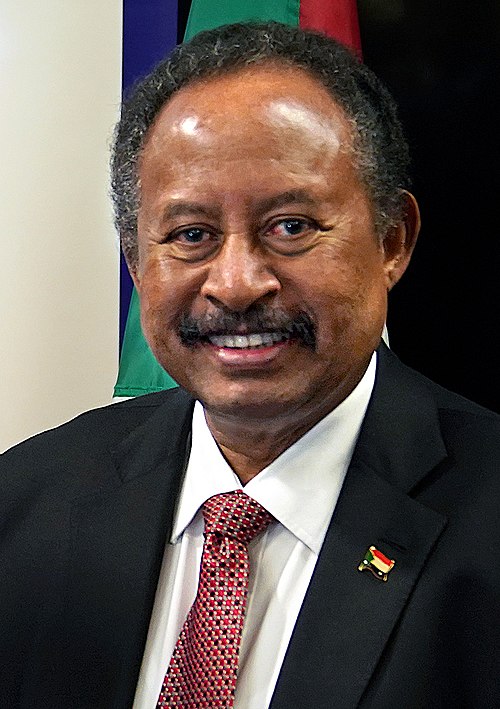
Abdalla Hamdok
Ex-Prime Minister • Sudan
Abdallah Kigoda
Ex-Minister of Natural Resources • Tanzania