Biography
Introduction: The Voice of a Continent
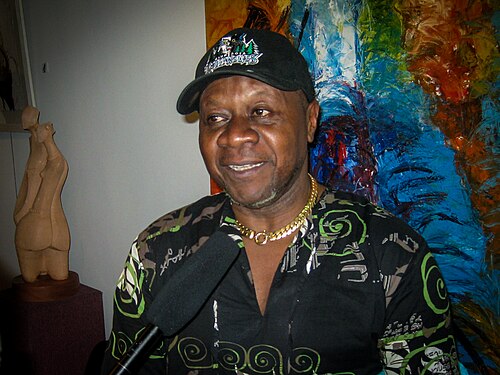
In the pantheon of African music legends, few names shine as brightly as Papa Wemba†. Born Jules Shungu Wembadio Pene Kikumba, he ascended to become the undisputed Soukous King, a title earned through a career that spanned over four decades and bridged continents. Hailing from the Democratic Republic of the Congo, Papa Wemba was not merely a musician; he was a cultural revolutionary, a fashion icon, and the charismatic ambassador of Congolese rumba and its effervescent offshoot, soukous, to the world. His key achievement was transforming a local sound into a global phenomenon, influencing artists worldwide while maintaining an unbreakable connection to his roots. His tragic passing in 2016 left a void, but his vibrant legacy continues to pulse through the heart of African Entertainment.
Early Life & Education: The Roots of Rhythm
Papa Wemba was born on June 14, 1949, in the city of Lubefu, in what was then the Belgian Congo. He was raised in a family deeply connected to music and tradition. His mother was a professional "pleureuse" (a mourner who sang at funerals), which exposed him to traditional rhythms and vocal styles from a young age. His father, a soldier, initially disapproved of a musical career, but the young Jules was irresistibly drawn to the sound. The family moved to the capital, Léopoldville (now Kinshasa), a melting pot of musical innovation where African rhythms met Cuban son and Latin melodies.
His formal education was secondary to his musical apprenticeship on the streets of Kinshasa. In the late 1960s, he joined the seminal band Zaiko Langa Langa, a group that would revolutionize Congolese music. With Zaiko, Papa Wemba† helped pioneer a new, faster, guitar-driven sound that moved away from the older rumba style. It was here that he honed his distinctive vocal style—a clear, high-pitched tenor that could convey both deep emotion and exhilarating joy. This period was his true formative education, teaching him the power of music as a force for youth identity and social change.
Career & Major Achievements: From Kinshasa to the World
Papa Wemba's career is a tapestry of artistic innovation and international triumph. After leaving Zaiko Langa Langa in the mid-1970s, he founded his own group, Viva La Musica, in 1977. The name, meaning "Long Live Music," became a prophecy. With Viva La Musica, he perfected the soukous sound, characterized by intricate, interlocking guitar patterns, a relentless sebene (the accelerated, dance-focused section of a song), and sweet, harmonious vocals.
The Birth of "La Sape" and Cultural Influence
Beyond music, Papa Wemba† became the figurehead of "La Sape" (Société des Ambianceurs et des Personnes Élégantes), a cultural movement centered on extravagant, high-fashion attire from European designer houses. He turned his concerts and public appearances into runway shows, preaching a philosophy of elegance and self-worth. This fusion of dazzling music and audacious fashion created an irresistible package that captivated Africa and intrigued Europe.
International Breakthrough and Collaborations
His global breakthrough came in the 1980s and 1990s. He collaborated with international stars like Peter Gabriel, featuring on Gabriel's hit "In Your Eyes" and touring with him. This exposure led to a record deal with Real World Records. Albums like Le Voyageur (1992) and Emotion (1995) introduced soukous to a vast new audience, blending traditional Congolese rhythms with elements of pop, rock, and soul. Tracks like "Show Me the Way" became international dance floor anthems.
His major achievements include:
- Pioneering the modern soukous sound with Zaiko Langa Langa and Viva La Musica.
- Successfully bridging African and Western music markets in the pre-internet era.
- Selling out prestigious venues like the Paris Olympia and London's Royal Albert Hall.
- Acting in notable films, including "The Life of Pi" (as the Musician) and "Wild Roses" (1992).
- Inspiring generations of musicians across Africa and the diaspora.
Personal Life & Legacy: The Man Behind the Music
Offstage, Papa Wemba was a complex figure. He was a devout Christian who also respected traditional beliefs, a duality reflected in his music. He was a family man, though his life in the spotlight was demanding. His leadership of Viva La Musica was patriarchal; he was known as "le Pape" (the Pope) by his band and fans, a testament to his authoritative yet inspirational role. His personal life was not without controversy, including a brief imprisonment in 2004 related to a human trafficking case, a chapter he described as a profound personal trial.
The legacy of Papa Wemba† is monumental. He fundamentally shaped the sound of modern Congolese music and, by extension, popular music across Africa. He proved that an African artist could achieve global stardom without diluting their cultural essence. More than a musician, he was a cultural icon who used style and sound to project an image of African pride, sophistication, and joy. His sudden death from a heart attack while performing on stage in Abidjan, Ivory Coast, on April 24, 2016, was a shock felt worldwide, a testament to his enduring influence. Today, his music remains a staple at celebrations across the continent, and his style continues to inspire.
Net Worth & Business Ventures
While exact figures for his net worth were never publicly confirmed, Papa Wemba† was undoubtedly one of the most commercially successful African artists of his generation. His wealth was generated through multiple streams: robust record sales across Africa and Europe, lucrative international touring, and his film appearances. As the leader of Viva La Musica, he managed a large musical enterprise, responsible for the livelihoods of many musicians. His association with La Sape also had commercial undertones, involving partnerships and endorsements linked to fashion. His primary business was entertainment, and he built a brand synonymous with quality and innovation. He invested in his craft and his community, maintaining a recording studio and nurturing young talent in Kinshasa. His financial success was a direct result of his artistic mastery and his ability to market Congolese culture as a vibrant, world-class product.
For further reading on the life and music of this icon, refer to reputable music archives and obituaries from sources like BBC News or The New York Times, which documented his global impact upon his passing in 2016.
Financial Breakdown
Net Worth Analysis
Papa Wemba was a legendary musician, not a business magnate; his wealth derived from his music career, and he passed away in 2016, so no 2024 net worth exists.
Frequently Asked Questions
What is Papa Wemba†'s estimated net worth?
Papa Wemba† has an estimated net worth of R 80.9 Million.
What is Papa Wemba†'s role and nationality?
Papa Wemba† is a Soukous King from Democratic Republic of the Congo.
How did Papa Wemba† make their money?
Papa Wemba† built their fortune primarily through Papa Wemba was a legendary musician, not a business magnate; his wealth derived from his music career, and he passed away in 2016, so no 2024 net worth exists..
How old is Papa Wemba†?
Papa Wemba† was born in 1949 (77 years old).
Related Personalities
2Baba (Innocent Idibia)
Veteran Artist & Activist • Nigeria
Aar Maanta
Singer & Composer • Somalia
Abdel Aziz al-Mubarak
Oud Master • Sudan
Abdel Halim Hafez†
Legend; “Nightingale”; “The Dark-Skinned Nightingale” • Egypt