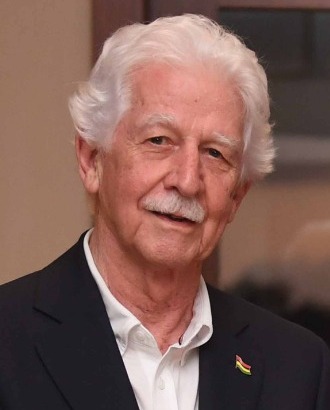
$5M
Estimated Net Worth
As of 2024 • medium confidence
Financial Breakdown
Asset Distribution
Assets vs Liabilities
Assets
Liabilities
Disclaimer: These financial estimates are based on publicly available information and should be considered approximate. Last updated: 12/31/2025
Biography
Introduction: A Pillar of Mauritian Politics
Paul Raymond Bérenger stands as one of the most consequential and enduring figures in the modern political history of Mauritius. A firebrand socialist, trade unionist, and master strategist, his name is synonymous with the Mauritian Militant Movement (MMM) and the nation's vibrant, often tumultuous, democratic evolution. Born in 1945, Paul Bérenger carved a unique path as a Franco-Mauritian who became the foremost champion of the working class and a pivotal force in shaping post-independence Mauritius. His crowning political achievement came in 2003 when he became Prime Minister of Mauritius, marking a historic moment as the first non-Hindu to hold the office since independence. However, his greater legacy may well be his decades-long role as the principal architect of a strong, credible opposition, relentlessly holding governments to account and advocating for social justice, transparency, and republicanism.
Early Life & Education: Forging a Political Consciousness
Paul Bérenger was born on March 26, 1945, in Quatre Bornes, Mauritius, into a middle-class Franco-Mauritian family. This ethnic background, a minority in a predominantly Indo-Mauritian nation, would profoundly shape his political perspective and drive his commitment to a non-communal, class-based politics. His early education was at the prestigious Royal College Curepipe, an institution that produced many of the island's future leaders. It was during these formative years that his political consciousness began to awaken, influenced by global leftist movements and the anti-colonial struggles sweeping across Africa and Asia.
For his higher education, Bérenger traveled to the United Kingdom and later to Wales, where he studied at the University of Wales, Aberystwyth. Immersed in the radical student politics of the 1960s, he was deeply influenced by Marxist thought, democratic socialism, and the ideals of anti-imperialism. Upon returning to Mauritius in the late 1960s, he found a society grappling with the challenges of recent independence (achieved in 1968), stark economic inequalities, and a political system still influenced by colonial structures and communal voting. This context became the crucible for his political activism. He initially worked as a journalist, using the pen to critique the establishment, before fully dedicating himself to political mobilization, laying the groundwork for his future role as MMM Leader & Ex-PM.
Career & Major Achievements: Architect of Opposition and Prime Minister
Paul Bérenger's political career is inextricably linked to the Mauritian Militant Movement (MMM), a party he co-founded in 1969 alongside Dev Virahsawmy and others. The MMM emerged as a radical, socialist alternative to the traditional parties, appealing directly to workers, trade unions, intellectuals, and the youth. Bérenger's eloquence, strategic acumen, and unwavering commitment quickly made him the party's most recognizable face.
Rise of the MMM and Political Struggles
The MMM's rapid ascent shook the Mauritian political landscape. In the 1976 general elections, just seven years after its founding, the party won a majority of the popular vote, though the first-past-the-post system denied it a parliamentary majority. This period was marked by intense political confrontation, including a state of emergency declared in 1971-1972 and Bérenger's imprisonment in 1975. These struggles cemented his image as a martyr for democracy and a fearless opponent of the Sir Seewoosagur Ramgoolam government. Throughout the 1980s and 1990s, he served in various ministerial capacities, including as Minister of Finance, often in coalition governments, where he played a key role in economic policy.
Historic Premiership and Constitutional Reform
The zenith of Bérenger's executive career came after the 2000 general elections. In a unique power-sharing agreement with Sir Anerood Jugnauth of the Militant Socialist Movement (MSM), known as the "Medpoint Accord," it was agreed that Jugnauth would serve as President and Bérenger as Prime Minister for the final two years of the term. Thus, on September 30, 2003, Paul Bérenger was sworn in as the Prime Minister of Mauritius. His tenure, though short, was significant. He focused on international relations, strengthening ties with African nations and Europe, and oversaw the initial phases of important economic reforms. His premiership itself was a powerful symbol of breaking ethnic barriers in Mauritian Politics & Government.
The Definitive Opposition Leader
Perhaps Bérenger's most lasting impact has been his role as Leader of the Opposition. Following electoral defeats in 2005 and subsequent years, he mastered the art of parliamentary scrutiny and public campaigning. His tenure as Opposition Leader is noted for:
- Relentlessly exposing corruption scandals, such as the Medpoint scandal.
- Championing constitutional reforms, including the push for the abolition of the Privy Council as the final court of appeal.
- Advocating for greater social welfare, environmental protections, and electoral reform.
- Providing a coherent ideological alternative, even as the MMM's platform evolved with the times.
Personal Life & Legacy: The Man Behind the Politician
Outside the political arena, Paul Bérenger is known as a private individual with a deep passion for literature, history, and the sea. An avid reader and a thoughtful writer, he has authored several political texts and essays reflecting on Mauritius's development. He is a known connoisseur of Mauritian and international culture. While not flamboyant in his personal dealings, his commitment has extended to various social causes, though his primary vehicle for social change has always been political action rather than separate philanthropic foundations.
The legacy of Paul Bérenger is multifaceted. He is credited with:
- Democratizing Mauritian Politics: By building a mass, multi-ethnic party, he broke the monopoly of traditional elite-led parties.
- Strengthening the Opposition: He institutionalized the role of the opposition as a vital pillar of democracy.
- Shaping Economic Debate: His socialist critiques forced successive governments to pay greater attention to inequality and workers' rights.
- Transcending Ethnicity: His career challenged communal politics, proving that leadership could be based on ideology rather than ethnic identity.
Net Worth & Business Ventures
Unlike many of his contemporaries who have significant business holdings, Paul Bérenger's career has been almost entirely dedicated to politics and public service. He is not known for major business ventures or significant private wealth accumulation. His financial profile is consistent with that of a career politician who has held ministerial and parliamentary positions for decades. His income has primarily derived from his parliamentary salary, ministerial emoluments, and later, his pension as a former Prime Minister and long-serving Member of Parliament. In the context of Mauritian Politics & Government, Bérenger is often viewed as a figure whose capital is political rather than financial, with his influence stemming from ideology and popular support rather than economic power. There is no publicly available or verified estimation of a substantial personal net worth, reinforcing his image as a leader who prioritized political struggle over personal financial gain.
For further reading on the political history of Mauritius and the role of Paul Bérenger, credible sources include the National Assembly of Mauritius website for parliamentary records, and academic publications on Mauritian political history from institutions like the University of Mauritius.
Net Worth Analysis
Paul Bérenger is a career politician and trade unionist in Mauritius, not a business figure; his wealth is derived from public service salaries and pensions, not corporate holdings.
Quick Stats
Related People
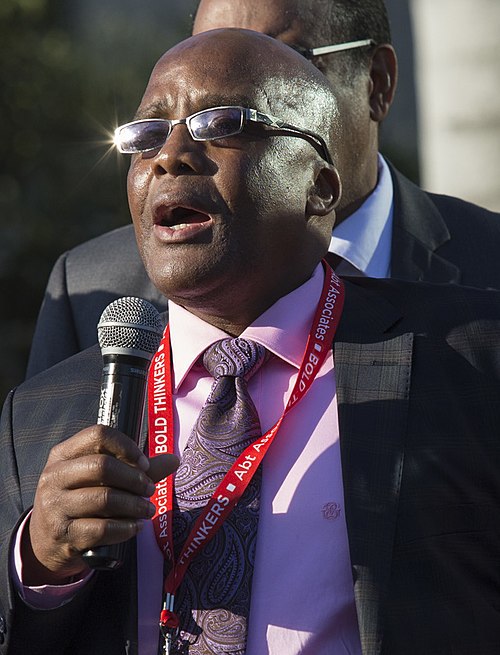
Aaron Motsoaledi
LP; Minister of Home Affairs
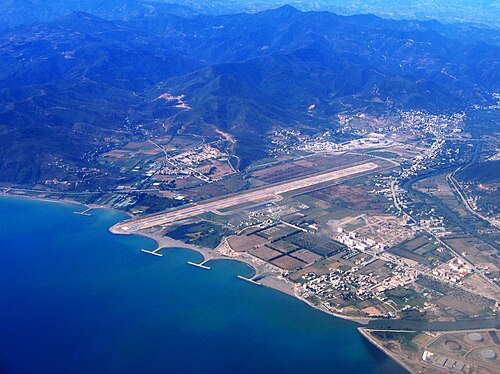
Abane Ramdane†
FLN Leader & Strategist
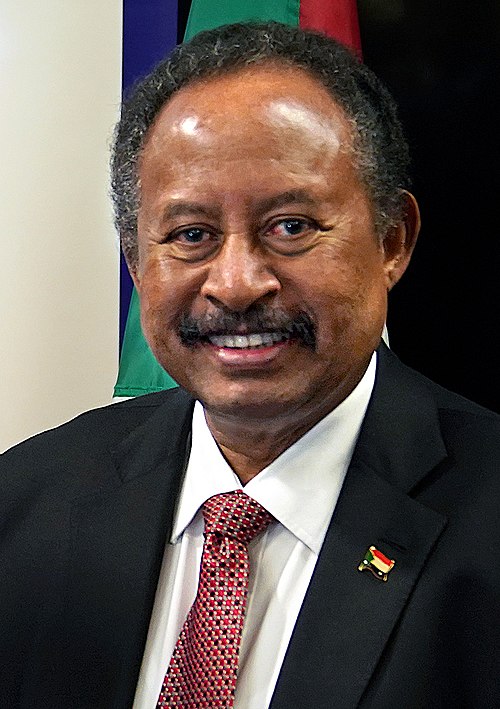
Abdalla Hamdok
Ex-Prime Minister
Abdallah Kigoda
Ex-Minister of Natural Resources