Financial Breakdown
Asset Distribution
Assets vs Liabilities
Assets
Liabilities
Disclaimer: These financial estimates are based on publicly available information and should be considered approximate. Last updated: 12/29/2025
Biography
Introduction: A Pillar of South African Politics
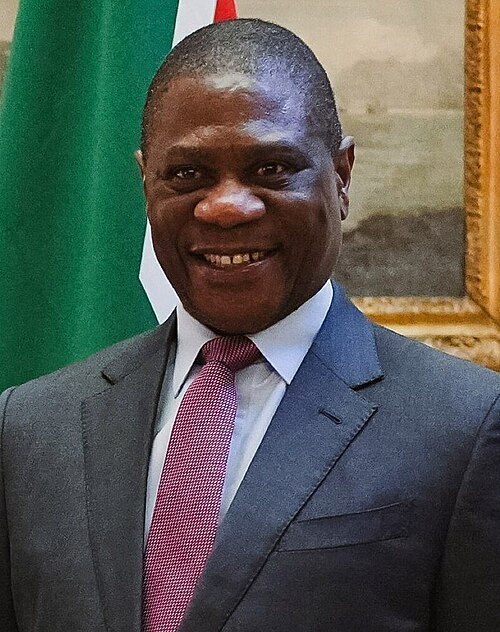
Paul Shipokosa Mashatile stands as a central figure in the modern political landscape of South Africa. As the Deputy President of South Africa, sworn in on 7 March 2023, he holds the second-highest office in the land, serving as a key deputy to President Cyril Ramaphosa. His appointment marked the culmination of a decades-long journey through the ranks of the African National Congress (ANC) and various government positions. Paul Mashatile is notable not only for his high office but for his deep roots in the anti-apartheid struggle, his influential role in the economic hub of Gauteng province, and his reputation as a skilled political negotiator and organizer. His career embodies the trajectory of the post-apartheid governing party, from liberation movement to administrative authority, making his biography essential to understanding contemporary Politics & Government in the nation.
Early Life & Education: Forging a Political Consciousness
Paul Mashatile was born on 21 October 1961 in Atteridgeville, a township west of Pretoria. Growing up under the oppressive system of apartheid, his formative years were shaped by the socio-political injustices of the time. This environment naturally steered him towards political activism from a young age. His formal education began at local schools in Atteridgeville, where his leadership qualities began to surface.
Mashatile's political awakening was cemented during his time at the Makhumbini High School and later through his involvement with the Congress of South African Students (COSAS), a pivotal student organization that mobilized youth against the apartheid regime. While details of his tertiary education are less prominently documented in public records, his real political education occurred on the ground. He became deeply embedded in the United Democratic Front (UDF), a broad anti-apartheid coalition formed in the 1980s. It was within these structures that Paul Mashatile honed his skills in mobilization, grassroots organizing, and political strategy, experiences that would form the bedrock of his entire career. The struggles and community organizing in the townships of the then Transvaal province were his university, preparing him for the leadership roles he would later assume in a democratic South Africa.
Career & Major Achievements: A Ascent Through the Ranks
The political career of Paul Mashatile is a chronicle of steady ascent within the ANC, marked by significant tenures in both provincial and national government. His journey reflects a blend of party loyalty, administrative experience, and strategic positioning.
Post-Apartheid Political Rise
Following South Africa's first democratic elections in 1994, Mashatile served as a Member of the Executive Council (MEC) for Housing in Gauteng from 1994 to 1998, tackling the monumental challenge of housing delivery in the country's economic heartland. He later held the MEC portfolio for Safety and Security. His influence within the ANC grew concurrently; he served as the Provincial Secretary of the ANC in Gauteng from 1998 to 2008, a period during which the province solidified as a key political battleground.
Premier of Gauteng and National Cabinet
In 2008, Paul Mashatile reached a major milestone when he was appointed as the Premier of Gauteng, a role he held until 2009. This position placed him at the helm of South Africa's most populous and economically critical province. After a period as the ANC's Treasurer-General, he returned to the national executive. Under President Jacob Zuma, he served as the Minister of Arts and Culture from 2014 to 2017, where he oversaw policies aimed at promoting social cohesion and the nation's creative industries.
The Path to Deputy Presidency
Mashatile's path to the deputy presidency was characterized by strategic party leadership roles. He was elected as the ANC's Treasurer-General again in 2017, a position of immense financial oversight within the party. Following the ANC's 54th National Conference in 2017, he became a member of the party's top leadership structure, the National Executive Committee (NEC). His most critical pre-deputy presidency role was his election as the ANC Treasurer-General and his subsequent rise to become the party's Deputy President in December 2022. This party position made him the natural candidate for the role of Deputy President of the Republic following the resignation of David Mabuza. On 7 March 2023, Paul Mashatile was officially sworn in as the Deputy President of South Africa, tasked with responsibilities that include leading government business in Parliament, chairing various councils, and deputizing the President across a wide spectrum of national and international duties.
- 1994-1998: MEC for Housing, Gauteng Provincial Government.
- 2008-2009: Premier of Gauteng Province.
- 2014-2017: Minister of Arts and Culture of South Africa.
- 2017-2022: ANC Treasurer-General (elected at 54th National Conference).
- Dec 2022: Elected ANC Deputy President at the 55th National Conference.
- Mar 2023-Present: Deputy President of the Republic of South Africa.
Personal Life & Legacy: The Man Behind the Office
Paul Mashatile is known to be a private individual regarding his family life. He is married and has children. Beyond the political sphere, he is recognized as an avid reader and a patron of the arts, an interest undoubtedly nurtured during his tenure as Minister of Arts and Culture. He maintains a connection to his roots in Atteridgeville and is often described as a sociable figure with a wide network across different sectors of South African society.
In terms of legacy, Paul Mashatile's impact is multifaceted. He is viewed as a key representative of the ANC's "Alex Mafia" – a network of politicians from Alexandra township and surrounding areas in Gauteng. His legacy is currently being defined by his role as Deputy President during a challenging period for the country, marked by economic difficulties and political realignments. As a senior figure, his ability to navigate internal party dynamics while contributing to effective governance will significantly influence how his career is ultimately judged. His journey from township activist to the second-highest constitutional office remains a powerful narrative within the story of post-apartheid South Africa.
Net Worth & Business Engagements
As a senior government official, Paul Mashatile's income is derived from his official salary as Deputy President. Like many high-profile South African politicians, his financial disclosures are a matter of public record through the Executive Ethics Code, which requires the declaration of interests, gifts, and financial holdings. Specific details of his personal net worth are not officially published in a consolidated figure and are considered private. Throughout his long career in public service and party leadership, Mashatile has been associated with various business networks in South Africa, a common feature among senior ANC figures. However, he has consistently maintained that his primary focus is his political and governmental roles. Any business interests he may hold are subject to the disclosure requirements aimed at preventing conflicts of interest, ensuring transparency in the intersection between public office and private enterprise in South Africa's Politics & Government sphere.
For further information on the Deputy President's roles and responsibilities, you can refer to the official The Presidency of South Africa website.
Frequently Asked Questions
What is Paul Mashatile's estimated net worth?
Paul Mashatile has an estimated net worth of $5.0 Million.
What is Paul Mashatile's role and nationality?
Paul Mashatile is a Deputy President of South Africa from South Africa.
How did Paul Mashatile make their money?
Paul Mashatile built their fortune primarily through As a career politician and government official, his wealth is not from major business holdings; public disclosures and media reports suggest assets in the millions, not billions..
How old is Paul Mashatile?
Paul Mashatile was born in 1961 (65 years old).
Which category is Paul Mashatile listed under?
Paul Mashatile is featured under the Politics & Government category on NetWorth Africa.
How is Paul Mashatile's net worth calculated?
NetWorth Africa estimates financial valuations using publicly available stock equity holdings, company ownership records, real estate assets, and verified market data.
Net Worth Analysis
As a career politician and government official, his wealth is not from major business holdings; public disclosures and media reports suggest assets in the millions, not billions.
Quick Stats
Related People
Aaron Motsoaledi
LP; Minister of Home Affairs • South Africa
Abane Ramdane†
FLN Leader & Strategist • Algeria
Abdalla Hamdok
Ex-Prime Minister • Sudan
Abdallah Kigoda
Ex-Minister of Natural Resources • Tanzania