Financial Breakdown
Asset Distribution
Assets vs Liabilities
Assets
Liabilities
Disclaimer: These financial estimates are based on publicly available information and should be considered approximate. Last updated: 12/29/2025
Biography
Introduction: The Soldier-President of Burkina Faso
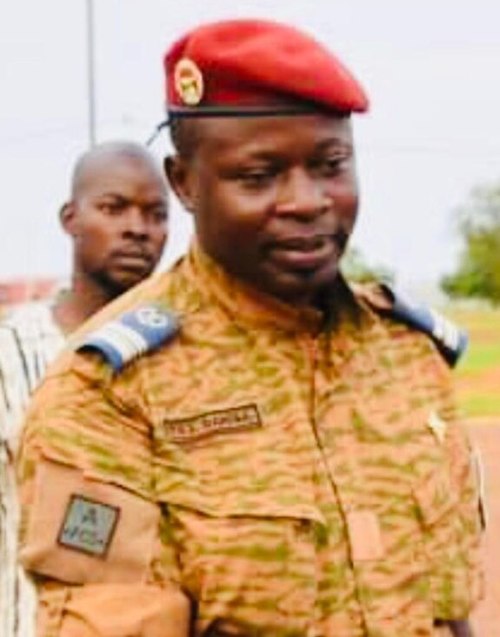
Lieutenant-Colonel Paul-Henri Sandaogo Damiba is a prominent figure in modern West African Politics & Government, known for his brief but significant tenure as the transitional President of Burkina Faso. Born in 1981, Damiba rose to international prominence on January 24, 2022, when he led a military coup that ousted the democratically elected President, Roch Marc Christian Kaboré. Citing the government's failure to contain a devastating jihadist insurgency, Damiba's ascent marked another chapter in Burkina Faso's turbulent political history, characterized by military intervention. His rule, which lasted just over seven months, was defined by the relentless security crisis and ended in a counter-coup by a fellow officer in September 2022. The story of Paul-Henri Sandaogo Damiba is intrinsically linked to the challenges of governance, security, and military leadership in the Sahel region.
Early Life and Military Education
Paul-Henri Sandaogo Damiba was born in 1981 in the capital city of Ouagadougou, Burkina Faso. From a young age, he was immersed in a nation with a strong tradition of military influence in politics. Details about his immediate family and childhood are sparingly documented in the public domain, as is common with many military figures. His formative path was decisively shaped by a commitment to a career in the armed forces.
Damiba embarked on his military education with rigorous training, both domestically and abroad, which equipped him with specialized skills in security and defense. A pivotal stage in his development was his attendance at the prestigious École Militaire in Paris, France, where he underwent advanced officer training. This international education provided him with a broad perspective on military strategy and counter-insurgency operations. He furthered his academic credentials by earning a Master's degree in Criminal Sciences, focusing his research on the very crisis that would later define his presidency. His thesis, notably titled "West African Armies and Terrorism: Uncertain Responses?", analyzed the effectiveness of military strategies in the region against jihadist threats. This academic pursuit demonstrated his early and focused interest in the security challenges that would eventually catalyze his seizure of power.
Career, Coup d'État, and Presidential Tenure
The professional trajectory of Paul-Henri Sandaogo Damiba was built within the structure of the Burkinabè armed forces, where he steadily climbed the ranks. He gained extensive field experience, particularly in the country's volatile northern and eastern regions, which were under siege by groups linked to Al-Qaeda and the Islamic State. His operational roles included command positions in key units, and he served as the commander of the Third Military Region, based in the eastern city of Fada N'Gourma—a hotspot of insurgent activity. This frontline experience solidified his reputation among his peers and his critique of the civilian government's security strategy.
The January 2022 Coup and Rise to Power
By early 2022, public and military frustration with President Kaboré's administration had peaked. Following a deadly attack that killed dozens of military police, soldiers mutinied. On January 24, 2022, Lieutenant-Colonel Damiba emerged as the leader of the Patriotic Movement for Safeguard and Restoration (MPSR). Armored vehicles surrounded the presidential palace and state television station, and the military announced it had seized power, citing the "continuing deterioration of the security situation" and the government's "incapacity" to unite the nation. The constitution was suspended, parliament dissolved, and the borders were closed. Damiba was declared President of Burkina Faso and Head of State.
Major Policies and Challenges as President
As the transitional President, Damiba's central promise was security. His major policies and actions included:
- Appointing himself as Minister of Defense and Veterans Affairs, maintaining direct control over security operations.
- Launching military offensives and restructuring the armed forces, including the creation of new special units and the establishment of "Volunteers for the Defense of the Homeland" (VDP), a civilian auxiliary force.
- Engaging in diplomatic outreach to regional bodies like ECOWAS and the African Union, which condemned the coup but later engaged with the transition charter that set a goal for a return to civilian rule by July 2024.
- Facing severe international criticism for human rights concerns, particularly after the massacre of dozens of civilians in the village of Karma in April 2022, which was attributed to army volunteers.
The September 2022 Counter-Coup and Ouster
On September 30, 2022, just over seven months after taking power, Captain Ibrahim Traoré led a faction of disgruntled soldiers in a counter-coup against Damiba. The catalyst was a perceived failure to stem the insurgency, highlighted by a major attack on a supply convoy that killed dozens of soldiers and civilians. After brief tensions and negotiations mediated by religious leaders, Damiba agreed to resign to avoid further conflict. He formally stepped down on October 2, 2022, and was subsequently exiled, initially to Togo. Captain Traoré assumed the presidency, marking a dramatic end to Damiba's rule.
Personal Life, Exile, and Lasting Legacy
Unlike many political figures, Paul-Henri Sandaogo Damiba maintained a notably private personal life. During his presidency, little information was publicly disseminated about his family or personal interests, aligning with his image as a disciplined military officer focused solely on the national crisis. His public persona was that of a strategic thinker, often photographed in military fatigues and referencing his academic work on counter-terrorism.
Following his ouster, Damiba entered into exile. His legacy is complex and contested. To some, he represents another military officer who disrupted a fragile democratic process, setting a precedent for further instability. To others, he was a patriot who attempted, albeit unsuccessfully, to confront an existential threat that a civilian government could not manage. His brief presidency underscores the profound security challenges facing Burkina Faso and the wider Sahel, where military solutions have repeatedly proven insufficient without broader political and developmental strategies. The case of Paul-Henri Sandaogo Damiba remains a critical study in the intersection of Military Leadership and political power in contemporary Africa.
Net Worth and Financial Standing
As a career military officer and a head of state for a short period in one of the world's poorest nations, precise details regarding Paul-Henri Sandaogo Damiba's personal net worth and business ventures are not publicly verified or transparent. Unlike long-serving leaders or those from resource-rich countries, there are no substantial reports of significant personal wealth accumulation during his time in power. His financial background is assumed to be rooted in his military salary and allowances. Any assets or financial dealings remain private, and in the context of Burkina Faso's economy and his sudden rise and fall from power, there is little indication of major business interests or commercial ventures associated with him. His profile remains primarily that of a military strategist and former head of state, rather than a business figure.
Frequently Asked Questions
What is Paul-Henri Sandaogo Damiba's estimated net worth?
Paul-Henri Sandaogo Damiba has an estimated net worth of $500,000.
What is Paul-Henri Sandaogo Damiba's role and nationality?
Paul-Henri Sandaogo Damiba is a Ex-President of Burkina Faso from Burkina Faso.
How did Paul-Henri Sandaogo Damiba make their money?
Paul-Henri Sandaogo Damiba built their fortune primarily through As a former military officer and head of state of a low-income country, his wealth is not from business but from salary and allowances, with no evidence of significant personal fortune or inclusion on wealth lists..
How old is Paul-Henri Sandaogo Damiba?
Paul-Henri Sandaogo Damiba was born in 1981 (45 years old).
Which category is Paul-Henri Sandaogo Damiba listed under?
Paul-Henri Sandaogo Damiba is featured under the Politics & Government category on NetWorth Africa.
How is Paul-Henri Sandaogo Damiba's net worth calculated?
NetWorth Africa estimates financial valuations using publicly available stock equity holdings, company ownership records, real estate assets, and verified market data.
Net Worth Analysis
As a former military officer and head of state of a low-income country, his wealth is not from business but from salary and allowances, with no evidence of significant personal fortune or inclusion on wealth lists.
Quick Stats

Related People

Aaron Motsoaledi
LP; Minister of Home Affairs • South Africa

Abane Ramdane†
FLN Leader & Strategist • Algeria

Abdalla Hamdok
Ex-Prime Minister • Sudan

Abdallah Kigoda
Ex-Minister of Natural Resources • Tanzania