$5M
Estimated Net Worth
As of 2024 • medium confidence
Financial Breakdown
Asset Distribution
Assets vs Liabilities
Assets
Disclaimer: These financial estimates are based on publicly available information and should be considered approximate. Last updated: 1/21/2026
Biography
Introduction: The Soldier-President of Burundi
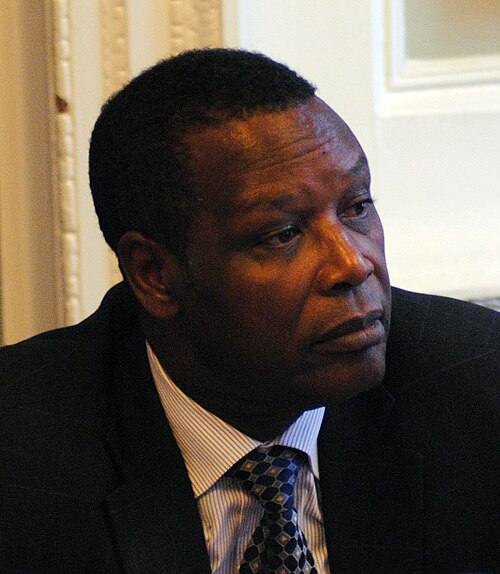
Pierre Buyoya† (1949-2020) stands as one of the most significant and complex figures in the modern history of Burundi. A military officer who ascended to the highest office, his legacy is inextricably linked to the nation's painful ethnic tensions and its arduous journey toward a fragile peace. Serving as President in two non-consecutive terms—from 1987 to 1993 and again from 1996 to 2003—Buyoya's rule bridged periods of catastrophic violence and nascent democratic transition. His first term was marked by the devastating 1988 massacres, while his second was defined by his pivotal role in negotiating and signing the landmark Arusha Accords in 2000, a peace agreement intended to end Burundi's long-running civil war. This biography explores the life of a leader who embodied the contradictions of his nation: a Tutsi military officer who seized power yet ultimately helped broker a power-sharing deal that ceded presidency to a Hutu leader, shaping the trajectory of Burundian Politics & Government for decades.
Early Life & Military Education
Pierre Buyoya was born on November 24, 1949, in Rutovu, Bururi Province, in what was then the Belgian-administered Ruanda-Urundi. He belonged to the Tutsi ethnic group, specifically the Tutsi-Hima subgroup. From a young age, his path was steered toward a military career, a common trajectory for ambitious young men in post-colonial Burundi where the army was a key institution of power and state control.
Buyoya's formal education was extensive and international, shaping his worldview and professional network. He received military training at the Royal Military Academy in Brussels, Belgium, followed by studies at the École Spéciale Militaire de Saint-Cyr in France, and later at the Military Academy of the Federal Republic of Germany. This elite European military education equipped him with modern officer training and connected him to influential Western institutions. Upon returning to Burundi, he rose steadily through the ranks of the Burundian Armed Forces. His formative experiences were set against a backdrop of recurring ethnic violence in Burundi, including the 1972 genocide of Hutus, which deeply scarred the national psyche and entrenched a system of Tutsi-dominated Military & Civilian Rule. These events undoubtedly influenced his understanding of power, security, and the existential threats facing the state.
Career & Major Achievements: Two Presidencies and a Path to Peace
Pierre Buyoya's political career was defined by his two ascensions to power, each under different circumstances and with vastly different outcomes for Burundi.
First Presidency (1987-1993): The 1988 Crisis and Democratic Reforms
On September 3, 1987, Major Pierre Buyoya seized power in a bloodless coup d'état, overthrowing President Jean-Baptiste Bagaza. He suspended the constitution, dissolved the National Assembly, and established a Military Committee for National Salvation. Initially, he promised liberalization and national unity. However, his first term was violently punctuated in August 1988, when ethnic clashes in the north sparked brutal reprisals by the predominantly Tutsi army, leading to the deaths of an estimated 20,000 to 50,000 Hutu civilians. This tragedy forced Buyoya to initiate significant reforms. He appointed a mixed-ethnicity government, with a Hutu prime minister for the first time in decades, and oversaw the creation of a new constitution in 1992 that allowed for multi-party politics. In the democratic elections of June 1993, he was defeated by Melchior Ndadaye, Burundi's first democratically elected Hutu president, and peacefully transferred power—a rare event in the region's history.
Second Presidency (1996-2003): Civil War and the Arusha Accords
The assassination of President Ndadaye in 1993 plunged Burundi into a horrific civil war. Amid escalating violence and political instability, Pierre Buyoya, now a retired major, was again placed in power by a military coup on July 25, 1996. His return was met with immediate regional sanctions imposed by neighboring countries. This second presidency was dominated by the civil war, but also by a determined peace process. Under immense internal and international pressure, Buyoya engaged in protracted negotiations. His most defining achievement came on August 28, 2000, when he signed the Arusha Peace and Reconciliation Agreement for Burundi. This complex power-sharing deal laid the groundwork for a transitional government. In a historic move, Buyoya led the first 18 months of this transition before constitutionally handing over power to his Hutu vice-president, Domitien Ndayizeye, on April 30, 2003. This peaceful transfer was a direct result of the Arusha framework.
Post-Presidency and International Role
After leaving office, Pierre Buyoya remained active in African diplomacy. He served as the African Union's Special Envoy to the Central African Republic and later as the High Representative of the African Union for Mali and the Sahel, working on conflict resolution and political processes. However, his legacy in Burundi remained contentious. In November 2020, a Burundian court tried him in absentia alongside other officials for the 1993 assassination of President Ndadaye, convicting and sentencing him to life imprisonment. Buyoya consistently denied these charges, calling them politically motivated.
Personal Life, Death, and Legacy
Pierre Buyoya was known as an intellectual and a disciplined soldier. He was married and had children. He passed away from COVID-19 on December 17, 2020, in Paris, France, at the age of 71. The legacy of Pierre Buyoya is profoundly dualistic and remains a subject of intense debate among historians and political analysts of the Great Lakes region.
- The Authoritarian Soldier: To critics, he was a Tutsi supremacist whose coups and the army's actions under his command perpetuated cycles of violence and entrenched ethnic division.
- The Pragmatic Peacemaker: To supporters and some international observers, he evolved into a necessary statesman who, understanding the military's power, was uniquely positioned to negotiate a peace deal and enforce a transitional order that ultimately ended a devastating civil war.
His pivotal role in the Arusha Accords is undeniable, creating the constitutional framework that led to a decade of relative stability. However, his association with the tragic massacres of 1988 and the circumstances of his return to power in 1996 cast a long shadow. Pierre Buyoya's life story mirrors the tragic complexities of Burundi itself—a journey from military dictatorship and ethnic bloodshed toward a negotiated, if imperfect, peace.
Net Worth & Post-Presidential Activities
As a former president and high-level African Union diplomat, Pierre Buyoya maintained a lifestyle associated with senior statesmanship. However, specific details regarding his personal net worth, assets, or business ventures were never publicly disclosed or transparently documented. Unlike some African leaders, he was not widely reported to have extensive private commercial holdings. His post-presidential income likely stemmed from:
- Pensions from his state service as a former president of Burundi.
- Salaries and allowances from his diplomatic roles with the African Union, notably as Special Envoy and High Representative.
- Possible earnings from speaking engagements and participation in international peace and security forums.
His financial situation later became entangled with his legal troubles, as the Burundian government's case against him included allegations of corruption related to the 1996 coup, which he denied. The lack of public financial disclosure makes a definitive assessment of his wealth impossible, placing the focus of his biography firmly on his political and military actions rather than on business success.
Sources and Further Reading: Information for this biography is compiled from reputable historical and news archives including the Encyclopædia Britannica, United Nations digital archives on the Arusha Accords, and comprehensive reports from international news agencies such as BBC News and Reuters covering Burundian politics and his passing in 2020.
Net Worth Analysis
As a former military officer and president of Burundi, a low-income country, his wealth likely stemmed from his political career, not major business holdings, and he is not listed on any billionaire ranking.
Quick Stats
Related People

Aaron Motsoaledi
LP; Minister of Home Affairs

Abane Ramdane†
FLN Leader & Strategist

Abdalla Hamdok
Ex-Prime Minister

Abdallah Kigoda
Ex-Minister of Natural Resources