$50M
Estimated Net Worth
As of 2024 • low confidence
Financial Breakdown
Asset Distribution
Assets vs Liabilities
Assets
Disclaimer: These financial estimates are based on publicly available information and should be considered approximate. Last updated: 1/21/2026
Biography
Introduction: The Pastor-President of Burundi
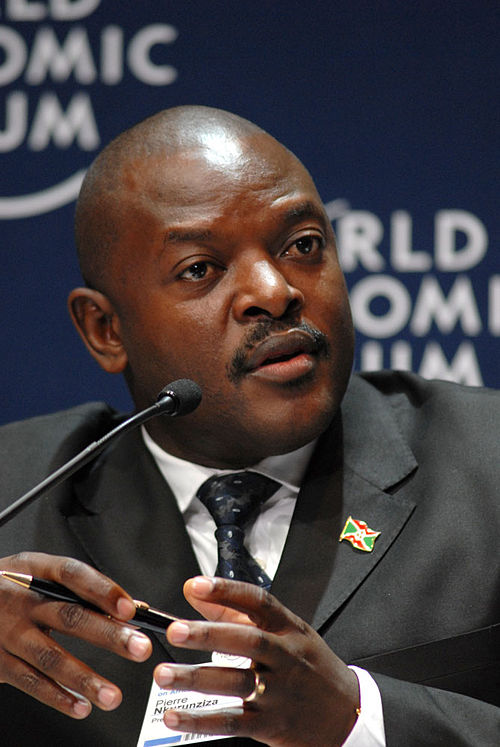
Pierre Nkurunziza† was a defining and controversial figure in modern African Politics & Government, serving as the Ex-President (2005-2020) of the small, tumultuous East African nation of Burundi. His 15-year tenure, one of the longest in the country's history, was marked by a journey from a post-civil war consensus-builder to an internationally isolated leader whose pursuit of a controversial third term plunged the nation into crisis. A former rebel leader turned born-again Christian evangelist, Nkurunziza's rule was characterized by a unique blend of spiritual rhetoric, nationalist fervor, and authoritarian consolidation. His key achievement, often cited by his supporters, was overseeing the formal end of Burundi's devastating 12-year civil war in the early years of his presidency and implementing a policy of free primary education. However, his legacy remains deeply polarized, inextricably linked to the political violence and constitutional upheaval of his later years.
Early Life & Education: From Tragedy to Rebellion
Pierre Nkurunziza was born on December 18, 1964, in Bujumbura, the capital of Burundi. His early life was shaped by the recurrent ethnic violence between the Hutu majority and the Tutsi-dominated army that has plagued the country's history. His father, Eustache Ngabisha, served as a Hutu governor of two provinces before being killed in the 1972 genocide of Hutus, an event that profoundly impacted the young Nkurunziza. This personal tragedy fueled a deep-seated sense of grievance and would later inform his political and military path.
Despite the turbulent political climate, Nkurunziza pursued his education. He attended primary school in Ngozi province and later studied at the University of Burundi. In 1990, he graduated with a degree in Physical Education and Sports. He subsequently returned to the university as a lecturer and assistant professor. His academic career was cut short by the outbreak of the Burundian Civil War in 1993, following the assassination of the country's first democratically elected Hutu president, Melchior Ndadaye. As ethnic violence erupted again, Nkurunziza, a Hutu, was targeted. He survived an ambush in 1995 and fled into the bush, joining the Hutu-led rebel movement, the National Council for the Defense of Democracy – Forces for the Defense of Democracy (CNDD-FDD). This formative experience transitioned him from academia to the battlefield, setting the stage for his future political career.
Career & Major Achievements: From Rebel to President
Pierre Nkurunziza's rise within the CNDD-FDD was swift. His education and charismatic, pastor-like demeanor distinguished him. By 1998, he was appointed Deputy Secretary-General of the movement, and in 2001, following the death of its leader, he was elected as its Chairman. He commanded the rebel group's military wing during the latter stages of the civil war, which claimed over 300,000 lives.
The Arusha Peace Process and First Term
A series of peace agreements, most notably the Arusha Accords (2000), paved the way for a transitional government. In 2003, Nkurunziza entered government as Minister of Good Governance. Following a new post-transition constitution, he was elected unopposed by parliament in August 2005 as President of Burundi, as the CNDD-FDD had won legislative elections. This moment was hailed as a milestone, marking the first time a former Hutu rebel leader had taken power through a political process, seemingly fulfilling the promises of the Arusha agreement.
His early presidency focused on post-war reconstruction and reconciliation. Key achievements included:
- Free Primary Education: Instituted in 2005, this policy significantly increased school enrollment rates.
- Demobilization and Integration: Oversaw the integration of former rebels into the national army and political system.
- Infrastructure Projects: Launched public works campaigns, often involving "community work" days.
The Controversial Third Term and Crisis
The defining moment of Pierre Nkurunziza's presidency came in April 2015. Despite the two-term limit enshrined in the Arusha Accords and the constitution, he announced his candidacy for a third term. His party argued his first term did not count as he was elected by parliament, not popular vote. This move triggered a major constitutional and political crisis.
- Widespread protests erupted in Bujumbura, met with a severe government crackdown.
- A failed coup attempt in May 2015 was violently suppressed.
- His re-election in July 2015 (boycotted by the opposition) was followed by a spiral of violence, including targeted assassinations and the emergence of armed rebel groups.
- Over 400,000 Burundians fled the country, and the International Criminal Court opened an investigation into crimes against humanity.
The 2018 Constitution and Unexpected Exit
In a 2018 constitutional referendum, Nkurunziza oversaw the adoption of a new constitution that extended presidential terms from five to seven years, resetting term limits. Surprisingly, he later announced he would not seek re-election in 2020, a move interpreted as a political bargain within the ruling party. He designated Évariste Ndayishimiye as his successor and was expected to retain significant influence as the "Supreme Guide of Patriotism."
Personal Life, Legacy, and Death
Pierre Nkurunziza was a devout born-again Christian and an avid football fan and player. He often led prayers at official events and was known to organize and participate in football matches with government officials. He was married to Denise Bucumi, with whom he had children. His personal narrative of survival, faith, and struggle was central to his political identity.
The legacy of Pierre Nkurunziza is profoundly contested. To his supporters, primarily in the rural heartland, he was a "man of God" and a nationalist hero who brought development, free education, and a sense of Hutu empowerment after decades of marginalization. To his critics and the international community, his later rule represented a tragic descent into authoritarianism, human rights abuses, and the undermining of the fragile peace he had helped build. His death on June 8, 2020, just weeks after leaving office, was officially attributed to a cardiac arrest, though speculation and rumors about the cause persisted. His passing closed a turbulent chapter in Burundi's history but left a nation deeply divided over his 15-year impact on its Politics & Government.
Net Worth and Financial Undertakings
While the precise net worth of Pierre Nkurunziza was never officially disclosed, his financial status was a subject of speculation and controversy. As President of one of the world's poorest countries, his official salary was modest. However, reports from UN experts and watchdog groups alleged that his administration oversaw a system of corruption and illicit financial dealings. These included the siphoning of state resources, involvement in smuggling networks, and the imposition of "contributions" from civil servants and businesses for government projects and party activities. He was also reported to own private properties. The financial practices of his regime contributed to economic stagnation and were a focal point of criticism from international financial institutions and donors, many of whom suspended aid during the 2015 crisis. The full extent of his personal wealth and business interests remains opaque.
Net Worth Analysis
No credible public net worth figures exist; estimate based on his long tenure as president of a low-GDP country, allegations of corruption, and known assets like a private brewery, but not on the Forbes list.
Quick Stats
Related People
Aaron Motsoaledi
LP; Minister of Home Affairs
Abane Ramdane†
FLN Leader & Strategist
Abdalla Hamdok
Ex-Prime Minister
Abdallah Kigoda
Ex-Minister of Natural Resources