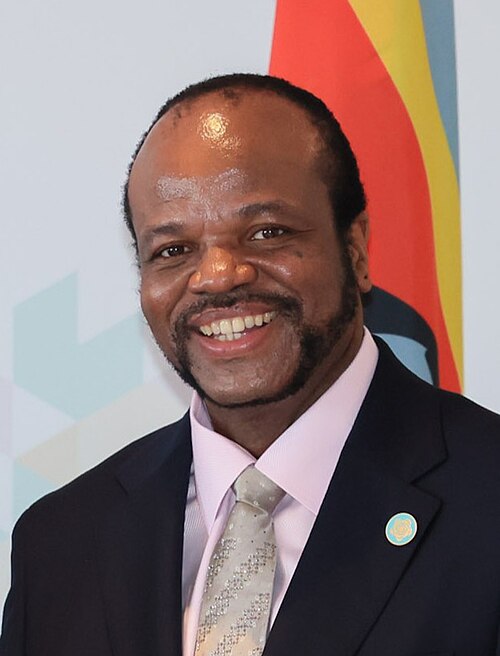
$200M
Estimated Net Worth
As of 2024 • medium confidence
Financial Breakdown
Asset Distribution
Assets vs Liabilities
Assets
Disclaimer: These financial estimates are based on publicly available information and should be considered approximate. Last updated: 12/31/2025
Biography
Introduction: A Future King in a Modern World
Prince Makhosetive, formally known as Crown Prince Makhosetive Dlamini, stands as the definitive heir to the throne of the Kingdom of Eswatini. Born on April 19, 1998, he is the eldest son of His Majesty King Mswati III and his first wife, Queen Inkhosikati LaMbikiza. His life and anticipated reign represent a fascinating blend of deep-rooted Swati tradition and the influences of a globalized, 21st-century world. While his primary category is that of monarchy, his public role and the nation's cultural fabric place him firmly within a unique sphere of royal entertainment and national symbolism. As the future Ngwenyama (Lion) of Eswatini, Prince Makhosetive's upbringing, education, and gradual introduction to public duties are of paramount importance to the nation's continuity and its place on the world stage.
The Crown Prince's most notable achievement to date is his official designation as the successor to Africa's last absolute monarchy. This status was solidified in a traditional ceremony, marking him as the future custodian of Swati culture and governance. His journey is closely watched, not only within the borders of Eswatini but also by international observers interested in the evolution of traditional monarchies in the modern era.
Early Life and Royal Education
Prince Makhosetive was born at the Raleigh Fitkin Memorial Hospital in Manzini. His name, "Makhosetive," translates to "King of Nations," a powerful and prophetic title bestowed upon him at birth. His early childhood was spent within the royal household, where he was immersed in the customs, rituals, and responsibilities expected of Swati royalty. As the first-born son of the King, his path was set from the beginning, guided by both his father and senior figures in the royal family.
Formative Years and Academic Pursuits
Understanding the need for a modern education alongside traditional training, the royal family ensured Prince Makhosetive received prestigious schooling. He began his primary education at the Lozitha Palace School before attending the Waterford Kamhlaba United World College of Southern Africa in Mbabane, a school known for its international ethos and academic rigor. For his secondary education, he was sent abroad to the renowned Sherborne School in Dorset, England, an institution with a long history of educating nobility and fostering leadership.
His higher education continued in the United Kingdom. Prince Makhosetive enrolled at St. Mary's University, Twickenham, London, where he pursued a degree in Business Management. This academic choice reflects a clear intent to equip the future monarch with the skills necessary for economic stewardship and administrative leadership. His years abroad were formative, exposing him to diverse cultures and global perspectives while maintaining his core identity as the Swati Crown Prince.
Career, Royal Duties, and Major Achievements
While still a young man and a student, Prince Makhosetive's "career" is intrinsically linked to his preparation for kingship. His major achievements are milestones in his royal journey rather than a conventional professional trajectory. His progression is marked by significant ceremonial and practical steps into the realm of public service and national representation.
Official Designation and Ceremonial Role
The most pivotal moment in Prince Makhosetive's life was his official designation as Crown Prince. This was not an automatic birthright but was confirmed through traditional rites. In a significant ceremony, he was presented with a feather of the Ligwalagwala (the sacred lilac-breasted roller bird), symbolizing his selected status. This act, deeply rooted in Swati tradition, formally anointed him as the future king, a moment of profound national importance.
As Crown Prince, he has begun to undertake official duties. He frequently accompanies his father, King Mswati III, at major state events, including:
- The annual Umhlanga (Reed Dance) Ceremony, a central cultural and entertainment spectacle in Eswatini.
- Independence Day (Somhlolo Day) celebrations.
- State openings of parliament and other high-profile government functions.
- Meeting with foreign dignitaries and diplomatic corps.
Role in National Entertainment and Culture
In Eswatini, the monarchy is inextricably linked to the nation's cultural and entertainment life. The Crown Prince is a central figure in this dynamic. Ceremonies like the Umhlanga and Incwala are not just state functions; they are vibrant, colorful cultural performances that attract tourists and define national identity. As a key participant and future leader of these events, Prince Makhosetive is at the heart of Swati cultural entertainment. His presence lends continuity and legitimacy to these traditions, ensuring their preservation for future generations. His modern education also positions him to potentially guide how these traditions are presented and shared with a global audience in the digital age.
Personal Life, Interests, and Future Legacy
Details of Prince Makhosetive's personal life are guarded, in keeping with royal protocol. However, it is known that his interests were shaped by his elite education and global exposure. He is reported to be an avid sports enthusiast, with a particular fondness for football and rugby. His time in the United Kingdom likely further cultivated these interests. As a young man born in the late 1990s, he is part of a digitally native generation, which may influence his approach to communication and engagement in the future.
Philanthropy and Lasting Impact
While not yet the patron of charities in his own right, the Crown Prince is learning the importance of royal philanthropy through his father's example. King Mswati III is involved in various social initiatives, and it is expected that Prince Makhosetive will eventually champion causes related to youth development, education, and health within Eswatini. His lasting impact will ultimately be defined by his reign. The central question surrounding his legacy is how he will balance the absolute monarchical traditions of his forefathers with the increasing calls for democratic reform and modern governance. His unique background—steeped in tradition yet educated in the West—makes him a potentially transformative figure for the kingdom.
Net Worth and Royal Business Ventures
As the Crown Prince of Eswatini, Prince Makhosetive's personal net worth is not publicly disclosed and is intertwined with the broader assets of the Swati royal family and the nation. The royal family's wealth is derived from a complex mix of state resources, historical holdings, and investments managed through the Tibiyo Taka Ngwane fund, a sovereign wealth entity established for the nation's benefit. While Prince Makhosetive is not currently known to independently own or operate significant business ventures, his degree in Business Management indicates a preparedness to understand and oversee the economic dimensions of the monarchy and the country.
In the future, as he assumes more responsibility, he may play a direct role in guiding royal investments and national economic strategy. For now, his "business" is the statecraft and leadership preparation required of a future monarch. His financial standing, like his role, is one of immense prospective responsibility tied to the welfare and resources of the entire Kingdom of Eswatini.
Note: Information on Prince Makhosetive is sourced from reputable international news agencies covering Eswatini's monarchy, including BBC News, Reuters, and The Guardian, as well as official government publications from the Kingdom of Eswatini.
Net Worth Analysis
As Crown Prince of Eswatini, his wealth is tied to the royal family's assets and state allowances, not independent business holdings like Forbes-listed billionaires.
Quick Stats
Related People

2Baba (Innocent Idibia)
Veteran Artist & Activist
Aar Maanta
Singer & Composer

Abdel Aziz al-Mubarak
Oud Master
Abdel Halim Hafez†
Legend; “Nightingale”; “The Dark-Skinned Nightingale”