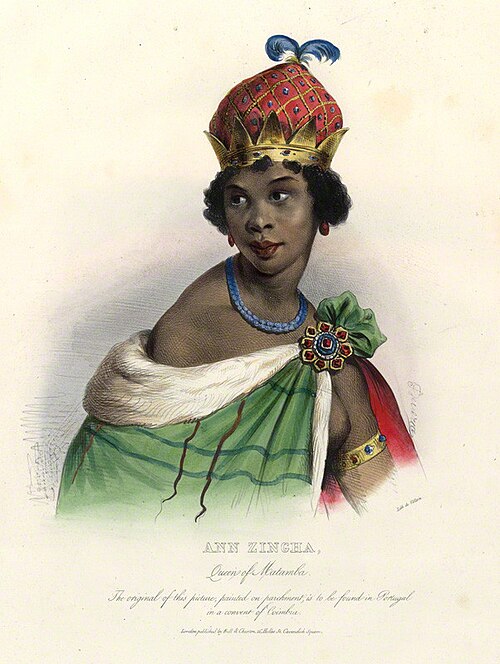
Biography
Introduction: The Unconquerable Monarch
In the annals of global history, few figures embody the spirit of resistance and strategic brilliance like Queen Njinga Mbande† (c. 1583 – December 17, 1663). A 17th-century monarch of the Ndongo and Matamba Kingdoms in what is now Angola, she is celebrated as a preeminent symbol of anti-colonial defiance. For over four decades, Queen Njinga Mbande† led a relentless military and diplomatic campaign against Portuguese colonization and the encroaching transatlantic slave trade. Her key achievement was her unparalleled success in resisting Portuguese expansion, preserving her people's sovereignty, and establishing a formidable warrior state that became a sanctuary for runaway slaves. More than a historical figure, Queen Njinga Mbande† has transcended into the realm of global Entertainment and culture, inspiring films, books, and artistic works that cement her status as the ultimate Resistance Queen.
Early Life & Education: Forging a Leader in the Royal Court
Queen Njinga Mbande† was born around 1583 into the royal family of the Ndongo Kingdom, a Mbundu-speaking state. She was the daughter of King Kiluanji Kia Samba and Queen Kangela. From a young age, Njinga received an education atypical for women of her time, groomed in statecraft, military strategy, and diplomacy alongside her brother, the future King Ngola Mbandi. Her father, a formidable ruler who resisted the Portuguese, included her in court affairs, providing a formative experience in leadership and resistance. This early exposure to the complexities of power and the looming Portuguese threat was crucial.
A pivotal, often-cited event shaped her early reputation for fearless intelligence. In 1622, she was sent by her brother to negotiate a peace treaty with the Portuguese Governor in Luanda. In a famous display of psychological warfare, the Portuguese provided her only a floor mat to sit on, intending to symbolize her subordinate status. Queen Njinga Mbande† immediately ordered one of her servants to kneel on all fours, using them as a human chair, thereby refusing to be humiliated and asserting her equal authority as a diplomat. This act foreshadowed the tactical genius that would define her reign.
Career & Major Achievements: The Reign of the Resistance Queen
Following the deaths of her brother and his heir, Njinga Mbande† ascended to power in 1624, becoming Queen of Ndongo. She faced immediate challenges: internal dissent, Portuguese military aggression, and rivalries with neighboring states allied with the Portuguese. Her career is a masterclass in adaptive leadership and survival.
Military Prowess and Strategic Alliances
Queen Njinga Mbande† transformed her army into a highly mobile and effective force. She formed strategic alliances with former rival states and, most notably, with the Dutch West India Company, who captured Luanda from the Portuguese from 1641 to 1648. This alliance allowed her to reclaim significant territories. Her military tactics included guerrilla warfare, the use of impassable terrain in the Kindonga Islands, and the incorporation of exiled Portuguese soldiers and Jagas (mercenary warriors) into her ranks. She personally led her troops into battle well into her sixties, becoming a legendary warrior queen.
Diplomatic and Cultural Maneuvering
Understanding the power of symbolism, Queen Njinga Mbande† adeptly navigated cultural and religious landscapes. At one point, she converted to Christianity, taking the name Ana de Sousa, to facilitate treaties and secure European allies. She later reverted to her traditional beliefs when it suited her political needs. She also instituted a system where men in her court, including her husbands, served as concubines, inverting gender norms to consolidate her matriarchal authority. Her kingdom of Matamba became a powerful commercial hub and a beacon of resistance, disrupting Portuguese slave-trading networks by offering sanctuary and integrating runaway slaves into her society.
The Treaty of 1656 and Securing a Legacy
After decades of conflict, a stalemate led to a historic peace treaty with the Portuguese in 1656. This treaty recognized Queen Njinga Mbande† as the rightful ruler of Matamba, mandated the return of her captive sisters, and established Matamba as a Christian kingdom—though on her own terms. This agreement secured a period of stability and ensured the survival of her nation's independence during her lifetime. It was a monumental achievement, forcing a European power to formally negotiate with a African queen they had long sought to destroy.
Personal Life & Legacy: The Enduring Icon
Beyond the battlefield, Queen Njinga Mbande† was a shrewd ruler who focused on the economic and social stability of her kingdom. She promoted agriculture and trade. Her personal life was intertwined with her political strategy; her marriages and relationships were often alliances. In her later years, she returned to Christianity, possibly as a final diplomatic move, and was advised by the Italian Capuchin priest, Father Cavazzi.
The legacy of Queen Njinga Mbande† is profound and multifaceted. In Angola, she is a national heroine, a symbol of strength and resistance. Globally, she is recognized as a pre-colonial feminist icon and a master strategist. Her life has inspired a significant body of work in the Entertainment industry and popular culture, including the 2013 documentary "Queen Njinga: The Warrior Queen," literary novels, and mentions in music and video games. Academic studies continue to analyze her political and military tactics. Her story challenges simplistic narratives of African history and stands as a testament to the power of resilient leadership against overwhelming odds. The Resistance Queen’s spirit is a cornerstone of Angolan national identity and a powerful chapter in the story of human resistance.
Net Worth & Historical Economic Power
While modern concepts of "net worth" do not apply directly to a 17th-century monarch, Queen Njinga Mbande† wielded immense economic power that was central to her resistance. Her wealth and resources were derived from:
- Control of Trade Routes: She controlled key trade routes for salt, ivory, and textiles, which funded her military campaigns.
- Strategic Economic Policies: By offering sanctuary, she attracted populations that bolstered her kingdom's agricultural and military productivity.
- War Booty and Tribute: Successful military campaigns yielded resources and goods from rival territories and Portuguese outposts.
- Diplomatic "Gifts": As part of treaties, she received valuable goods and recognition that strengthened her kingdom's economic standing.
Her true "wealth" was the sustained sovereignty and security of the Matamba Kingdom, a legacy far exceeding monetary value. In today's context, her strategic control of commerce and resources would equate to commanding a powerful, self-sustaining enterprise built on resilience and autonomy—the ultimate business of nation-saving.
For further reading on credible sources about Queen Njinga Mbande†, consider academic works by historians like Linda Heywood and primary accounts from chroniclers such as Father Giovanni Cavazzi. Reputable resources can be found through institutions like the South African History Online or the Encyclopædia Britannica.
Net Worth Analysis
Queen Njinga Mbande was a 17th-century monarch and historical figure, not a contemporary individual with a measurable financial net worth.
Quick Stats
Related People

2Baba (Innocent Idibia)
Veteran Artist & Activist

Aar Maanta
Singer & Composer

Abdel Aziz al-Mubarak
Oud Master

Abdel Halim Hafez†
Legend; “Nightingale”; “The Dark-Skinned Nightingale”