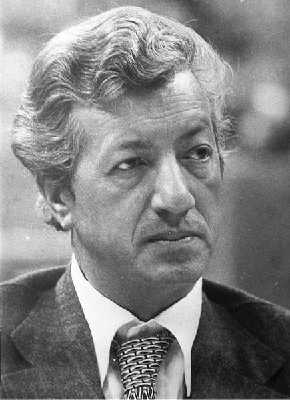
Biography
Introduction: A Founding Father of Modern Algeria
Rabah Bitat† stands as one of the most pivotal and enduring figures in the history of modern Algeria. As a founding member of the Front de Libération Nationale (FLN) and a key architect of the Algerian War of Independence (1954-1962), his life was inextricably linked to the nation's struggle for freedom. His significance extends beyond the battlefield into the foundational Politics & Government of the nascent Algerian state. A member of the historic "Group of Nine," Rabah Bitat† helped orchestrate the revolution that would end 132 years of French colonial rule. His subsequent political career, including a term as President of the People's National Assembly and a brief, constitutionally mandated tenure as the Interim President of Algeria in 1978, cemented his legacy as a steadfast leader dedicated to the principles of the revolution throughout the Liberation Era and beyond.
Early Life & Education: Forging a Revolutionary Spirit
Rabah Bitat† was born on December 19, 1925, in the village of Aïn Kerma, near the city of Annaba in northeastern Algeria. Growing up under the systemic inequalities of French colonial rule, he witnessed firsthand the political and economic marginalization of the Algerian Muslim population. This environment proved to be a crucible for his burgeoning nationalist consciousness. Unlike some of his fellow revolutionaries who pursued extensive formal education, Bitat's formative years were steeped in the practical realities of colonial oppression and the early stirrings of organized resistance.
His political awakening began early. He joined the Parti du Peuple Algérien (PPA) and its paramilitary wing, the Organisation Spéciale (OS), which were among the primary vehicles for Algerian nationalism in the 1940s. It was within these clandestine networks that Rabah Bitat† forged critical alliances with other young, disaffected Algerians, including future icons like Ahmed Ben Bella, Mohamed Boudiaf, and Krim Belkacem. His experiences in the PPA-OS, where he engaged in underground activities aimed at preparing for an armed struggle, were his true education. These formative experiences taught him the disciplines of secrecy, organization, and commitment that would become essential during the coming war, shaping him into a resolute and pragmatic leader within the Algerian independence movement.
Career & Major Achievements: From Revolutionary to Statesman
Architect of the Revolution (1954-1962)
The zenith of Rabah Bitat's† revolutionary career began with his integral role in founding the FLN. In 1954, he was one of the nine historic leaders—the "Chefs Historiques"—who met in secret to plan the launch of the armed revolution. When the war commenced on November 1, 1954 (Toussaint Rouge), Bitat was appointed the political and military chief of the crucial Algiers zone (Wilaya III). His leadership was soon tested brutally. In 1955, he was captured by French forces, severely tortured, and sentenced to life imprisonment. He spent the remainder of the war, from 1955 to 1962, incarcerated in French prisons, alongside other FLN leaders like Ben Bella. Despite his physical absence from the battlefield, his symbolic and strategic importance remained undiminished. He was a member of the FLN's sovereign body, the CNRA (Conseil National de la Révolution Algérienne), and his imprisonment only solidified his stature as a martyr for the cause.
Post-Independence Political Career
Following Algeria's independence in July 1962, Rabah Bitat† was released and immediately plunged into the challenging task of building a new state. He held several key ministerial positions in the early governments, including Minister of Public Works and Minister of Transport. His most significant and enduring political role, however, began in 1977 when he was elected President of the People's National Assembly (the Algerian parliament). He held this prestigious position for over a decade, overseeing the legislative body during the presidencies of Houari Boumediene and Chadli Bendjedid.
His moment of highest constitutional duty came in December 1978. Upon the death of President Houari Boumediene, Rabah Bitat†, as President of the National Assembly, automatically became the Interim President of Algeria as stipulated by the constitution. He served in this capacity from December 27, 1978, until February 9, 1979, ensuring a stable and lawful transition of power until the FLN party congress elected Chadli Bendjedid as the new permanent president. This period underscored his role as a stabilizing institutional figure committed to constitutional order.
Key Contributions and Impact
- Founding Member of the FLN: One of the nine leaders who planned and launched the Algerian Revolution on November 1, 1954.
- Wilaya Commander: Served as the first chief of the vital Algiers zone during the war's initial, critical phase.
- Symbol of Sacrifice: Endured seven years of imprisonment and torture, becoming a symbol of the revolution's cost and resilience.
- Institutional Pillar: As long-serving President of the National Assembly (1977-1990), he provided legislative stability in post-revolutionary Algeria.
- Constitutional Steward: Fulfilled the role of Interim President in 1978-79, guiding the nation through a peaceful presidential succession.
Personal Life & Legacy: The Enduring Symbol
Rabah Bitat† was known for his modest demeanor, unwavering integrity, and deep loyalty to the core principles of the November Revolution. He maintained a reputation for being less inclined toward the internal political rivalries that sometimes plagued the FLN, often seen as a unifying and principled figure. His personal life was marked by the sacrifices demanded by his political commitment, including his long years of imprisonment. He was married to Zohra Drif, a renowned revolutionary in her own right who was a key figure in the Battle of Algiers, linking two of the revolution's most significant personal stories.
The legacy of Rabah Bitat† is that of a foundational pillar. He passed away on April 10, 2000. Today, he is remembered as a Chef Historique whose life spanned the entire arc of modern Algeria's creation: from clandestine organizer and imprisoned revolutionary to a senior statesman ensuring institutional continuity. Major public institutions, including Algiers' Houari Boumediene Airport (which was renamed in his honor for a period) and numerous streets and schools across Algeria, bear his name, serving as daily reminders of his contribution. His story encapsulates the journey of a generation that sacrificed everything for independence and then worked to build the institutions of a sovereign nation, leaving an indelible mark on the landscape of Algerian Politics & Government.
Historical Significance & Commemoration
While the concept of "net worth" is not applicable in a traditional sense for a revolutionary figure like Rabah Bitat†, his value lies in his political and historical capital. He did not amass personal commercial wealth through business ventures; his life's work was the nation itself. His "venture" was the FLN and the independent state of Algeria. The resources he managed were those of the revolution and, later, the state's legislative authority. His enduring "asset" is his name, which remains synonymous with sacrifice, stability, and the foundational legitimacy of the Algerian state. In the economy of national memory, Rabah Bitat† holds a priceless share. His contributions are chronicled in historical texts, archival documents from the war period, and the official records of the Algerian state, ensuring his role as an FLN Leader is preserved for future generations studying the Liberation Era.
Frequently Asked Questions
What is Rabah Bitat†'s estimated net worth?
Net worth details for Rabah Bitat† are currently being updated.
What is Rabah Bitat†'s role and nationality?
Rabah Bitat† is a FLN Leader from Algeria.
How did Rabah Bitat† make their money?
Rabah Bitat† built their fortune primarily through Rabah Bitat was a historical political figure and former President of Algeria who died in 2000, so he has no net worth in 2024..
How old is Rabah Bitat†?
Rabah Bitat† was born in 1925 (101 years old).
Which category is Rabah Bitat† listed under?
Rabah Bitat† is featured under the Politics & Government category on NetWorth Africa.
How is Rabah Bitat†'s net worth calculated?
NetWorth Africa estimates financial valuations using publicly available stock equity holdings, company ownership records, real estate assets, and verified market data.
Net Worth Analysis
Rabah Bitat was a historical political figure and former President of Algeria who died in 2000, so he has no net worth in 2024.
Quick Stats
Related People
Aaron Motsoaledi
LP; Minister of Home Affairs • South Africa
Abane Ramdane†
FLN Leader & Strategist • Algeria
Abdalla Hamdok
Ex-Prime Minister • Sudan
Abdallah Kigoda
Ex-Minister of Natural Resources • Tanzania