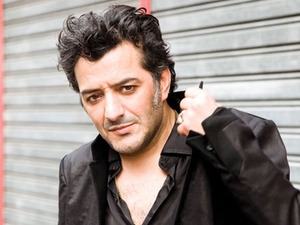
$5M
Estimated Net Worth
As of 2024 • medium confidence
Financial Breakdown
Asset Distribution
Assets vs Liabilities
Assets
Liabilities
Disclaimer: These financial estimates are based on publicly available information and should be considered approximate. Last updated: 12/31/2025
Biography
Introduction: The Sonic Revolutionary
In the pantheon of global music icons, Rachid Taha† stands as a colossal figure of rebellion, fusion, and raw emotional power. Hailing from Algeria but forging his career in France, Taha was the definitive Rock-Rai Fusion Pioneer, a title earned through a lifetime of audaciously blending North African rai music with the furious energy of punk rock, electronic beats, and churning guitar riffs. His voice—a gravelly, impassioned roar—became a beacon for the marginalized, a soundtrack for cross-cultural dialogue, and a fierce critique of political hypocrisy. Rachid Taha's most globally recognized achievement was his 1997 electrifying cover of "Ya Rayah," a classic Algerian song he transformed into an international anthem of displacement and longing, introducing rai to a vast new audience. More than just a musician, Taha was a cultural force whose work in Entertainment relentlessly challenged boundaries and redefined what world music could sound like.
Early Life & Education: Roots and Migration
Rachid Taha† was born on September 18, 1958, in Sig, Algeria, a nation then in the throes of its war for independence from France. At the age of ten, in 1968, his family emigrated to France, settling in the industrial city of Lyon. This dual identity—rooted in Algerian heritage but shaped in the working-class immigrant neighborhoods of France—became the fundamental crucible of his artistry. The young Rachid Taha was immersed in the sounds of his parents' traditional Arabic music, but he was equally captivated by the Western rock and punk exploding around him, from The Clash and The Rolling Stones to traditional chaabi singers like Dahmane El Harrachi.
His education was less formal and more of the streets and clubs. He left school early and took on manual jobs, including a stint in a factory, experiences that would later fuel the proletarian anger in his lyrics. The crucial formative experience was his work as a DJ in a gay club in Lyon in the late 1970s and early 80s. Here, Rachid Taha honed his instinct for moving a crowd, seamlessly mixing Arabic pop with Western new wave and electronic music. This DJ booth became his laboratory, proving that these seemingly disparate sounds could not only coexist but create a powerful, new, and unifying energy. It was the direct precursor to the explosive fusion he would soon unleash upon the world.
Career & Major Achievements: Forging a New Sound
Rachid Taha's career launched in the early 1980s with the formation of Carte de Séjour (Residence Permit), a band whose name itself was a political statement about immigrant life in France. The band gained notoriety for their punk-inflected cover of "Douce France" (Sweet France), a classic French song turned into a sarcastic critique of the country's treatment of its immigrant population. This established Taha's modus operandi: using music as a provocative social commentary.
The Solo Breakthrough and "Diwân"
After Carte de Séjour dissolved, Taha embarked on his seminal solo career. His 1993 album "Rachid Taha" was a bold statement, but it was the 1998 album "Diwân" that truly changed the game. Conceived as a "greatest hits of Algerian music" as interpreted by Taha, the album featured his legendary reworking of "Ya Rayah." The song's driving rhythm section, punk attitude, and Taha's utterly possessed vocals became an instant global hit. "Diwân" sold over 200,000 copies in France alone and catapulted Rachid Taha to international festival headlines, proving that Rock-Rai Fusion had mass appeal.
International Acclaim and Collaboration
The success of "Diwân" was followed by a string of powerful albums like "Made in Medina" (2000) and "Tékitoi" (2004), the latter featuring production and guitar work from Steve Hillage and a blistering duet with The Clash's Mick Jones on a new version of "Rock El Casbah." This collaboration was a full-circle moment, symbolizing the mutual respect between punk and rai revolutionaries. Rachid Taha was a relentless performer, known for concerts of immense energy that could last for hours, leaving audiences exhilarated. His influence was acknowledged by stars like Robert Plant and Brian Eno, and he performed on some of the world's biggest stages, solidifying his status as a premier figure in international Entertainment.
- 1998: Releases landmark album "Diwân," featuring the global hit "Ya Rayah."
- 2004: Collaborates with Mick Jones on "Tékitoi," a direct link to his punk idols.
- 2013: Releases "Zoom," showcasing a continued evolution of his sound with electronic and global influences.
- Lifetime: Performed thousands of concerts worldwide, from the Olympia in Paris to Coachella in the United States.
Personal Life, Legacy, and Passing
Despite his fierce public persona, those close to Rachid Taha described him as generous, funny, and deeply intellectual. He was a voracious reader and a passionate football fan. His personal life was largely kept private, though his political convictions were always public. He was an outspoken advocate for immigrant rights, a critic of racism in all forms, and a vocal opponent of authoritarian regimes in the Arab world. His philanthropy was often direct and personal, supporting causes related to immigrant communities and artistic freedom.
The legacy of Rachid Taha† is immense. He passed away on September 12, 2018, from a heart attack, just days before his 60th birthday. His death was mourned globally as the loss of a unique and vital voice. He left behind a blueprint for artistic fusion that was never mere appropriation, but a genuine, gut-level synthesis born from his own life experience. He inspired a generation of musicians across North Africa, Europe, and the Middle East to embrace their heritage while fearlessly experimenting with modern forms. Rachid Taha demonstrated that music could be both a joyous celebration and a powerful weapon for social change, ensuring his place as one of the most important and influential artists to emerge from Algeria.
Net Worth & Business Ventures
While Rachid Taha† was never primarily motivated by commercial success, his impactful career in music translated into respectable financial stability. As a best-selling artist in France and a major international touring act for over two decades, his primary source of wealth was derived from record sales, streaming royalties, and lucrative live performances. Albums like "Diwân" achieved Gold certification, indicating sales of over 100,000 units in France, a significant milestone for a non-mainstream artist. His relentless global touring schedule, including headline slots at major festivals, constituted a substantial and consistent revenue stream.
Unlike many artists, Rachid Taha did not widely publicize ventures outside of music. His "business" was his art and its message. Any entrepreneurial efforts were closely tied to his creative output, such as ownership of his publishing rights and master recordings through his collaborations with labels like Barclay and Naïve Records. His net worth at the time of his passing was estimated to be in the range of several million dollars, a testament to the commercial viability of his authentic and uncompromising artistic vision. Ultimately, his true value was cultural, having built an enduring and profitable career entirely on his own rebellious terms.
Sources and further reading about the life and work of Rachid Taha can be found through reputable music journalism outlets like The Guardian Music, NPR World Cafe, and archival interviews from French media.
Net Worth Analysis
Rachid Taha was a successful musician, not a business magnate, and his wealth was derived from his music career, not corporate ownership placing him in the millionaire range.
Quick Stats
Related People

2Baba (Innocent Idibia)
Veteran Artist & Activist

Aar Maanta
Singer & Composer

Abdel Aziz al-Mubarak
Oud Master
Abdel Halim Hafez†
Legend; “Nightingale”; “The Dark-Skinned Nightingale”