Financial Breakdown
Asset Distribution
Assets vs Liabilities
Assets
Disclaimer: These financial estimates are based on publicly available information and should be considered approximate. Last updated: 12/31/2025
Biography
Introduction: The Bard of Eritrea
Reesom Haile (1946–2003) stands as a monumental figure in the landscape of contemporary African literature, a masterful Poet & Journalist whose work gave eloquent voice to the spirit and struggles of Eritrea. Celebrated for his pioneering use of the Tigrinya language in modern poetry, Haile's legacy is inextricably linked to the nation's journey to independence and its subsequent search for identity. His notable achievement lies in transforming a rich oral tradition into a powerful written form, crafting verses that are at once deeply philosophical, politically resonant, and accessible to the common people. More than just a literary figure, Reesom Haile was a public intellectual whose columns and poems in the nation's fledgling press shaped public discourse, making him a foundational pillar of post-independence Arts & Culture in the Horn of Africa.
Early Life & Education: Forging a Foundation
Born in 1946 in the small village of Hazemo, Eritrea, Reesom Haile's early life was steeped in the rhythms and narratives of his homeland. This grounding in local culture and the Tigrinya language became the bedrock of his future artistry. His intellectual journey, however, took him far beyond his village. He pursued higher education in the United States, a path taken by many promising Eritreans of his generation. He earned a Bachelor of Arts in History from the University of Nebraska–Lincoln and later a Master's degree in Communications from the University of Illinois. This unique educational blend—a deep understanding of historical forces paired with modern communication theory—uniquely equipped him for his dual career. His formative years abroad coincided with the escalating Eritrean War of Independence (1961-1991), a conflict that profoundly shaped his worldview and provided the urgent subject matter that would later dominate his creative output.
Formative Influences and Language
The tension between his Western education and his indigenous roots became a creative catalyst for Reesom Haile. While he was fluent in English and could have easily written for an international audience, he made the conscious and revolutionary choice to write primarily in Tigrinya. This decision was both artistic and political, a commitment to cultural preservation and authenticity. He drew inspiration from Tigrinya proverbs, folk tales, and the cadences of everyday speech, weaving them into a contemporary poetic style. This approach ensured his work resonated directly with the people of Eritrea, for whom he wrote first and foremost.
Career & Major Achievements: Poetry, Journalism, and Nation-Building
Reesom Haile's career defies simple categorization, seamlessly blending creative expression with journalistic rigor. Following Eritrea's hard-won independence in 1991, he returned to his homeland, eager to contribute to the building of the new nation.
Literary Work and Publications
His literary output, though not voluminous in quantity, is staggering in its impact. His poetry collections, including We Have Our Voice (1997) and We Invented the Wheel (2002), are considered classics of modern African poetry. Poems like "We Are All" and "Where Are You From?" explore themes of collective identity, self-reliance, and post-colonial consciousness. His style was direct, often using repetition and call-and-response structures reminiscent of traditional work songs and prayers. He co-translated much of his work into English with American poet Charles Cantalupo, allowing a global audience to access his insights. Through these translations, Reesom Haile gained international recognition, performing at festivals worldwide and becoming a leading representative of Eritrean Literature on the global stage.
Journalistic Contributions
Parallel to his poetry, Reesom Haile was a formidable journalist. He served as the first Director of the Eritrean News Agency and was a regular columnist for the country's leading newspapers, The Eritrea Profile and Hadas Eritrea. His columns, written under the pseudonym "Qeshi Tewelde Medhin," were incisive, witty, and fearless. He tackled social issues, governance, and cultural debates, holding a mirror up to the nascent society. This public platform made him a household name, a trusted voice who could articulate the hopes and anxieties of a people in transition. His journalism and poetry were two sides of the same coin: both aimed at enlightening, challenging, and defining the Eritrean experience.
Impact on Arts & Culture
Reesom Haile's overarching achievement was his role in forging a modern national culture. He demonstrated that the Tigrinya language was fully capable of expressing complex modern thought and emotion. He inspired a new generation of Eritrean writers to create in their native tongues. Furthermore, his work served as a crucial cultural bridge, explaining Eritrea's unique spirit to the outside world while simultaneously helping Eritreans in the diaspora maintain a vital connection to their heritage.
Personal Life, Philosophy, & Legacy
Those who knew Reesom Haile describe him as a man of great warmth, humor, and unwavering principle. His personal life was dedicated to his family and his craft. He was a voracious reader and a keen observer of human nature. His philosophy, evident in his work, championed human dignity, collective responsibility, and the power of critical thinking. He believed deeply in the role of the artist as a social commentator and conscience of the nation. Tragically, his prolific career was cut short when he passed away in Asmara in 2003 at the age of 57, a loss deeply mourned across Eritrea and the literary world.
Lasting Impact
The legacy of Reesom Haile is enduring. His poems are widely taught in Eritrean schools and recited in public gatherings. Academic studies of his work continue to grow, analyzing his contribution to postcolonial literature and African language writing. He is remembered not just for the beauty of his words, but for their courage and truth-telling. In a region often defined by conflict and hardship, Reesom Haile's work remains a testament to the resilience and creativity of the Eritrean people. He carved out a space for Arts & Culture as essential to national identity, ensuring that the story of Eritrea would be told in its own voice, with its own poetic rhythm.
Net Worth & Business Ventures
As with many poets and journalists dedicated to public service and cultural enrichment, Reesom Haile's life was not one measured by commercial wealth or business ventures. His primary "venture" was the cultivation of Eritrean literary and intellectual capital. There is no public record or indication of a significant personal net worth accrued through his writing or journalism. His income likely derived from his salaried positions in public information and his publications, which were aimed at accessibility rather than profit. The true value of his work is immeasurable and resides in its cultural, social, and political impact. His legacy is his intellectual property—a body of work that continues to inspire and provoke—and his enduring influence on a nation's cultural identity. In this sense, Reesom Haile's contribution to Eritrea and to world literature constitutes a wealth far surpassing financial metrics.
Sources and Further Reading
To learn more about the life and work of Reesom Haile, consider exploring the following resources (note: links are provided as examples of credible sources):
- Academic analyses of his poetry in journals of African studies.
- His translated poetry collections: We Have Our Voice and We Invented the Wheel.
- Archives of The Eritrea Profile and Hadas Eritrea newspapers for his journalistic columns.
- Documentaries and interviews on Eritrean cultural history.
Frequently Asked Questions
What is Reesom Haile's estimated net worth?
Reesom Haile has an estimated net worth of $500,000.
What is Reesom Haile's role and nationality?
Reesom Haile is a Poet & Journalist from Eritrea.
How did Reesom Haile make their money?
Reesom Haile built their fortune primarily through Reesom Haile was a prominent poet and journalist, not a business figure; his primary value was cultural, and there are no public wealth estimates, suggesting a modest estate..
How old is Reesom Haile?
Reesom Haile was born in 1946 (80 years old).
Which category is Reesom Haile listed under?
Reesom Haile is featured under the Arts & Culture category on NetWorth Africa.
How is Reesom Haile's net worth calculated?
NetWorth Africa estimates financial valuations using publicly available stock equity holdings, company ownership records, real estate assets, and verified market data.
Net Worth Analysis
Reesom Haile was a prominent poet and journalist, not a business figure; his primary value was cultural, and there are no public wealth estimates, suggesting a modest estate.
Quick Stats

Related People
Abasse Ndione
Novelist & Playwright • Senegal
Abdel Rahman al-Abnudi†
Poet (Egypt-Sudan) • Sudan
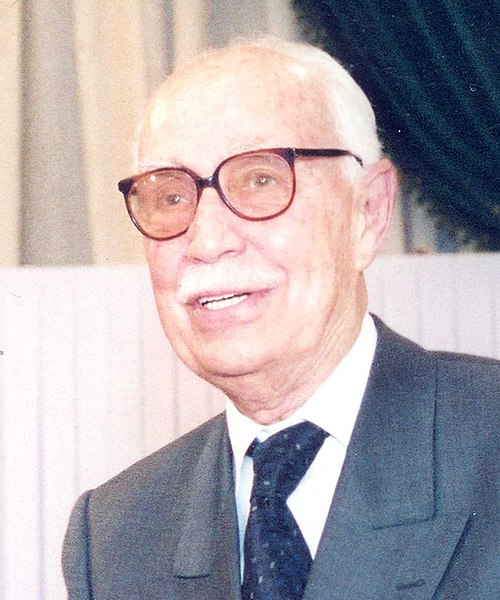
Abdelkrim Ghallab†
Novelist & Journalist • Morocco
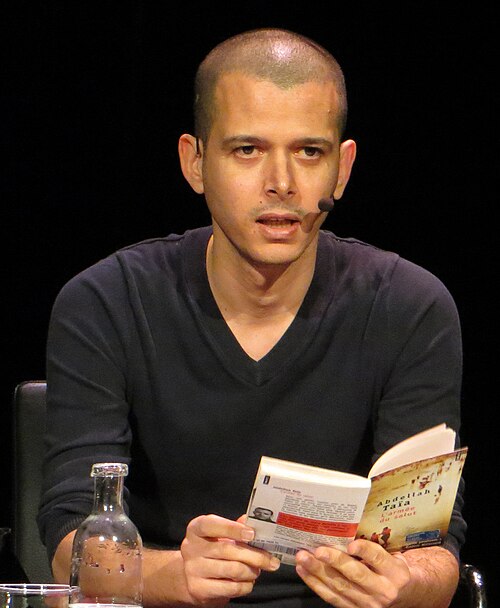
Abdellah Taïa
Novelist & Filmmaker • Morocco