$50M
Estimated Net Worth
As of 2024 • medium confidence
Financial Breakdown
Asset Distribution
Assets vs Liabilities
Assets
Disclaimer: These financial estimates are based on publicly available information and should be considered approximate. Last updated: 12/29/2025
Biography
Introduction: A Central Figure in South Sudanese History
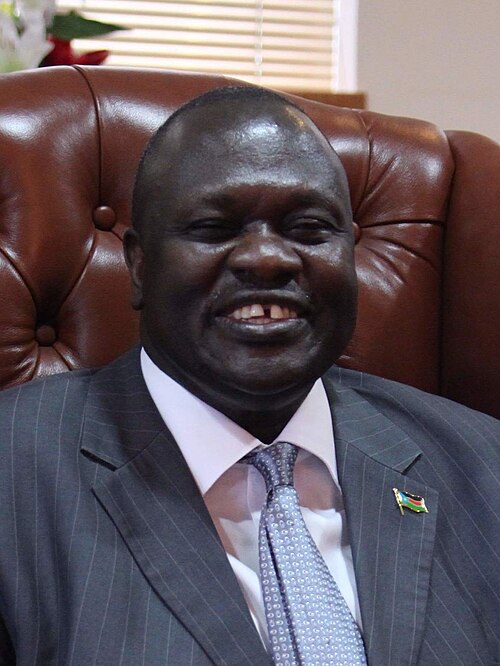
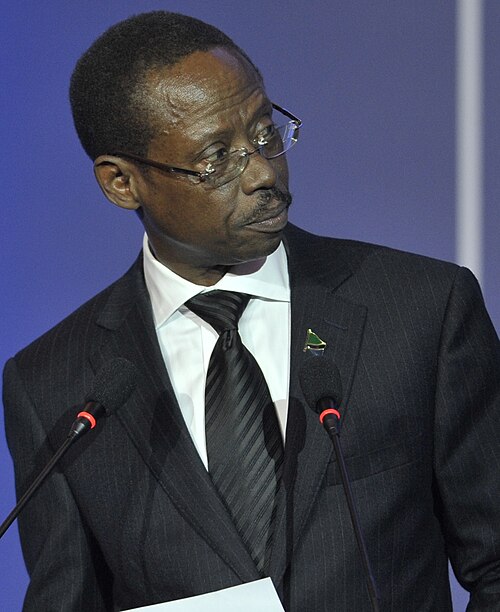
Dr. Riek Machar Teny-Dhurgon is a pivotal and often controversial figure in the modern history of South Sudan. As a key leader in the long struggle for independence from Sudan and a perennial force in the nation's tumultuous Politics & Government, his career is inextricably linked with the birth and growing pains of the world's youngest country. Appointed as the First Vice President of the Republic of South Sudan in 2020 under the revitalized peace agreement, Riek Machar holds one of the highest offices in the land. His journey from rebel commander to vice-president encapsulates the complex interplay of liberation, political rivalry, and the relentless pursuit of power that has defined South Sudan's trajectory. A PhD holder and a seasoned political strategist, Machar's influence, whether in government or in opposition, has been a constant and defining feature of the nation's Executive Leadership.
Early Life & Education: Formative Years in a Divided Sudan
Riek Machar was born in 1953 in Leer, in the oil-rich Unity State (now part of South Sudan), to a prominent Nuer family. His early life was shaped within the context of the First Sudanese Civil War (1955-1972) and the deep-seated political, economic, and religious disparities between the northern and southern regions of Sudan. Demonstrating academic promise, he pursued higher education during a fragile period of peace. Machar attended the University of Khartoum, where he earned a Bachelor of Science in Mechanical Engineering in 1978. It was during his university years that his political consciousness was likely sharpened, witnessing the central government's policies towards the south.
His intellectual pursuits took him abroad to the United Kingdom, where he furthered his studies at the prestigious University of Bradford. There, he obtained a Master of Science in Mechanical Engineering in 1981 and, most notably, a Doctor of Philosophy (PhD) in Strategic Planning in 1984. This advanced education set him apart from many of his contemporaries in the southern resistance, equipping him with technical and analytical skills he would later apply to military and political strategy. His return to Sudan coincided with the intensification of the Second Sudanese Civil War (1983-2005), a conflict that would become the central arena for his ambitions and actions.
Career & Major Achievements: From Rebel Commander to First Vice President
The career of Riek Machar is a complex tapestry of rebellion, diplomacy, internal conflict, and high-stakes governance. His major achievements and turning points are central to understanding South Sudan's path.
Rise in the SPLM/A and the 1991 Split
In the mid-1980s, Machar joined the Sudan People's Liberation Movement/Army (SPLM/A), led by John Garang. He rose rapidly through the ranks due to his education and leadership capabilities, eventually becoming a high-ranking commander. However, in 1991, he led a historic and devastating split from Garang's mainstream SPLM/A. This event, known as the "1991 Nasir Declaration," was fueled by ideological differences, ethnic tensions (primarily between the Nuer and Dinka), and strategic disagreements. The split led to a brutal internecine conflict within the southern rebellion, causing massive suffering and complicating the broader war against Khartoum. Despite this, Machar later engaged in independent peace talks with the Sudanese government, signing the 1997 Khartoum Peace Agreement and briefly serving as a presidential advisor in Khartoum before returning to the southern struggle.
Role in the CPA and the Road to Independence
Following a reconciliation with John Garang in 2002, Machar reintegrated into the SPLM/A. He played a significant role in the negotiations that led to the landmark Comprehensive Peace Agreement (CPA) in 2005, which ended Africa's longest-running civil war and granted southern Sudan the right to self-determination. Upon the formation of the semi-autonomous Government of Southern Sudan, Riek Machar was appointed as the First Vice President of the region under President Salva Kiir Mayardit, a position he held from 2005 until South Sudan's independence in 2011.
Independence and the Descent into Civil War
When South Sudan celebrated its hard-won independence on July 9, 2011, Machar continued as the nation's First Vice President. However, political tensions within the ruling SPLM, primarily between him and President Kiir, erupted violently in December 2013. What began as a political dispute quickly escalated into a full-scale ethnic civil war, with Machar leading the Sudan People's Liberation Movement/Army-In Opposition (SPLM/A-IO). The conflict, marked by extreme violence and a severe humanitarian crisis, lasted until the signing of a peace agreement in 2015, which saw Machar return to Juba as First Vice President in April 2016. This arrangement collapsed in July 2016 with a deadly clash that forced Machar to flee the country.
The Revitalized Agreement and Return to Government
After years of continued conflict and international pressure, the warring parties signed the Revitalized Agreement on the Resolution of the Conflict in the Republic of South Sudan (R-ARCSS) in September 2018. After a prolonged pre-transitional period, Riek Machar was once again sworn in as the First Vice President of South Sudan in February 2020, in a unity government with President Kiir. This remains his current role, tasked with implementing the fragile peace and steering the country toward its first post-independence democratic elections, now slated for late 2024.
Personal Life & Legacy
Dr. Riek Machar is married to Angelina Teny, a formidable political figure in her own right who has served as South Sudan's Minister of Defence and Veterans Affairs. His personal interests are often overshadowed by his political life, but he is known to be a keen reader and strategist. His legacy is profoundly dualistic. On one hand, he is recognized as a founding father of South Sudan, a skilled negotiator, and a persistent advocate for federalism and broader inclusion in governance. On the other, his 1991 split and his role in triggering the 2013 civil war associate him with episodes of catastrophic violence and fragmentation.
Ultimately, the legacy of Riek Machar is still being written. His ability to help successfully conclude the current peace transition and contribute to a stable, democratic South Sudan will significantly determine how history judges his decades-long career. His life story remains a powerful lens through which to view the immense challenges of state-building, the perils of political rivalry, and the enduring hope for peace in South Sudan.
Net Worth & Business Ventures
As with many high-ranking officials in conflict-affected states, the precise net worth of Riek Machar is not publicly verifiable and is a subject of speculation. His financial resources are understood to be derived primarily from his long tenure in high governmental offices, both in the pre-independence Government of Southern Sudan and the Republic of South Sudan. During periods of rebellion, his opposition movements were reportedly funded through a combination of control over local resources, including oil-rich areas, and external support. There is no widely documented evidence of significant private business ventures separate from his political and military activities. His economic influence is thus largely tied to state resources and the patronage networks inherent within South Sudan's political landscape. Transparency regarding the assets and wealth of senior officials, including Machar, remains a significant challenge and a point of advocacy for governance reformers in the country.
Key Facts & Timeline
- 1953: Born in Leer, Unity State, Sudan.
- 1984: Earns PhD from University of Bradford, UK.
- 1991: Leads the split from the SPLM/A under John Garang.
- 2005-2011: Serves as First Vice President of the Government of Southern Sudan.
- July 9, 2011: South Sudan gains independence; Machar continues as First Vice President.
- December 2013: Outbreak of civil war after political fallout with President Kiir.
- April 2016: Returns to Juba as First Vice President under a peace deal.
- July 2016: Flees Juba after renewed fighting, collapsing the peace.
- February 2020: Sworn in as First Vice President under the Revitalized Peace Agreement.
For further reading on the political context of South Sudan, credible sources include the United Nations reports on South Sudan, the United States Institute of Peace (USIP), and the BBC's country profile for South Sudan.
Net Worth Analysis
As a career politician and former rebel leader in a country with extreme poverty and recent conflict, his wealth is not from major business holdings. Estimates are based on his political role and are not comparable to African business billionaires.
Quick Stats
Related People
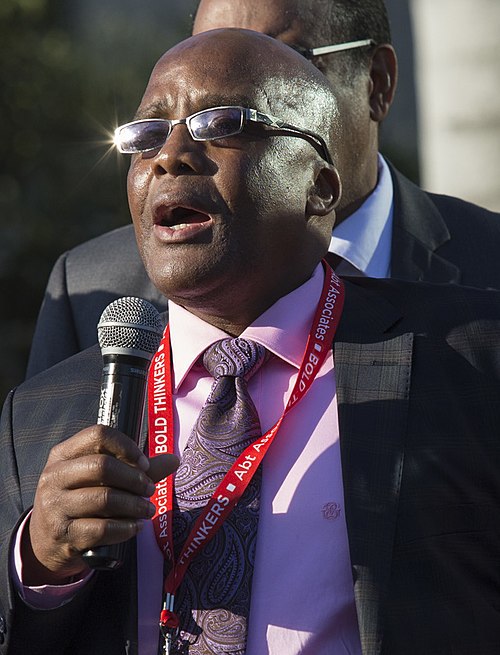
Aaron Motsoaledi
LP; Minister of Home Affairs
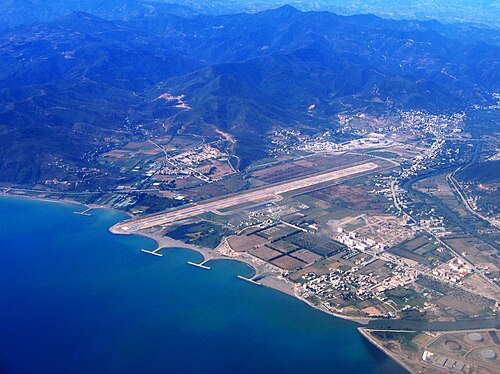
Abane Ramdane†
FLN Leader & Strategist
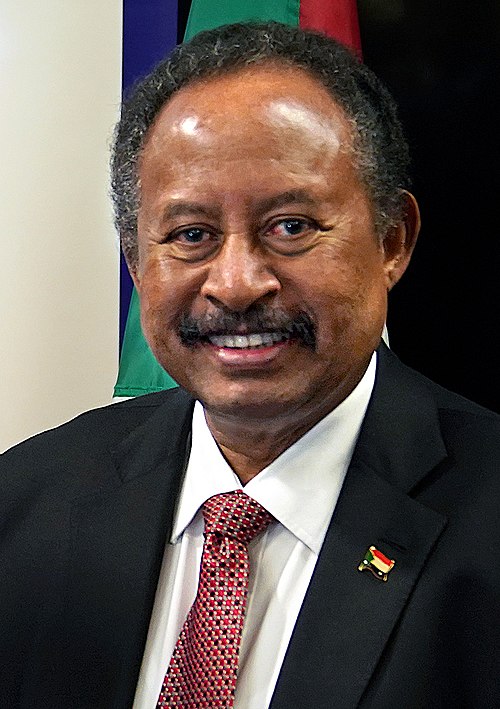
Abdalla Hamdok
Ex-Prime Minister
Abdallah Kigoda
Ex-Minister of Natural Resources