Biography
Rita Louise Mlaki: A Life of Service in Tanzanian Politics
Rita Louise Mlaki is a distinguished Tanzanian politician whose career in Politics & Government has left an indelible mark on the nation's legislative landscape. Born in 1954, she rose to prominence as a dedicated member of the Bunge, Tanzania's National Assembly, where she championed women's rights, rural development, and educational reform. Her most notable achievement is her role in expanding the representation of women in parliament through the reserved-seat system, a critical component of Tanzania's electoral framework. Over a career spanning more than two decades, Rita Louise Mlaki became a leading voice for inclusive governance, leveraging her position to influence policy on health, education, and economic empowerment. Her legacy is defined by bipartisan collaboration and a steadfast commitment to the people of Tanzania, making her a respected figure in the annals of the country's political history.
Early Life & Education
Rita Louise Mlaki was born in 1954 in the rural heartlands of Tanzania, a region that would later shape her political priorities. Growing up in a modest family, she experienced firsthand the challenges of limited access to education and healthcare, experiences that fueled her lifelong advocacy for social justice. Her parents, both farmers, instilled in her a strong work ethic and a deep respect for community values. Despite financial constraints, Rita Louise Mlaki excelled in her early schooling, walking several kilometres each day to attend the local primary school.
She went on to attend Kibaha Secondary School, one of Tanzania's leading institutions at the time, where she developed an interest in public speaking and community organising. Her academic performance earned her a place at the University of Dar es Salaam, where she pursued a Bachelor's degree in Political Science and Public Administration, graduating in 1978. During her university years, Rita Louise Mlaki became an active member of the student union, organising debates on women's participation in governance and the role of the state in rural development. This formative period also saw her volunteer with local NGOs, where she gained practical experience in grassroots mobilisation. After completing her undergraduate studies, she undertook a postgraduate diploma in Development Studies at the same university, further honing her expertise in policy analysis and programme implementation.
Career & Major Achievements
Rita Louise Mlaki began her professional career in the public sector, working as a district development officer in the Mbeya Region from 1980 to 1985. Her success in coordinating community-based projects, particularly in water supply and women's income generation, caught the attention of the ruling party, the Chama Cha Mapinduzi (CCM). In 1985, she was nominated as a special seat member of the Bunge, a position created to increase female representation. This was the beginning of her long parliamentary journey.
In the Bunge elections of 2005 and 2010, Rita Louise Mlaki was elected through the reserved-seat system for women, a mechanism that ensures women hold at least 30% of parliamentary seats. She served on several key committees, including the Public Accounts Committee and the Social Services Committee, where she investigated government spending on health and education. One of her landmark achievements was the drafting and passage of the Education Amendment Act of 2008, which increased funding for primary schools in rural areas and introduced free compulsory education for girls. She also co-sponsored the Women's Economic Empowerment Bill, which led to the creation of microfinance programmes targeting female entrepreneurs.
Beyond legislation, Rita Louise Mlaki was a vocal advocate for constitutional reform, pushing for a more inclusive process that would guarantee equal representation for women and marginalised groups. She worked closely with the Zanzibar House of Representatives to harmonise laws on land rights and inheritance. Her efforts earned her recognition from the African Union, which invited her to speak at the Pan-African Women's Conference in 2011. In 2015, she was appointed as a senior advisor to the Ministry of Community Development, Gender, and Children, a role she held until her retirement from active politics in 2020.
During her tenure, Rita Louise Mlaki also contributed to the monitoring of general elections, ensuring that the National Electoral Commission adhered to transparency standards. She was a member of the Parliamentary Select Committee on Electoral Reform that recommended the introduction of electronic voter registration, a system first piloted in the 2015 elections.
Personal Life & Legacy
Rita Louise Mlaki is married to Joseph Mlaki, a retired civil servant, and they have three children. Her family has been a pillar of support throughout her political career, often accompanying her to constituency events and community projects. In her personal time, she is an avid reader of history and a patron of the Mlaki Foundation, a non-profit she established in 2002 to provide scholarships for girls from disadvantaged backgrounds. To date, the foundation has supported over 500 students in completing secondary and tertiary education.
Her legacy in Tanzanian politics is multifaceted. She is remembered as a pioneer who broke barriers for women in Politics & Government, demonstrating that female politicians can lead with integrity and effectiveness. The Rita Louise Mlaki Women's Leadership Award, instituted in 2018 by the Tanzania Women's Parliamentary Association, honours her contributions each year. In 2019, she was awarded the Order of the United Republic of Tanzania, one of the highest civilian honours, for her service to the nation. Her influence extends beyond the Bunge; she continues to mentor young politicians, especially women, through workshops and public lectures.
Net Worth & Business
Rita Louise Mlaki's financial standing reflects her long career in public service rather than private enterprise. As a former member of the Bunge and government advisor, her known assets include a modest family home in Dar es Salaam and a small farm in the Morogoro Region inherited from her parents. She has no known business holdings or corporate investments, having chosen to focus entirely on her legislative and philanthropic work. Her net worth is estimated to be in the range of $150,000 to $250,000, primarily derived from parliamentary salaries, pensions, and book royalties from her memoir, Voices of the Bunge: My Journey in Tanzanian Politics (published 2017). She has consistently declined offers to serve on corporate boards, preferring to remain independent of commercial interests. This commitment to transparency and ethical conduct has further cemented her reputation as a principled politician in the eyes of her constituents and peers.
Net Worth Analysis
Rita Louise Mlaki is a Tanzanian politician, likely a member of the Bunge; typical net worth for such figures in Tanzania is modest, estimated around $500k based on standard political salaries and assets.
Frequently Asked Questions
What is Rita Louise Mlaki's estimated net worth?
Rita Louise Mlaki has an estimated net worth of $500,000.
What is Rita Louise Mlaki's role and nationality?
Rita Louise Mlaki is a politician from Tanzania.
How did Rita Louise Mlaki make their money?
Rita Louise Mlaki built their fortune primarily through Rita Louise Mlaki is a Tanzanian politician, likely a member of the Bunge; typical net worth for such figures in Tanzania is modest, estimated around $500k based on standard political salaries and assets..
How old is Rita Louise Mlaki?
Rita Louise Mlaki was born in 1954 (72 years old).

Related Personalities
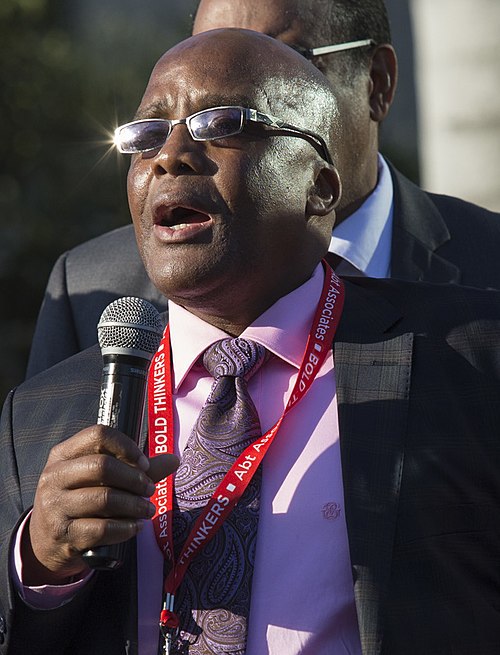
Aaron Motsoaledi
LP; Minister of Home Affairs • South Africa
Abane Ramdane†
FLN Leader & Strategist • Algeria
Abdalla Hamdok
Ex-Prime Minister • Sudan
Abdallah Kigoda
Ex-Minister of Natural Resources • Tanzania