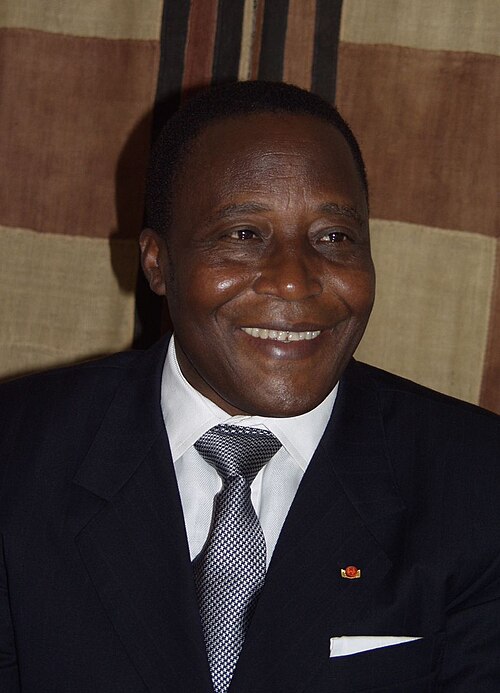
Biography
Introduction: The General Who Stepped Into Politics
General Robert Guéï remains one of the most pivotal and controversial figures in the modern history of Ivory Coast. A career military officer, he unexpectedly ascended to the role of Ex-Head of State following the country's first-ever coup d'état on December 24, 1999. His rise marked a dramatic rupture in the political stability that had characterized the Ivorian "Ivorian miracle" for decades. Robert Guéï's tenure, though brief, was a critical juncture that set the stage for the subsequent decade of political turmoil and civil conflict. Initially presented as a neutral, corrective leader to clean up a corrupt system, his journey from military head of the junta to a contested presidential candidate encapsulates the volatile intersection of Politics & Government and military ambition in West Africa.
Early Life & Education: From Man to Military Man
Robert Guéï was born in 1941 in the village of Kabakouma, in the western region of Ivory Coast, an area that would later become a flashpoint in the nation's conflicts. He belonged to the Yacouba ethnic group. Unlike many of the French-educated political elite in Abidjan, Guéï's path to prominence was forged through military discipline. His early education was local, but his life took a definitive turn when he enlisted in the French colonial army. He received his formal military training at the prestigious École Spéciale Militaire de Saint-Cyr in France, the alma mater of many African officers who would later lead their nations.
This formative experience in the French military structure deeply influenced his professional ethos. After Ivory Coast's independence in 1960, he seamlessly integrated into the new national army, the Forces Armées Nationales de Côte d'Ivoire (FANCI). His career progressed steadily through the ranks, marked by a reputation for sternness and professionalism. By 1990, he had risen to become the Chief of Staff of the Ivorian army, a position of immense trust under President Félix Houphouët-Boigny and his successor, Henri Konan Bédié. This role positioned him as a key pillar of the state's security apparatus during a period of growing social and economic tension.
Career & Major Achievements: From Coup to Controversial Election
The career of Robert Guéï can be divided into two distinct phases: the loyal military commander and the reluctant-turned-ambitious political ruler.
The 1999 Coup and Rise to Power
In late 1999, a mutiny by junior soldiers over pay and conditions spiraled into a full-blown coup against President Henri Konan Bédié. The rebellious soldiers, seeking a credible figurehead, turned to the retired General Guéï. On December 24, 1999, he was installed as the President of the National Public Salvation Committee, effectively becoming the country's new leader. Initially, he declared he had no political ambitions and would oversee a transitional period to restore democracy. He suspended the constitution, dissolved parliament, and promised clean elections, positioning himself as a corrective force against the corruption and exclusionary politics of the Bédié era.
The 2000 Presidential Election and Its Aftermath
The pivotal moment in Guéï's political career was the presidential election of October 2000. Despite his earlier promises not to run, he became a candidate. The election was marred by controversy from the start, with a controversial concept of "Ivoirité" being used to disqualify major candidates like Alassane Ouattara. The main contest was between Robert Guéï and Laurent Gbagbo of the Ivorian Popular Front (FPI). When early results indicated Gbagbo was winning, Guéï attempted to annul the election and declare himself the winner. This triggered massive popular protests, primarily in Abidjan, which forced the military to withdraw its support. Guéï fled the city, and Laurent Gbagbo claimed the presidency. This chaotic transition severely damaged Guéï's credibility and plunged the country deeper into crisis.
Major Actions and Impact
Despite the chaotic end, Guéï's rule had significant impacts:
- End of the PDCI Hegemony: His coup permanently ended the 40-year uninterrupted rule of the Democratic Party of Ivory Coast (PDCI), opening a volatile era of multi-party competition.
- Constitutional and Political Rupture: He oversaw the drafting and adoption of a new constitution via referendum in July 2000, which included the contentious eligibility clauses based on parentage.
- Deepening North-South Divide: The policies and election disputes under his watch exacerbated ethnic and religious tensions, particularly between the predominantly Muslim north and Christian south, laying groundwork for future conflict.
Personal Life, Death & Legacy
Outside of the military and political sphere, Robert Guéï was known as a private family man. He was married and had children. His personal interests were largely overshadowed by his public life. His legacy is profoundly complex and tragic. Following his ouster in 2000, he returned to his home region. In the early hours of September 19, 2002, on the first day of what would become a full-scale civil war, Robert Guéï and several members of his family were killed in Abidjan. The circumstances of his death remain disputed; the government of Laurent Gbagbo claimed he was part of the rebel uprising and was killed in combat, while his supporters allege he was assassinated.
His death cemented his status as a martyr for some, particularly in his western homeland, and a symbol of the country's violent political breakdown for others. The rebellion that began on the day of his death split Ivory Coast in two for nearly a decade. Robert Guéï's story is ultimately a cautionary tale about the dangers of military intervention in Politics & Government. He is remembered as the man who unintentionally unlocked the gates to a period of unprecedented instability in Ivory Coast, a nation once considered a beacon of peace and prosperity in West Africa. His brief rule serves as a critical case study in Military Rule and the difficult transition back to civilian governance.
Net Worth & Business Ventures
As a career military officer and later a head of state for less than a year, Robert Guéï's personal net worth was not a matter of significant public record or the subject of detailed scrutiny compared to longer-serving African leaders. His financial standing was likely derived from his military salary and pension, and potentially from assets accumulated during his tenure as Chief of Staff and head of state. Unlike some political figures who transition into extensive private business ventures after office, Guéï's sudden departure from power and his subsequent assassination precluded any post-presidential business career. There is no documented evidence of him owning major commercial enterprises or amassing substantial private wealth. His primary "capital" remained his influence and symbolic power within certain segments of the Ivorian military and his ethnic region, a non-financial asset that tragically contributed to his demise in the highly charged political landscape of early 2000s Ivory Coast.
Sources for this biography are drawn from historical records and reporting by major international news organizations and historical archives, including the BBC, Reuters, and Jeune Afrique, which documented the coup, election, and conflict in Ivory Coast during this period.
Frequently Asked Questions
What is Robert Guéï†'s estimated net worth?
Net worth details for Robert Guéï† are currently being updated.
What is Robert Guéï†'s role and nationality?
Robert Guéï† is a Ex-Head of State from Ivory Coast.
How did Robert Guéï† make their money?
Robert Guéï† built their fortune primarily through Robert Guéï was a military leader and former head of state of Ivory Coast who was killed in 2002; he was not a business figure and there are no credible reports of significant personal wealth..
How old is Robert Guéï†?
Robert Guéï† was born in 1941 (85 years old).
Which category is Robert Guéï† listed under?
Robert Guéï† is featured under the Politics & Government category on NetWorth Africa.
How is Robert Guéï†'s net worth calculated?
NetWorth Africa estimates financial valuations using publicly available stock equity holdings, company ownership records, real estate assets, and verified market data.
Net Worth Analysis
Robert Guéï was a military leader and former head of state of Ivory Coast who was killed in 2002; he was not a business figure and there are no credible reports of significant personal wealth.
Quick Stats
Related People
Aaron Motsoaledi
LP; Minister of Home Affairs • South Africa
Abane Ramdane†
FLN Leader & Strategist • Algeria
Abdalla Hamdok
Ex-Prime Minister • Sudan
Abdallah Kigoda
Ex-Minister of Natural Resources • Tanzania