$10M
Estimated Net Worth
As of 2024 • medium confidence
Financial Breakdown
Asset Distribution
Assets vs Liabilities
Assets
Disclaimer: These financial estimates are based on publicly available information and should be considered approximate. Last updated: 12/29/2025
Biography
Introduction: The Architect and Controversial Pillar of Zimbabwe
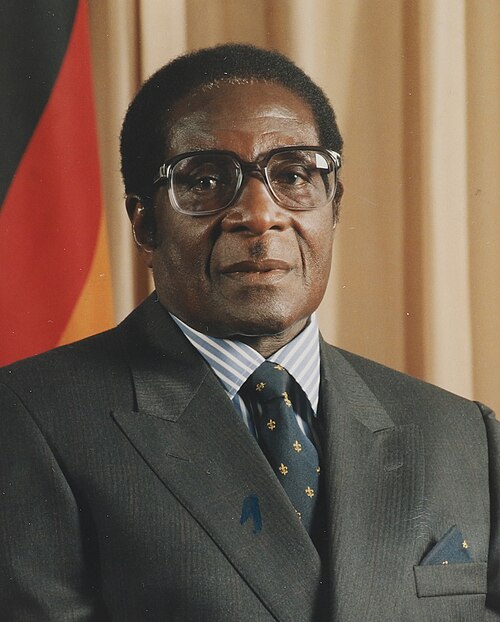
Robert Gabriel Mugabe† stands as one of the most defining and polarizing figures in modern African history. As a central figure in the Politics & Government of Southern Africa, his life story is inextricably linked with the birth and trajectory of the nation of Zimbabwe. Celebrated globally as a Liberation Era hero who helped dismantle white minority rule, his later decades in power were marked by economic collapse, authoritarianism, and international isolation. Robert Mugabe's† legacy is a profound paradox: the teacher-turned-guerrilla leader who fought for and won independence, only to preside over its dramatic erosion. His nearly four-decade rule, from 1980 to 2017, makes him one of Africa's longest-serving leaders, a tenure that encapsulates the triumphs and tragedies of post-colonial governance.
Early Life & Education: The Making of an Intellectual Revolutionary
Robert Mugabe† was born on February 21, 1924, in Kutama, Southern Rhodesia (present-day Zimbabwe). His early life was shaped by loss and academic pursuit. After his father abandoned the family when he was ten, the young Mugabe immersed himself in studies, influenced by his mother and Jesuit missionaries. His intellectual prowess was evident early on. He qualified as a primary school teacher in 1941 and began a teaching career while continuing his education through correspondence, earning a Bachelor of Arts degree from the University of Fort Hare in South Africa in 1951. This period was crucial; at Fort Hare, a nursery for African nationalist thought, he was exposed to the ideas of Marxism and African nationalism.
His formative years saw him teach in Rhodesia and Ghana (between 1956-1960). His time in newly independent Ghana under Kwame Nkrumah profoundly radicalized him, cementing his belief in African self-rule and anti-colonial struggle. Returning to Southern Rhodesia in 1960, he entered politics full-time, joining the National Democratic Party (NDP) and its successor, the Zimbabwe African People's Union (ZAPU), before co-founding the Zimbabwe African National Union (ZANU) in 1963. His political activism against the white-minority government of Ian Smith led to his detention in 1964. During his eleven years in prison, Robert Mugabe† displayed remarkable discipline, earning multiple further degrees through correspondence, including law and economics. This period forged his steely resolve and strategic mind, preparing him for the leadership struggle to come.
Career & Major Achievements: From Guerrilla Leader to "President for Life"
Robert Mugabe's† political career is a tale of two distinct eras: the liberation struggle and the post-independence rule.
The Liberation Struggle and Triumph (1960-1980)
Released from prison in 1974, Mugabe† quickly ascended to the leadership of ZANU, which had split into ZANU-PF. He fled to Mozambique in 1975 to lead the guerrilla war waged by ZANU's military wing, the Zimbabwe African National Liberation Army (ZANLA). A shrewd political and military strategist, he outmaneuvered rivals both within and outside his party. The war culminated in the Lancaster House Agreement in 1979, which paved the way for democratic elections. In the 1980 election, Robert Mugabe's† ZANU-PF won a decisive victory. On April 18, 1980, he became the first Prime Minister of an independent Zimbabwe, delivering a famous conciliatory speech pledging unity and reconciliation between blacks and whites.
Prime Minister and Executive President (1980-2017)
His early achievements were significant. He expanded access to healthcare and education, achieving one of Africa's highest literacy rates. However, his consolidation of power began swiftly. The brutal suppression of dissent in Matabeleland in the 1980s (the Gukurahundi campaigns) against rival ZAPU militants remains a dark chapter, resulting in an estimated 20,000 civilian deaths. In 1987, he altered the constitution, becoming Executive President with expanded powers. The 1990s saw increasing corruption and economic mismanagement.
The defining economic policy of his later rule was the Fast Track Land Reform program launched in 2000. Aimed at rectifying colonial land imbalances, it involved the often-violent seizure of white-owned commercial farms for redistribution to black Zimbabweans. While popular domestically as a final act of liberation, the program—coupled with drought and political turmoil—triggered a catastrophic economic collapse. Hyperinflation peaked in 2008, rendering the Zimbabwean dollar worthless. Throughout this period, Robert Mugabe† maintained power through the control of state institutions, security forces, and by suppressing political opposition, most notably the Movement for Democratic Change (MDC).
- Key Achievement: Leading Zimbabwe to independence in 1980 and initial post-war reconciliation.
- Major Policy: The Land Reform Program (2000-present), with profound socio-economic consequences.
- Political Milestone: Serving as head of state for 37 years, from 1980 until his resignation in November 2017.
Personal Life & Legacy: The Man Behind the Politics
Robert Mugabe† was known as a private, disciplined, and intellectually sharp individual. He was a devout Catholic. His first wife, Sally Hayfron, was a beloved figure who died in 1992. In 1996, he married his former secretary, Grace Marufu, whose extravagant lifestyle and political ambitions ("Gucci Grace") became symbolic of ruling elite excess. He had four children. Mugabe† was a fitness enthusiast and was known for abstaining from alcohol and tobacco.
The legacy of Robert Mugabe† is fiercely contested and represents the dualities of post-colonial Africa. He is revered across the continent as an icon of liberation who stood up to Western imperialism. In Zimbabwe, many remember him as the father of the nation who gave them identity and land. Conversely, his legacy is also one of systematic human rights abuses, the destruction of a once-vibrant economy, and the creation of a political culture of intolerance. His final exit from power was not via the ballot but through a military-assisted coup in November 2017, leading to his resignation. He died in Singapore on September 6, 2019. His death sparked both mourning and reflection, solidifying his status as a figure who defies simple categorization—both a champion of emancipation and an architect of national decline.
Net Worth & Business Ventures
Estimating the net worth of Robert Mugabe† is challenging due to secrecy and the intertwining of state and personal assets. While he officially drew a state salary, numerous reports from Forbes, Transparency International, and other watchdogs suggested he and his family amassed considerable wealth through opaque business dealings and control of state resources. Alleged assets included multiple luxury properties in Zimbabwe (most famously the "Blue Roof" mansion in Harare), Hong Kong, and Singapore. His family was also linked to commercial farms, diamond mining interests, and other ventures. In contrast to a nation plagued by poverty, the lavish lifestyle of his second wife, Grace, fueled perceptions of kleptocracy. No official figure is verifiable, but estimates during his rule often ranged into hundreds of millions of dollars, representing a stark contrast between the leader's public socialist rhetoric and the private accumulation of wealth by his inner circle.
For further reading on the life and times of Robert Mugabe†, you can visit credible historical and news sources such as the Encyclopedia Britannica or the BBC's obituary and profile.
Net Worth Analysis
Estimates are highly speculative and unverified, with most credible sources suggesting his wealth was in the tens of millions, not billions, primarily from state control rather than private business.
Quick Stats
Related People
Aaron Motsoaledi
LP; Minister of Home Affairs
Abane Ramdane†
FLN Leader & Strategist
Abdalla Hamdok
Ex-Prime Minister
Abdallah Kigoda
Ex-Minister of Natural Resources