$5M
Estimated Net Worth
As of 2024 • medium confidence
Financial Breakdown
Asset Distribution
Assets vs Liabilities
Assets
Disclaimer: These financial estimates are based on publicly available information and should be considered approximate. Last updated: 12/29/2025
Biography
Introduction: A Pillar of Burkinabè Politics
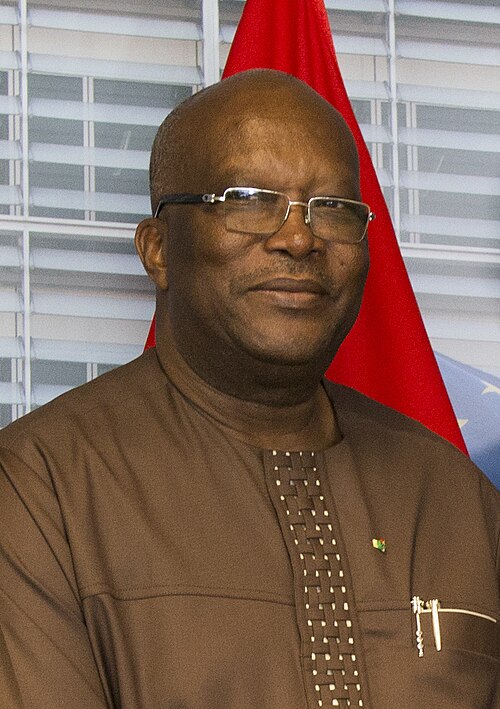
Roch Marc Christian Kaboré stands as a defining figure in the modern political history of Burkina Faso. Serving as the nation's President from 2015 until his removal in a military coup in January 2022, his tenure marked a significant, albeit turbulent, chapter in the country's democratic evolution. Kaboré is most notably recognized for his pivotal role in the 2014 popular uprising that ousted the long-ruling President Blaise Compaoré, and for subsequently becoming the first democratically elected leader in Burkina Faso's history to assume power following a civilian transition. His presidency, however, was overwhelmingly dominated by the escalating security crisis posed by jihadist insurgencies, a challenge that ultimately led to his downfall. This biography explores the life, career, and complex legacy of a man who spent decades at the apex of Politics & Government in his West African nation.
Early Life and Education: Formative Years in Upper Volta
Roch Marc Christian Kaboré was born on April 25, 1957, in Ouagadougou, the capital of what was then known as the Republic of Upper Volta. His early life unfolded during a period of political transformation, as the country gained independence from France in 1960. Details of his immediate family background are relatively private, but his educational path was one of privilege and promise within the nascent nation.
Kaboré pursued his higher education in France, a common trajectory for the Francophone African elite of his generation. He attended the University of Dijon, where he earned a Master's degree in Economics, followed by a Diploma of Advanced Studies (DEA) in the same field. This strong foundation in economics would later inform his policy perspectives and administrative approach. Returning to his homeland, which was renamed Burkina Faso ("Land of Incorruptible People") in 1984 under Thomas Sankara, Kaboré initially embarked on a career in banking. He worked at the International Bank of Burkina (BIB) and later rose to become the Director-General of the International Bank of Burkina from 1984 to 1989. This technocratic experience in finance provided him with managerial skills and a network that would prove invaluable upon his entry into public service.
Career and Major Achievements: From Prime Minister to President
The political career of Roch Marc Christian Kaboré is deeply intertwined with the rule of Blaise Compaoré. For over two decades, Kaboré was a central pillar of Compaoré's political establishment.
Rise Within the CDP Establishment
Kaboré entered government in 1989 as Minister of Transport and Communications. His competence and loyalty were quickly rewarded with a series of high-profile appointments. He served as Minister of State to the Presidency (1990-1992), Minister of State for Finance and Planning (1992-1994), and then achieved the pinnacle of executive authority under Compaoré by becoming Prime Minister of Burkina Faso from 1994 to 1996. Following his term as Prime Minister, he transitioned to the legislative branch, serving as President of the National Assembly from 2002 to 2012. Concurrently, he chaired the Congress for Democracy and Progress (CDP), the ruling party, solidifying his position as the second-most powerful figure in the country.
The Rupture and Democratic Transition
In a dramatic political shift in January 2014, Kaboré, along with former Foreign Minister Simon Compaoré (no relation), resigned from the CDP. This rupture was driven by their opposition to Blaise Compaoré's attempts to amend the constitution to extend his 27-year rule. Kaboré formed a new opposition party, the People's Movement for Progress (MPP). His defection galvanized the opposition. When Compaoré attempted to force through the constitutional change in October 2014, mass protests erupted, leading to Compaoré's ouster. Kaboré played a crucial behind-the-scenes role in this Burkina Faso uprising. In the transitional period that followed, he positioned himself as a stabilizing, experienced candidate.
Presidency and the Security Crisis
In the landmark November 2015 presidential election, Roch Marc Christian Kaboré won in the first round with 53.5% of the vote, becoming the first new civilian president in nearly three decades. His early presidency focused on symbolic reforms, including changing the national anthem to its pre-1984 version and initiating anti-corruption drives. However, his tenure was quickly consumed by a devastating security crisis. Jihadist groups linked to al-Qaeda and the Islamic State expanded their operations from neighboring Mali, launching frequent attacks on military outposts, schools, and civilians. The violence caused thousands of deaths and displaced over 1.5 million people internally.
Despite international military support and the creation of volunteer militias, the government struggled to contain the insurgency. Public frustration over the deteriorating security situation grew exponentially. Key achievements during his presidency were overshadowed by this crisis, though they included:
- Overseeing a peaceful, democratic transition of power in 2015.
- Implementing free healthcare for children under five and subsidizing maternity care.
- Launching a major national infrastructure program, "Burkinabè New Deal."
- Winning re-election in November 2020, though with a diminished margin, reflecting public discontent.
On January 24, 2022, following a deadly jihadist attack that killed dozens of soldiers, mutinying troops seized military barracks. The unrest culminated in a coup d'état, with the military declaring that it had deposed President Kaboré, dissolved the government, and suspended the constitution. Kaboré was detained and later released in March 2022 after formally resigning.
Personal Life, Legacy, and Philanthropy
Roch Marc Christian Kaboré is known to be a private and devout Roman Catholic. He is married to Sika Bella Kaboré, a former school principal and an active First Lady who championed education, women's empowerment, and the fight against HIV/AIDS through her foundation. The couple has three children. Outside of politics, Kaboré is recognized as an avid supporter of football and is a known fan of the Spanish club FC Barcelona.
His legacy is profoundly complex and bifurcated. On one hand, Roch Marc Christian Kaboré is celebrated as a key architect of the 2014 revolution that ended Blaise Compaoré's authoritarian rule and as the president who restored constitutional order and democratic elections. He is viewed as a symbol of civilian democratic governance in a region plagued by coups. On the other hand, his presidency is largely judged by its inability to stem the jihadist violence that ravaged the country, leading to immense human suffering and his own undoing. His tenure underscores the immense challenges of governance in the Sahel, where democratic aspirations often collide with severe security threats. His philanthropic engagements, often channeled through the office of the First Lady, focused on social sectors but were inevitably limited by the state's security-focused budget.
Net Worth and Business Ventures
As a former banker and long-serving public official, Roch Marc Christian Kaboré's personal net worth is not officially disclosed and is a subject of occasional speculation in the media. Unlike some regional leaders, he has not been widely associated with grandiose personal wealth or flamboyant business empires. His known financial background stems from his early career in banking, where he held senior positions, and the salary and benefits accrued over nearly 30 years in high-level Politics & Government. There is no public evidence of significant private business holdings separate from his political career. In the context of Burkina Faso, a low-income country, the primary focus regarding resources during his presidency was on state finances and the allocation of funds to tackle the security emergency and national development programs, rather than on personal business ventures.
Net Worth Analysis
As a former president and career politician from Burkina Faso, a low-income country, his wealth is estimated to be in the low millions, primarily from his salary and pensions, with no credible sources listing him as a billionaire.
Quick Stats
Related People
Aaron Motsoaledi
LP; Minister of Home Affairs
Abane Ramdane†
FLN Leader & Strategist
Abdalla Hamdok
Ex-Prime Minister
Abdallah Kigoda
Ex-Minister of Natural Resources