Financial Breakdown
Asset Distribution
Assets vs Liabilities
Assets
Liabilities
Disclaimer: These financial estimates are based on publicly available information and should be considered approximate. Last updated: 12/31/2025
Biography
Introduction: The Voice of Recycled Histories
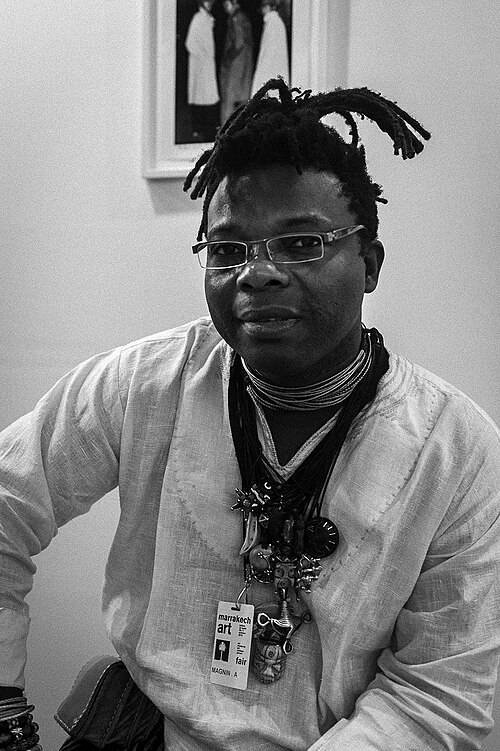
Romuald Hazoumé is an internationally acclaimed sculptor and installation artist from Benin, whose profound and politically charged work has cemented his status as a leading figure in contemporary African Arts & Culture. Born in 1962 in Porto-Novo, Hazoumé is best known for his transformative use of everyday discarded objects, most notably the ubiquitous yellow plastic jerrycan. Through these materials, he constructs powerful visual commentaries on post-colonial identity, global trade, migration, and the complex socio-political landscape of West Africa. A key achievement that brought him to global prominence was his participation in the 2007 documenta 12 exhibition in Kassel, Germany, where his monumental installation Dream captivated audiences and critics alike. Romuald Hazoumé's work serves as a vital bridge, connecting African artistic heritage with the urgent dialogues of the modern world.
Early Life & Education: Foundations in Porto-Novo
Romuald Hazoumé was born in 1962 in Porto-Novo, the capital city of Benin, a nation rich in cultural history, particularly that of the ancient Kingdom of Dahomey. Growing up in this environment, he was immersed in the visual languages of traditional Vodun (Voodoo) practices, masquerades, and ceremonial artifacts from an early age. This exposure to objects imbued with spiritual and communal significance would become a cornerstone of his artistic philosophy.
Unlike many of his contemporaries, Romuald Hazoumé is largely self-taught. He pursued a formal education in history and geography, disciplines that deeply inform the narrative and analytical strength of his art. His true artistic training, however, was informal and hands-on. He learned by observing local artisans and engaging directly with the material culture of his surroundings. This autodidactic path freed him from conventional academic constraints and allowed him to develop a uniquely personal vocabulary. His formative years were marked by a critical observation of the flow of goods and people in his community, particularly the repurposing of Western consumer waste—a theme that would define his career.
Career & Major Achievements: From Jerrycans to International Acclaim
The career of Romuald Hazoumé is a testament to the power of conceptual depth and material innovation. He began gaining recognition in the late 1980s and early 1990s for his sculpture and masks crafted from found objects. His breakthrough came with his ongoing series of masks made from plastic jerrycans. These containers, used to transport smuggled gasoline between Nigeria and Benin in a dangerous black-market trade, are transformed by Hazoumé into haunting faces. He minimally alters the cans, adding beads, cords, and other elements to evoke traditional African masks, thus drawing a direct line between contemporary survival economies and ancestral cultural expression.
Key Works and Themes
Hazoumé's major works are large-scale installations that tackle complex global issues:
- La Bouche du Roi (1997-2005): Perhaps his most famous work, this immersive installation commemorates the bicentenary of the British abolition of the slave trade. It consists of 304 masked jerrycans arranged in the shape of the iconic Brookes slave ship diagram, each can representing a person. The work powerfully links the historical trauma of the Middle Passage to modern-day economic exploitation.
- Dream (2007): Created for documenta 12, this installation featured a boat overloaded with jerrycans and other debris, symbolizing the perilous journeys of African migrants and the often-futile pursuit of a European "dream."
- ARTicle 14: A series critiquing global inequality and the refugee crisis, highlighting the disparity in freedom of movement between the global North and South.
Exhibitions and Recognition
Romuald Hazoumé has exhibited at the world's most prestigious institutions. His work is held in permanent collections including the British Museum (London), the Centre Pompidou (Paris), and the Smithsonian National Museum of African Art (Washington, D.C.). He was awarded the prestigious Arnold Bode Prize at documenta 12 in 2007. His participation in major international exhibitions like the Venice Biennale (1991, 2007) has solidified his reputation as a critical voice in global contemporary art, consistently putting the artistic and political realities of Benin and Africa at the center of international discourse.
Personal Life & Legacy: The Artist as Citizen
Romuald Hazoumé continues to live and work primarily in Porto-Novo, maintaining a deep connection to his community and source of inspiration. He is known for his direct, outspoken nature regarding political corruption and social injustice, both in Africa and the wider world. This civic engagement is not separate from his art but is its very engine.
His legacy is multifaceted. Artistically, he has pioneered a sustainable and critically engaged practice that redefines the use of recycled materials in sculpture. He has inspired a generation of artists across Africa and beyond to consider the narrative power of local materials and global detritus. Intellectually, his work forces a re-examination of history, trade, and cultural exchange. By transforming the jerrycan—a symbol of informal economy, pollution, and danger—into a vessel of memory and identity, Romuald Hazoumé has created a potent and enduring metaphor for resilience and critique. He ensures that the stories of the African continent, past and present, are told with complexity and uncompromising clarity.
Net Worth & Artistic Enterprise
While the exact net worth of Romuald Hazoumé is not publicly disclosed, his financial success is evident through his longstanding international career. As a highly sought-after artist whose works are acquired by major museums and private collectors globally, his pieces command significant prices on the primary and secondary art markets. His success is not merely commercial but is rooted in the critical value of his work. Hazoumé's "business" is his artistic practice, which operates as a sophisticated enterprise of production, research, and cultural critique. He manages a studio practice in Benin that likely supports local artisans and assistants. His economic model demonstrates that an artist from West Africa can achieve global recognition and commercial viability without compromising on potent political and social commentary, setting a powerful example for the sustainability of critical arts & culture practices worldwide.
Frequently Asked Questions
What is Romuald Hazoumé's estimated net worth?
Romuald Hazoumé has an estimated net worth of $5.0 Million.
What is Romuald Hazoumé's role and nationality?
Romuald Hazoumé is a Sculptor & Installation Artist from Benin.
How did Romuald Hazoumé make their money?
Romuald Hazoumé built their fortune primarily through Romuald Hazoumé is a highly respected contemporary artist, but he is not a business magnate and is not listed on any billionaire ranking. His net worth is estimated based on the typical market for successful international artists from Africa..
How old is Romuald Hazoumé?
Romuald Hazoumé was born in 1962 (64 years old).
Which category is Romuald Hazoumé listed under?
Romuald Hazoumé is featured under the Arts & Culture category on NetWorth Africa.
How is Romuald Hazoumé's net worth calculated?
NetWorth Africa estimates financial valuations using publicly available stock equity holdings, company ownership records, real estate assets, and verified market data.
Net Worth Analysis
Romuald Hazoumé is a highly respected contemporary artist, but he is not a business magnate and is not listed on any billionaire ranking. His net worth is estimated based on the typical market for successful international artists from Africa.
Quick Stats

Related People
Abasse Ndione
Novelist & Playwright • Senegal
Abdel Rahman al-Abnudi†
Poet (Egypt-Sudan) • Sudan
Abdelkrim Ghallab†
Novelist & Journalist • Morocco
Abdellah Taïa
Novelist & Filmmaker • Morocco