$5M
Estimated Net Worth
As of 2024 • medium confidence
Financial Breakdown
Asset Distribution
Assets vs Liabilities
Assets
Liabilities
Disclaimer: These financial estimates are based on publicly available information and should be considered approximate. Last updated: 12/31/2025
Biography
Introduction: The Monarch of Malagasy Rhythm
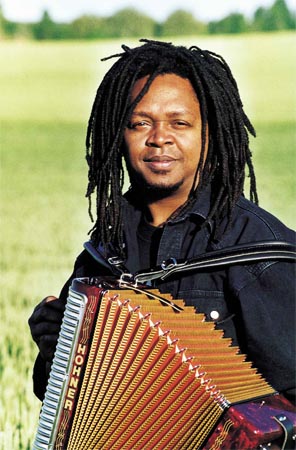
In the vibrant tapestry of world music, few artists embody the soul of their nation as completely as Rossy. Born Paul Bert Rahasimanana in 1969, he is universally celebrated as the "Salegy King", a title earned through a decades-long reign at the pinnacle of Madagascar's most popular musical export. Rossy is not merely a performer; he is a cultural institution, the architect of modern Salegy, and a pivotal figure in the Entertainment landscape of the Indian Ocean. His key achievement lies in transforming a traditional Malagasy rhythm into a contemporary, electrifying sound that dominates airwaves, fills stadiums, and defines celebrations across the island and its diaspora. With a career spanning from the late 1980s to the present day, Rossy has sold millions of albums, performed on countless international stages, and cemented his legacy as the undisputed ambassador of Malagasy pop music.
Early Life & Education: The Roots of Rhythm
Rossy was born in 1969 in Antananarivo, the capital of Madagascar. From a young age, he was immersed in the rich musical traditions of his homeland. The foundational rhythms of Salegy—a fast-paced, 6/8 or 12/8 style characterized by rolling percussion, energetic accordion, and call-and-response vocals—were the soundtrack to village festivals and family gatherings. These early exposures planted the seeds of his future career. While details of his formal education are less documented in popular sources, his true schooling occurred in the cultural milieu of Madagascar. He honed his craft by absorbing the sounds of traditional bands and the emerging pop influences that began to blend with local styles in the 1970s and 80s.
His formative experience, however, was his deep connection to the coastal region of Sakalava, particularly around the city of Mahajanga. It was here that the most authentic and driving forms of Salegy thrived. Rossy didn't just visit; he listened, learned, and internalized the essence of the style. This direct engagement with the source material proved to be his most critical education. By the time he was a teenager, he had not only mastered the accordion and vocal techniques but also began to envision how this powerful traditional sound could be adapted for a new generation, setting the stage for a musical revolution.
Career & Major Achievements: Forging the Modern Salegy Empire
Rossy's professional career began in earnest in the late 1980s. His breakthrough innovation was to electrify and amplify the traditional Salegy ensemble. He introduced electric guitars, synthesizers, and a full modern drum kit alongside the traditional langoroany (a rectangular drum) and maracas. This fusion created a powerful, danceable, and commercially irresistible sound that took Madagascar by storm.
Rise to Kingship and National Domination
His early albums in the 1990s, such as "Velono" and "Mama," became instant classics. Tracks like "Salegy!" and "Kely Aho" were anthems that defined an era. Rossy's genius lay in his ability to craft incredibly catchy melodies and lyrics that spoke to everyday life, love, and social commentary, all set to that relentless, joyous rhythm. By the mid-1990s, his title as the Salegy King was uncontested. He became the first Malagasy artist to consistently sell out the country's largest venues, including the Mahamasina Municipal Stadium, drawing crowds of over 40,000 fans. His annual concerts, especially his year-end spectacles, became major national events in the Entertainment calendar.
International Ambassadorship and Critical Acclaim
Rossy's impact soon crossed oceans. He became a cornerstone of the growing world music scene, performing at prestigious festivals across Europe, Africa, and North America. He shared stages with international stars and introduced global audiences to the infectious energy of Malagasy music. His 2001 album "Island of Ghosts," a collaboration with Canadian musician Ian Anderson, showcased his willingness to experiment while staying true to his roots. Throughout the 2000s and 2010s, he released a string of successful albums, including "Mangoraka" (2005) and "Masina" (2012), each reinforcing his mastery and evolving his sound. Awards and accolades piled up, both domestically and from pan-African music organizations.
Key Career Milestones:
- Pioneered Modern Salegy: Successfully fused traditional rhythms with modern electric instruments in the late 1980s/early 1990s.
- Unprecedented Sales: Has sold millions of physical albums in a country where the market is often informal, a testament to his unparalleled popularity.
- Stadium-Filling Performances: Holds the record for multiple sold-out shows at Mahamasina Stadium, the largest in Madagascar.
- Global Touring: Took Salegy to world-renowned venues and festivals, acting as a cultural ambassador for Madagascar.
- Enduring Relevance: Maintained a dominant position in Malagasy music for over three decades, influencing generations of artists.
Personal Life & Legacy: The Man Behind the Crown
While Rossy is a colossal public figure, he has generally kept his private life out of the spotlight. He is known to be a family man, married with children. His public persona is one of charisma, humility, and an unwavering dedication to his fans and his culture. Beyond performance, his legacy is multifaceted. He is a philanthropist, often involved in charitable initiatives and benefit concerts for causes ranging from disaster relief to children's welfare in Madagascar. His music itself is a form of cultural preservation and innovation.
The lasting impact of Rossy is immeasurable. He didn't just popularize Salegy; he standardized its modern form. Every contemporary Salegy band in Madagascar and among diaspora communities uses the template he created. He inspired countless musicians, from direct proteges to artists in other genres. His work ensured that a traditional art form not only survived the modern era but thrived, becoming the dominant force in Malagasy pop Entertainment. As the Salegy King, Rossy's legacy is the joyful, pulsating heartbeat of a nation's celebration, a sound that will forever be associated with his name.
Net Worth & Business Ventures
As Madagascar's most successful musical artist, Rossy has undoubtedly achieved significant financial success, though exact figures for his net worth are not publicly disclosed in international media. His wealth is derived from multiple streams within the Entertainment industry. Primary sources include massive album sales (both physical and, increasingly, digital), sold-out concert tours, and lucrative performance fees for private and public events across the country. His annual mega-concerts are major revenue generators.
Beyond direct music income, Rossy has leveraged his brand into savvy business ventures. He founded his own production company and record label, which allows him to control his music's distribution and mentor upcoming artists. He has also been involved in endorsement deals and partnerships with various Malagasy brands. Furthermore, ownership of his extensive musical catalog represents a valuable and enduring asset. While not a businessman in the traditional corporate sense, Rossy has built a sustainable commercial empire around his art, ensuring that his status as the Salegy King is supported by a robust financial foundation, making him one of the most prosperous figures in Malagasy entertainment history.
Net Worth Analysis
Rossy is a major music star in Madagascar, but salegy is a niche genre and Madagascar's entertainment industry has limited commercial scale compared to global markets.
Quick Stats
Related People
2Baba (Innocent Idibia)
Veteran Artist & Activist
Aar Maanta
Singer & Composer
Abdel Aziz al-Mubarak
Oud Master
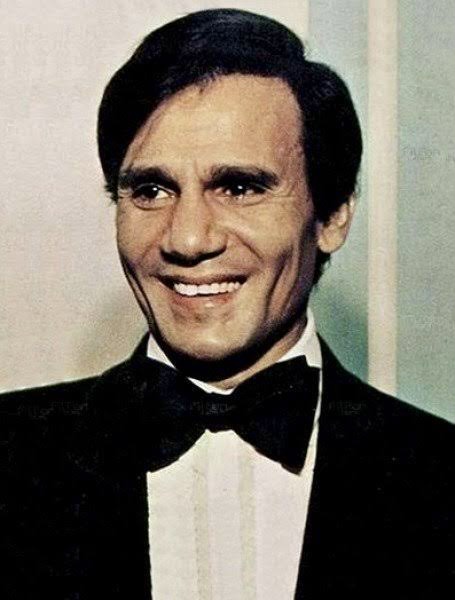
Abdel Halim Hafez†
Legend; “Nightingale”; “The Dark-Skinned Nightingale”