Biography
Introduction: A Beacon of Stability in Turbulent Times
Ruth Sando Fahnbulleh Perry† stands as a monumental figure in the modern political history of Liberia and a trailblazer for women in African Politics & Government. Appointed as the Interim Head of State of Liberia in September 1996, she made history by becoming the first woman to lead the nation and, at the time, the only female head of state on the African continent. Her tenure, though brief, was critically significant. Ruth Perry† assumed leadership at the nadir of Liberia's first brutal civil war (1989-1997), tasked with the herculean responsibility of steering the country through a fragile peace process toward democratic elections. Her key achievement was successfully overseeing this transition, which culminated in the relatively peaceful July 1997 presidential election that brought Charles Taylor to power. Her leadership, marked by maternal grace and unwavering commitment to peace, provided a vital period of calm and hope for a war-weary populace.
Early Life & Education: Foundations of a Leader
Ruth Sando Fahnbulleh was born on July 16, 1939, in a rural area of Grand Cape Mount County, Liberia. She was born into the Vai ethnic group, one of Liberia's indigenous communities, which informed her deep understanding of the country's social fabric beyond the Americo-Liberian elite. Her early education was rooted in local missionary schools, where she demonstrated a keen intellect. For her secondary education, she attended the prestigious College of West Africa in Monrovia, a Methodist institution known for educating many of Liberia's future leaders.
Her formative years were shaped by a blend of traditional values and formal education. After completing her secondary schooling, Ruth Perry† pursued a career in banking, working for the Bank of Liberia. This experience provided her with a practical understanding of economics and administration—skills that would later prove invaluable in governance. However, her most profound formative experiences came from her roles as a mother of seven children and an active community figure. Before entering national politics, she served as a senator's wife and was deeply involved in social and church activities, which honed her diplomatic skills and grassroots connections. This unique background, straddling the professional, traditional, and domestic spheres, equipped her with a relatable and compassionate leadership style distinct from the militaristic figures that dominated the era.
Career & Major Achievements: Steering a Nation from War to Peace
Ruth Perry's† political career was not one of long-held ambition but of duty called upon in a national emergency. Prior to 1996, her most notable public role was as a member of the Liberian Senate, representing Grand Cape Mount County from 1985 to 1989. Her senatorial career was cut short by the outbreak of civil war in 1989, which forced her into exile for a period. Her path to the presidency was forged not at the ballot box, but through a peace agreement. Following the August 1996 Abuja Peace Accord, which demanded the resignation of the existing Council of State, Liberia's warring factions and political stakeholders needed a neutral, consensus figure to lead the transition. Ruth Perry†, respected for her integrity, non-partisan stance, and maternal image, was chosen as that unifying figure.
Ascension to Interim Head of State
On September 3, 1996, Ruth Perry† was sworn in as the Chairman of the Liberian National Transitional Government, effectively the Interim Head of State. She led a six-member collective presidency, the Council of State, but was its acknowledged chair. Her administration faced immense challenges:
- Disarming Militias: Overseeing the disarmament of an estimated 60,000 combatants from various warring factions.
- Humanitarian Crisis: Managing a catastrophic humanitarian situation with over a million displaced persons and a shattered infrastructure.
- Preparing for Elections: Creating a secure environment and logistical framework for the first post-war national elections.
Key Accomplishments and Impact
Despite limited executive power and operating under the constant shadow of faction leaders, Ruth Perry's† tenure from September 1996 to August 1997 is credited with several crucial achievements. Her greatest success was maintaining the fragile ceasefire. She used her persona as a "mother of the nation" to appeal for calm and reconciliation, a stark contrast to the violent rhetoric of the warlords. Under her watch, the disarmament process, though imperfect, progressed sufficiently to allow elections to be held. She successfully presided over the organization and execution of the presidential and legislative elections on July 19, 1997. On August 2, 1997, she peacefully handed power to the elected president, Charles Taylor, completing her mandated transition—a rare peaceful transfer of power in Liberia's conflict-ridden history. Her leadership demonstrated that stability and dialogue were possible, setting a precedent for future transitional governance in West Africa.
Personal Life, Legacy & Lasting Impact
Outside of politics, Ruth Perry† was a devoted mother, grandmother, and a committed Christian. Her faith was a cornerstone of her life and informed her approach to reconciliation. She was known for her humility, grace, and a leadership style that emphasized listening and consensus-building. After leaving office, she remained a respected elder stateswoman, occasionally commenting on national issues but largely living a private life. She witnessed Liberia's descent into a second civil war (1999-2003) and the eventual election of Africa's first modern female elected head of state, Ellen Johnson Sirleaf, in 2005—a milestone many believe was made more conceivable by Perry's pioneering role.
The legacy of Ruth Perry† is multifaceted. She is remembered as a Transitional Leadership figure who provided essential stability at a critical juncture. She broke the highest political glass ceiling in Liberia, proving a woman could lead the nation and paving the way for others. While her tenure did not bring lasting peace—the Taylor regime ultimately collapsed into renewed conflict—she successfully accomplished the specific, narrow mission she was given: to guide the country to elections. Her life and work underscore the vital role of inclusive, consensus-oriented leadership in post-conflict recovery. Ruth Perry† passed away on January 8, 2017, in Columbus, Ohio, USA, at the age of 77. She is memorialized in Liberia as a symbol of maternal strength and national unity during one of its darkest hours.
Net Worth & Business Ventures
Unlike many political figures, Ruth Perry† was not known for significant personal wealth or extensive business ventures. Her financial background was primarily rooted in her early career in the banking sector at the Bank of Liberia and her family's resources. There is no publicly documented evidence of a substantial net worth or commercial empire associated with her. Her life before and after politics reflected modest means. The primary "wealth" she accumulated was one of respect and moral authority. In the context of Liberian politics, where economic power and political office have often been intertwined, Perry's relative financial disengagement was seen as a mark of her integrity and a factor in her selection as a neutral interim leader. Her legacy is measured not in monetary value, but in her historic service and the peaceful transition she stewarded for her nation.
Frequently Asked Questions
What is Ruth Perry†'s estimated net worth?
Ruth Perry† has an estimated net worth of $1.0 Million.
What is Ruth Perry†'s role and nationality?
Ruth Perry† is a Interim Head of State from Liberia.
How did Ruth Perry† make their money?
Ruth Perry† built their fortune primarily through Ruth Perry was a public servant and interim head of state, not a business figure, with no evidence of significant personal wealth from business holdings..
How old is Ruth Perry†?
Ruth Perry† was born in 1939 (87 years old).
Which category is Ruth Perry† listed under?
Ruth Perry† is featured under the Politics & Government category on NetWorth Africa.
How is Ruth Perry†'s net worth calculated?
NetWorth Africa estimates financial valuations using publicly available stock equity holdings, company ownership records, real estate assets, and verified market data.
Net Worth Analysis
Ruth Perry was a public servant and interim head of state, not a business figure, with no evidence of significant personal wealth from business holdings.
Quick Stats

Related People
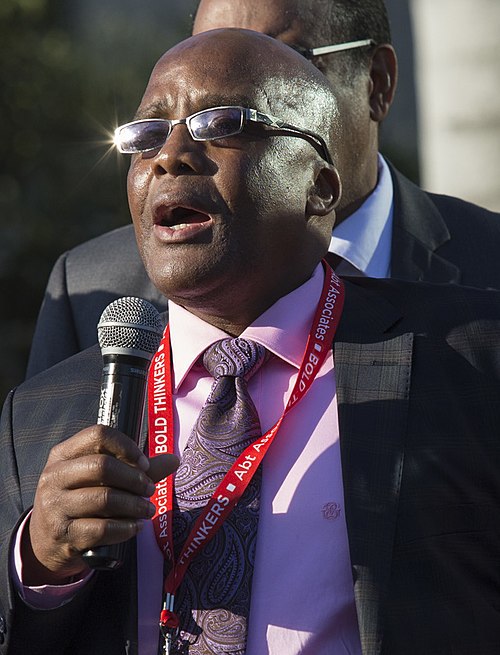
Aaron Motsoaledi
LP; Minister of Home Affairs • South Africa
Abane Ramdane†
FLN Leader & Strategist • Algeria
Abdalla Hamdok
Ex-Prime Minister • Sudan
Abdallah Kigoda
Ex-Minister of Natural Resources • Tanzania