$20B
Estimated Net Worth
As of 2024 • low confidence
Financial Breakdown
Asset Distribution
Assets vs Liabilities
Assets
Liabilities
Disclaimer: These financial estimates are based on publicly available information and should be considered approximate. Last updated: 12/29/2025
Biography
Introduction: The Heir Apparent's Tumultuous Journey
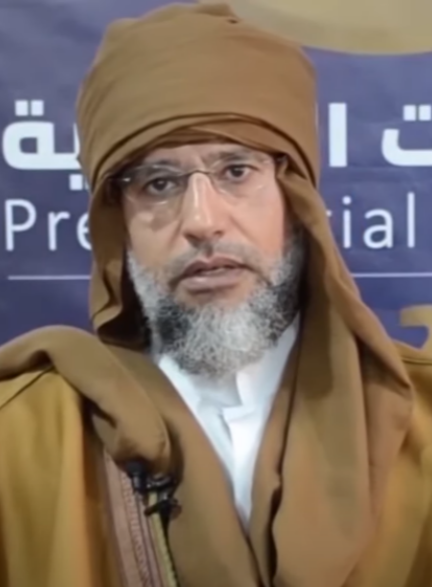
Saif al-Islam Gaddafi is one of the most complex and controversial figures in modern Libyan history. Born in 1972 as the second son of the long-ruling leader Muammar Gaddafi, he emerged from the shadow of his father in the early 2000s as a charismatic reformer and the de facto face of a new, modernizing Libya. For a decade, Saif al-Islam Gaddafi was seen internationally as a liberalizing force, engaging with Western governments and intellectuals, and spearheading economic and human rights initiatives. His key achievement during this period was negotiating the dismantling of Libya's weapons of mass destruction programs in 2003, which led to the country's brief reintegration into the international community. However, his image was irrevocably shattered during the 2011 Arab Spring uprising, when he became the defiant spokesman for his father's regime, delivering a fiery speech threatening civil war. His subsequent capture, imprisonment, and eventual emergence as a candidate in the 2021 presidential election have cemented his status as a pivotal, enigmatic, and polarizing figure in the ongoing struggle for Libya's future.
Early Life and Education: The Making of a Gaddafi
Saif al-Islam Gaddafi was born on June 25, 1972, in Tripoli, Libya. As a member of the Gaddafi family, he was raised within the inner circle of power but was initially not seen as the primary heir, a role reserved for his older brother, Muhammad. His early education took place in Libya before he moved to Europe for higher studies, a path that significantly shaped his worldview.
He earned a bachelor's degree in engineering from the Al Fateh University in Tripoli. Subsequently, he pursued international education, completing a master's degree in Business at IMADEC University in Vienna and a doctorate at the London School of Economics (LSE) in 2008. His PhD thesis, titled "The Role of Civil Society in the Democratisation of Global Governance Institutions," became a source of later controversy, with allegations of plagiarism leading to an LSE inquiry. This Western education exposed him to liberal democratic ideals and global networks, which he later attempted to reconcile with his position within an authoritarian regime. These formative experiences created the dual identity that would define his public persona: the Western-educated reformer and the loyal son of the revolutionary leader.
Career & Major Achievements: From Reformer to Regime Defender
The career of Saif al-Islam Gaddafi can be starkly divided into two eras: the pre-2011 reformist phase and his role during the 2011 revolution and its aftermath.
The Architect of Reform (2000-2010)
In the 2000s, Saif al-Islam positioned himself as the leading advocate for change within Libya. He wielded significant influence without holding an official government title, operating through the Gaddafi International Charity and Development Foundation (GICDF), which he chaired. His major achievements during this period included:
- Foreign Policy: He was a key interlocutor in negotiations with the United Kingdom and United States that led to Libya abandoning its WMD programs in December 2003, ending its international isolation.
- Economic Liberalization: He championed economic reforms to attract foreign investment and modernize Libya's oil-dependent economy.
- Human Rights Advocacy: He publicly criticized human rights abuses, secured the release of political prisoners, and engaged with international organizations like Human Rights Watch. He was instrumental in compensating victims of the 1996 Abu Salim prison massacre.
The 2011 Uprising and International Condemnation
The Arab Spring shattered this image. In February 2011, as protests erupted across Libya, Saif al-Islam delivered a nationally televised speech that marked a definitive turning point. Instead of calling for reform, he warned of "rivers of blood" and vowed to fight "to the last bullet." This speech galvanized the opposition and led the International Criminal Court (ICC) to issue an arrest warrant for him in June 2011 for crimes against humanity, specifically for alleged murder and persecution. He was captured in November 2011 by fighters in Zintan as the regime collapsed.
Imprisonment, Release, and Political Resurrection
Held by a militia in Zintan for nearly six years, Saif al-Islam Gaddafi was tried in absentia by a Tripoli court in 2015 and sentenced to death. His captors refused to hand him over. He was reportedly released in June 2017 under an amnesty law passed by the eastern-based parliament. He re-emerged into the public eye in 2018, giving interviews and positioning himself as a unifying national figure. In a dramatic move, he submitted his candidacy for the Libyan presidential election scheduled for December 2021, filing his papers in the southern city of Sebha. His eligibility was fiercely contested due to the ICC warrant and his 2015 conviction, and the election was indefinitely postponed. Nevertheless, his candidacy proved his enduring political relevance and the persistent loyalty of a segment of the Libyan population.
Personal Life, Legacy, and Lasting Impact
Saif al-Islam Gaddafi has largely kept his personal life private. He is known to be an art enthusiast and painter, with some of his work being exhibited internationally in the pre-2011 era. His philanthropic work was channeled through the GICDF, which was involved in conflict mediation and humanitarian projects across Africa and the Middle East.
His legacy is profoundly contradictory. For some, he remains the promising reformer who could have peacefully transitioned Libya. For most others, he is irrevocably tainted by his actions in 2011, seen as a symbol of the old regime's brutality. His lasting impact lies in his embodiment of Libya's deep divisions. As a Presidential Candidate, he represents not just a political choice but a referendum on the past. He commands support from certain tribes, regions that benefited from the old system, and populations weary of the chaos that has followed the 2011 revolution. His continued presence in Politics & Government ensures that the legacy of the Gaddafi era remains a live and potent force in Libyan politics, complicating efforts at national reconciliation and state-building.
Net Worth and Business Ventures
Prior to 2011, Saif al-Islam Gaddafi was believed to control significant wealth, though exact figures are speculative and obscured by the nature of the Gaddafi regime's finances. His wealth was thought to be derived from his influence over state funds and investments rather than traditional private business ventures. He was a key figure in the Libyan Investment Authority (LIA), the country's sovereign wealth fund. Reports suggested he controlled a network of offshore companies and held investments in real estate, telecommunications, and oil sectors across Europe and Africa. Following the 2011 revolution and UN sanctions, his assets internationally were frozen. His current net worth is unknown, as he operates in a climate of war and division where traditional financial assessment is impossible. Any remaining wealth is likely tied to loyalist networks and informal economies within Libya.
This biography is based on widely reported historical events and information from international news agencies, court documents from the International Criminal Court, and academic analyses of modern Libyan history.
Net Worth Analysis
Estimates of his wealth are speculative but often cited in the billions, primarily from frozen family assets and hidden funds abroad, with a commonly referenced figure around $20 billion.
Quick Stats
Related People

Aaron Motsoaledi
LP; Minister of Home Affairs

Abane Ramdane†
FLN Leader & Strategist

Abdalla Hamdok
Ex-Prime Minister

Abdallah Kigoda
Ex-Minister of Natural Resources