Biography
Introduction: The Father of the Somali Revolution
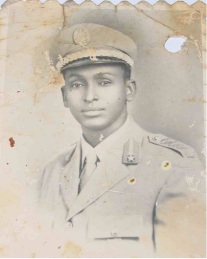
Salaad Gabeyre Kediye† stands as one of the most pivotal and controversial figures in modern Somali history. A military officer and fervent nationalist, he is widely credited as the "Father of the Somali Revolution" for his central role in orchestrating the bloodless coup d'état on October 21, 1969, that overthrew Somalia's civilian government. This event marked the end of Somalia's brief democratic experiment and ushered in over two decades of military rule under General Mohamed Siad Barre. Salaad Gabeyre Kediye† was the mastermind behind the coup's execution, leveraging his position and influence within the army to dismantle the nascent parliamentary system. His story is inextricably linked to the rise of the Supreme Revolutionary Council (SRC) and the profound socio-political transformations—and subsequent tragedies—that defined Somalia in the late 20th century.
Early Life & Education: Forging a Soldier
Salaad Gabeyre Kediye† was born in 1934 in the town of Galkayo, in what was then Italian Somaliland. Details of his early childhood are sparse, but he came of age in the final years of colonial administration, a period that deeply shaped his nationalist sentiments. Seeking a professional military career, he pursued education within the burgeoning Somali security forces. He attended the prestigious Military Academy of Modena in Italy, a common training ground for elite Somali officers destined for leadership. This Italian military education provided him with not only tactical and strategic knowledge but also exposed him to European political ideologies, including socialism, which would later influence his revolutionary thinking.
Upon returning to Somalia, which gained independence in 1960, Kediye quickly rose through the ranks of the newly formed Somali National Army. His formative experiences were marked by the palpable disillusionment with the post-independence civilian government, led by President Aden Abdullah Osman Daar and later Abdirashid Ali Sharmarke. The period was characterized by clan-based political patronage, corruption, and the perceived humiliation of Somalia in the 1964 war with Ethiopia over the Ogaden region. For patriotic officers like Salaad Gabeyre Kediye†, the government's weakness and nepotism were a betrayal of the Somali nationalist dream, setting the stage for revolutionary action.
Career & Major Achievements: The Path to Power and Purge
The apex of Salaad Gabeyre Kediye†'s career was the meticulously planned coup of October 21, 1969. Following the assassination of President Sharmarke by a bodyguard, the country was in a constitutional crisis. Seizing this moment of vulnerability, Major General Kediye and a cadre of fellow officers, including Colonel Mohamed Siad Barre, mobilized army units to take control of key government buildings, communication hubs, and the capital, Mogadishu. The coup faced no resistance, and the constitution was suspended. The military junta, the Supreme Revolutionary Council (SRC), was formed, with Siad Barre as its chairman and Kediye as a key member and Vice President.
Architect of the New Order
In the initial years, Salaad Gabeyre Kediye† was instrumental in shaping the SRC's policies. He was a chief proponent of "scientific socialism," the state ideology that guided nationalization programs, literacy campaigns, and efforts to dismantle clan allegiances. He held significant portfolios, influencing domestic and foreign policy towards alignment with the Soviet Bloc. His vision was for a centralized, modern, and socialist Somali state, free from what he viewed as the divisive and corrupting influence of clan politics.
The Inevitable Rift and Execution
However, the revolutionary unity was short-lived. By the early 1970s, a power struggle emerged within the SRC. Siad Barre moved to consolidate absolute power, sidelining other influential figures. Salaad Gabeyre Kediye†, with his immense revolutionary credibility and independent power base, was perceived as the most significant threat. In 1972, he was accused of plotting a counter-coup. After a swift and secretive military tribunal, Salaad Gabeyre Kediye† was found guilty. In a stark and brutal conclusion to his revolutionary journey, he was executed by firing squad in 1972, just three years after helping to bring the regime to power. His execution served as a grim warning to all potential opponents of Siad Barre's increasingly authoritarian rule.
Personal Life & Legacy: A Complex Historical Shadow
Unlike the burgeoning cult of personality around Siad Barre, Salaad Gabeyre Kediye† maintained a reputation as a disciplined, ideologically driven soldier. He was known for his sharp intellect, strategic mind, and unwavering commitment to a singular vision of Somali nationalism, albeit one that justified military rule. His personal life was largely subsumed by his political and military ambitions, a common trait among revolutionary figures of his era.
The legacy of Salaad Gabeyre Kediye† is profoundly complex and subject to intense debate. To some, he remains the genuine revolutionary idealist, the architect of a movement aimed at purging corruption and uniting the Somali nation, who was later betrayed by a ruthless dictator. To others, he is a central figure responsible for dismantling Somalia's fragile democracy and setting the nation on a path toward dictatorship, civil war, and collapse. His execution cemented Siad Barre's control but also planted seeds of dissent within the army and the regime's original supporters. His life and death symbolize the tragic cycle of revolution and repression that has haunted Somalia. Historians often cite his story as a classic case of a revolutionary being consumed by the very machinery of power he helped create.
Net Worth & Business: The Revolutionary's Estate
Assessing the net worth or business ventures of Salaad Gabeyre Kediye† is challenging due to the era and context of his life. As a high-ranking military officer and a leading member of a socialist revolutionary council, his economic status would not have been defined by private business acumen in a conventional sense. His power and influence were derived from his political and military positions within the state apparatus. The SRC regime nationalized major industries and banks, meaning the wealth of its key members was tied to state control and access to resources rather than personal entrepreneurship. Following his execution in 1972, any personal assets or property would have been seized by the state under Siad Barre's regime. Therefore, his historical significance lies solely in his political and revolutionary actions, not in any commercial or financial legacy.
Key Facts & Timeline
- 1934: Born in Galkayo, Somalia.
- Early 1960s: Receives military training in Italy, rises in Somali National Army.
- October 21, 1969: Orchestrates the successful military coup, establishing the Supreme Revolutionary Council.
- 1969-1972: Serves as a key member of the SRC and Vice President under Siad Barre.
- 1972: Accused of plotting a counter-coup, tried, and executed by firing squad.
- Lasting Title: Widely referred to as the "Father of the Somali Revolution."
For further research on this period of Somali history, academic sources and historical analyses of the Siad Barre regime often provide critical context for the role of Salaad Gabeyre Kediye†.
Frequently Asked Questions
What is Salaad Gabeyre Kediye†'s estimated net worth?
Net worth details for Salaad Gabeyre Kediye† are currently being updated.
What is Salaad Gabeyre Kediye†'s role and nationality?
Salaad Gabeyre Kediye† is a Revolutionary Leader from Somalia.
How did Salaad Gabeyre Kediye† make their money?
Salaad Gabeyre Kediye† built their fortune primarily through Salaad Gabeyre Kediye was a Somali military officer and key figure in the 1969 coup; he was executed in 1972 and has no reported personal wealth..
How old is Salaad Gabeyre Kediye†?
Salaad Gabeyre Kediye† was born in 1934 (92 years old).
Which category is Salaad Gabeyre Kediye† listed under?
Salaad Gabeyre Kediye† is featured under the Politics & Government category on NetWorth Africa.
How is Salaad Gabeyre Kediye†'s net worth calculated?
NetWorth Africa estimates financial valuations using publicly available stock equity holdings, company ownership records, real estate assets, and verified market data.
Net Worth Analysis
Salaad Gabeyre Kediye was a Somali military officer and key figure in the 1969 coup; he was executed in 1972 and has no reported personal wealth.
Quick Stats

Related People
Aaron Motsoaledi
LP; Minister of Home Affairs • South Africa
Abane Ramdane†
FLN Leader & Strategist • Algeria
Abdalla Hamdok
Ex-Prime Minister • Sudan
Abdallah Kigoda
Ex-Minister of Natural Resources • Tanzania