Financial Breakdown
Asset Distribution
Assets vs Liabilities
Assets
Liabilities
Disclaimer: These financial estimates are based on publicly available information and should be considered approximate. Last updated: 12/31/2025
Biography
Introduction: A Voice That Defied Destiny
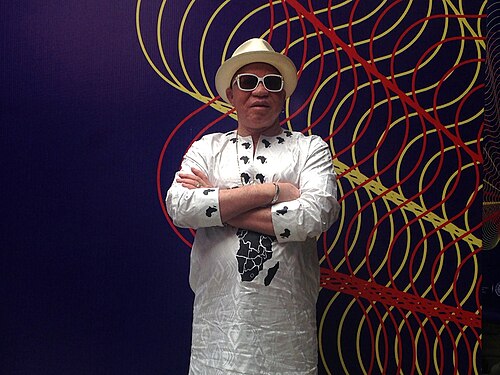
In the world of Entertainment and global music, few voices carry the weight, history, and sheer transcendent beauty of Salif Keita. Known universally as the "Golden Voice of Africa," Keita is not just a singer from Guinea; he is a cultural icon, a pioneer of Afro-pop, and a living testament to resilience. Born in 1949 with albinism, a condition met with deep superstition in his Mandinka society, his path was preordained for hardship. Yet, he transformed social exile into artistic royalty. Salif Keita's key achievement lies in his revolutionary fusion of traditional West African sounds—rooted in the history of the Mali Empire—with contemporary pop, rock, and jazz influences, creating a universally appealing sound that catapulted African music onto the world stage. His journey from outcast to international superstar is as compelling as his haunting, soaring vocals.
Early Life & Education: The Outcast Prince
Salif Keita was born on August 25, 1949, in the village of Djoliba, Guinea. His lineage is one of immense prestige, as a direct descendant of Sundiata Keita, the legendary founder of the Mali Empire in the 13th century. This noble birth, however, was overshadowed by his being born with albinism. In a cruel twist of fate, his condition was seen as a sign of bad luck within his community, leading to ostracization and a challenging childhood.
His early education was fraught with difficulty, not only due to social stigma but also because of his poor eyesight, a common trait associated with albinism. Initially aspiring to become a teacher, this dream was dashed when he was reportedly dismissed from school. It was during this period of isolation that Salif Keita turned to music. He found solace and expression in singing, despite his family's strong disapproval—music was traditionally the role of the *griot* (a historian and storyteller caste), not of nobility. This defiance of social and familial norms marked the first step in his extraordinary journey. In 1967, at the age of 18, he left his village for the capital, Bamako, in neighboring Mali, to pursue music professionally, carrying only his voice and an unshakeable determination.
Career & Major Achievements: Forging the Afro-Pop Revolution
Salif Keita's career is a chronicle of innovation and breaking barriers. In Bamako, he joined the legendary government-sponsored band, the Rail Band, and later the seminal group Les Ambassadeurs Internationaux. With these groups, he began crafting his signature style, blending Mandinka traditions with Cuban rhythms, jazz, and soul.
Rise to International Fame
Political unrest in Mali prompted his move to Abidjan, Côte d'Ivoire, in 1978, before he finally settled in Paris in 1984. This move to the West was pivotal. His 1987 album Soro, produced by Ivorian maestro Mory Kanté and French musician Jean-Philippe Rykiel, became a global sensation. It was a masterpiece of synthesis, where traditional instruments like the kora and balafon met electric guitars and synthesizers, all held together by Keita's powerful, emotive tenor. Soro is widely credited with defining the "world music" genre for a global audience.
Accolades and Global Impact
Throughout the 1990s and 2000s, Salif Keita solidified his status as a global ambassador for African music. His achievements are numerous and impactful:
- Grammy Nomination: His 2002 album Moffou was nominated for a Grammy Award, introducing his music to an even wider American audience.
- World Music Awards: He has been a consistent winner and honoree at international awards ceremonies, including the prestigious Kora Awards.
- UNESCO Peace Artist: In recognition of his advocacy, he was named a UNESCO Artist for Peace in 2004.
- Historic Performances: Keita has sold out major venues worldwide, from the Olympia in Paris to Carnegie Hall in New York, and has been a headline act at countless international festivals.
- Influential Discography: With over 20 albums to his name, including Amen (1991), Folon... the Past (1995), and La Différence (2009), his musical evolution has consistently pushed creative boundaries while staying true to his roots.
His career is not just a list of successes; it represents the opening of doors for an entire generation of African artists, proving that music from the continent could achieve sophisticated, mainstream international success.
Personal Life, Philanthropy & Legacy
Beyond his music, Salif Keita is a dedicated humanitarian. His personal life has been shaped by his experiences as a person with albinism. He has channeled his fame into powerful advocacy, founding the Salif Keita Global Foundation in 2005 to support people with albinism across Africa. The foundation focuses on providing medical care, sunscreen, and vision aids, while also campaigning against discrimination and violence—a critical issue in some regions where people with albinism are persecuted.
In 2009, he released the album La Différence, whose title track is a poignant anthem against the stigma of albinism. The album won him a National Order of Guinea, his country's highest honor, signaling a full-circle moment from outcast to national hero. His legacy is multifaceted: he is a musical innovator who created a new sonic palette for Africa, a fearless advocate for social justice, and a symbol of triumph over prejudice. He retired from touring in 2018 but remains an active voice in advocacy and cultural commentary.
Net Worth & Business Ventures
While exact figures are often private, Salif Keita's successful five-decade career in music, marked by global album sales, sold-out world tours, and prestigious awards, has undoubtedly led to significant financial success. Estimates of his net worth have ranged from several million to tens of millions of dollars, accumulated through his extensive discography, performances, and royalties. His primary business ventures are intrinsically linked to his art and advocacy. Beyond his foundation, he has invested in his craft and community. A notable venture is his own recording studio and his involvement in the cultural scene in Mali and Guinea. Unlike many celebrities, Keita's "business" is largely an extension of his life's mission: using his resources to fund his philanthropic work and to produce music that carries his message. His wealth is a byproduct of his artistry, which he strategically leverages to fund his humanitarian efforts for people with albinism.
For more information on his foundation and work, credible sources like United Nations features and interviews with NPR provide deeper insight into his advocacy.
Salif Keita's story is more than a biography; it is a powerful narrative of turning difference into strength. From a shunned prince in Djoliba, Guinea, to the globally revered Golden Voice of Africa, he has used his unparalleled gift to bridge continents, challenge injustices, and enrich the world's Entertainment landscape with some of the most profound music ever recorded. His voice is truly golden, not just in tone, but in its enduring value to humanity.
Frequently Asked Questions
What is Salif Keita's estimated net worth?
Salif Keita has an estimated net worth of $10.0 Million.
What is Salif Keita's role and nationality?
Salif Keita is a Golden Voice of Africa from Guinea.
How did Salif Keita make their money?
Salif Keita built their fortune primarily through Salif Keita is a highly successful and legendary musician, not a business magnate; his wealth stems from his long and influential career in music, not corporate holdings..
How old is Salif Keita?
Salif Keita was born in 1949 (77 years old).
Which category is Salif Keita listed under?
Salif Keita is featured under the Entertainment category on NetWorth Africa.
How is Salif Keita's net worth calculated?
NetWorth Africa estimates financial valuations using publicly available stock equity holdings, company ownership records, real estate assets, and verified market data.
Net Worth Analysis
Salif Keita is a highly successful and legendary musician, not a business magnate; his wealth stems from his long and influential career in music, not corporate holdings.
Quick Stats

Related People

2Baba (Innocent Idibia)
Veteran Artist & Activist • Nigeria

Aar Maanta
Singer & Composer • Somalia

Abdel Aziz al-Mubarak
Oud Master • Sudan
Abdel Halim Hafez†
Legend; “Nightingale”; “The Dark-Skinned Nightingale” • Egypt