$20M
Estimated Net Worth
As of 2024 • low confidence
Financial Breakdown
Asset Distribution
Assets vs Liabilities
Assets
Disclaimer: These financial estimates are based on publicly available information and should be considered approximate. Last updated: 12/29/2025
Biography
Introduction: The Leader of the World's Newest Nation
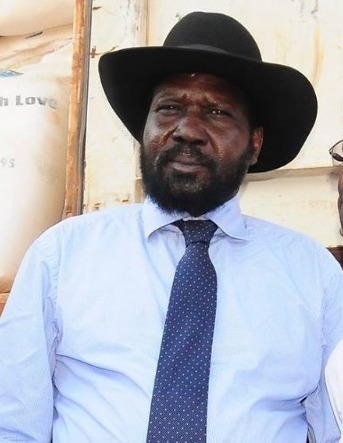
Salva Kiir Mayardit stands as a defining figure in modern African history, recognized globally as the first President of South Sudan. His iconic image, marked by a black cowboy hat—a gift from former U.S. President George W. Bush—became a symbol of the long struggle for freedom. Salva Kiir's most monumental achievement is leading South Sudan to its hard-fought independence from the Republic of Sudan on July 9, 2011. This momentous event, following decades of brutal civil war, marked the birth of the world's newest nation. His journey from a guerrilla fighter in the bush to the head of state encapsulates the turbulent path of a nation yearning for self-determination. This biography explores the life, career, and complex legacy of a man who helped forge a nation, yet has also presided over its devastating internal conflicts.
Early Life & Education: Roots in War and Rebellion
Salva Kiir was born in 1951 in Akon, a village in the Bahr el Ghazal region of southern Sudan, part of the Dinka ethnic group. His early life was shaped by the pervasive conflict between the north and south of Sudan, rooted in cultural, religious, and economic disparities. Unlike many contemporary African leaders, Salva Kiir's formal education was limited and repeatedly interrupted by war. He attended primary school in his home region but found his path altered irrevocably by the outbreak of the First Sudanese Civil War.
In the late 1960s, as a young man, Kiir joined the Anyanya rebellion, the southern separatist movement fighting against the Khartoum government. This formative experience in guerrilla warfare provided his primary education in combat, strategy, and survival. Following the 1972 Addis Ababa Agreement, which granted southern Sudan autonomy, he was integrated into the Sudanese Armed Forces as a low-ranking officer. His military career continued, but the underlying tensions between north and south persisted, setting the stage for his pivotal role in the next, even more destructive phase of conflict.
Career & Major Achievements: From Commander to President
The career of Salva Kiir is inextricably linked to the history of South Sudan's liberation struggle. His rise to prominence began with the outbreak of the Second Sudanese Civil War in 1983.
Rise in the SPLM/A
Kiir was among the first to join the Sudan People's Liberation Movement/Army (SPLM/A), founded and led by Colonel John Garang. His loyalty, military acumen, and ethnic background from a key Dinka section helped him rise steadily through the ranks. He held several senior military positions, including Deputy Chief of Staff for Operations, and became known as a capable and disciplined field commander. For over two decades, Salva Kiir operated from the bush, leading troops and managing the SPLM/A's complex internal dynamics.
Path to Independence
A critical turning point came in July 2005, following the signing of the Comprehensive Peace Agreement (CPA). When SPLM/A leader John Garang died in a helicopter crash just three weeks after becoming First Vice President of Sudan, Salva Kiir was thrust into the spotlight. He succeeded Garang as both First Vice President of Sudan and President of the Government of Southern Sudan. In this dual role, his focus shifted from warfare to state-building and diplomacy. He patiently steered the semi-autonomous region through the six-year interim period mandated by the CPA, culminating in the January 2011 referendum. An overwhelming 98.83% vote for secession paved the way for independence. On July 9, 2011, Salva Kiir stood before the world and proudly declared South Sudan a sovereign nation, reading the new country's constitution and taking the oath of office as its first executive President.
Presidency and Civil War
The immense hope of independence was short-lived. In December 2013, political tensions between President Salva Kiir and his former Vice President, Riek Machar, erupted into violent conflict. What began as a political dispute quickly took on ethnic dimensions, plunging the country into a devastating civil war. Kiir's presidency became defined by this brutal conflict, which resulted in widespread atrocities, a severe humanitarian crisis, and economic collapse. Despite multiple peace agreements, including the Revitalized Agreement on the Resolution of the Conflict in South Sudan (R-ARCSS) signed in 2018, which reinstated Machar as Vice President, the path to lasting peace remains fragile. His tenure has been marked by significant challenges, including:
- Presiding over the world's youngest nation through a crippling civil war (2013-2018, with sporadic continued violence).
- Managing a severe economic crisis fueled by falling oil prices, corruption, and conflict.
- Navigating complex international relations and pressure from regional bodies like IGAD and the African Union.
- Overseeing multiple failed and revitalized peace processes aimed at national unity.
Personal Life & Legacy: The Man Behind the Hat
Known for his reserved and stoic public demeanor, Salva Kiir is a contrast to his more charismatic predecessor, John Garang. His personal life is kept relatively private, though he is known to be a devout Roman Catholic, a faith shared by many in South Sudan. The famous cowboy hat is more than an accessory; it is a calculated part of his public image, representing both his connection to Western allies and a distinct identity separate from the Arab north. He is married to Mary Ayen Mayardit, who has been involved in humanitarian advocacy, and has multiple children.
The legacy of Salva Kiir is profoundly complex and still being written. He is undeniably a liberation hero, a central figure in achieving the independence for which millions of South Sudanese sacrificed. Streets and public institutions bear his name in gratitude for this role. However, his presidential legacy is heavily overshadowed by the civil war that began under his watch. Historians and citizens alike will judge him on both counts: as the father of independence and as the president during a period of catastrophic internal strife. His ultimate legacy hinges on whether South Sudan can achieve the sustainable peace and development its people dreamed of at independence.
Net Worth & Business Ventures
As a head of state who spent much of his career in a rebel movement and later led a nation with vast oil wealth but widespread poverty, questions about Salva Kiir's personal wealth are often raised. South Sudan has consistently ranked poorly on global corruption indices, with billions of dollars in oil revenue reportedly unaccounted for since independence. While there is no officially verified figure for President Kiir's net worth, he and his family have been the subject of allegations regarding unexplained assets and luxurious properties. In a notable 2012 letter (later leaked), Kiir himself accused 75 current and former government officials of stealing over $4 billion in public funds, inviting them to return the money—an admission of grand corruption at the highest levels of his government. Unlike some leaders, Salva Kiir is not publicly associated with specific private business ventures; his financial context is deeply intertwined with the state's resources and the patronage politics that characterize South Sudan's Politics & Government.
For further reading on the history of South Sudan and the peace process, credible sources include the United Nations, International Crisis Group, and reports from major human rights organizations.
Net Worth Analysis
Estimates are speculative as he is not on any public billionaire list; wealth is attributed to long-term political control and alleged corruption, but no verified figures exist.
Quick Stats
Related People
Aaron Motsoaledi
LP; Minister of Home Affairs
Abane Ramdane†
FLN Leader & Strategist
Abdalla Hamdok
Ex-Prime Minister
Abdallah Kigoda
Ex-Minister of Natural Resources