Biography
Introduction: The Steadfast Opposition Leader
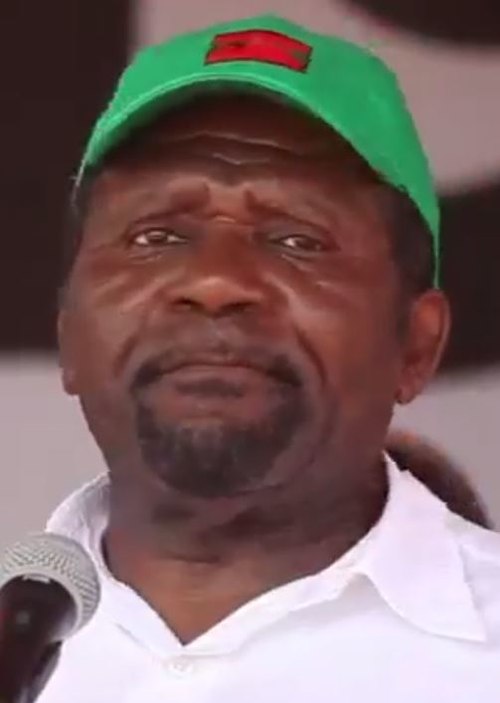
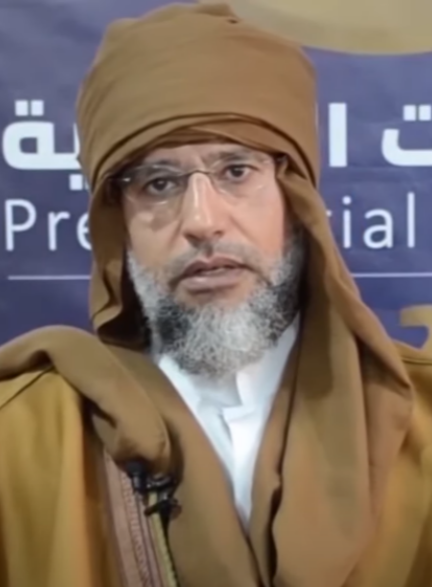
Isaías Samakuva, widely known simply as Samakuva, is a pivotal figure in modern Angolan Politics & Government. He rose to prominence as the third President of UNITA (União Nacional para a Independência Total de Angola), the country's primary opposition party, following the death of its historic leader, Jonas Savimbi. Serving from 2003 to 2019, Samakuva (Isaías Samakuva) led the party through a critical transition from armed struggle to peaceful political competition in a post-civil war Angola. His key achievement was steering UNITA away from its militaristic past, transforming it into a legitimate political force that contested elections and served as a vocal parliamentary opposition to the long-ruling MPLA government. As an Ex-UNITA President, his tenure is defined by the challenges of democratization, national reconciliation, and the consolidation of multiparty politics in Angola.
Early Life & Education: Formative Years in a Nation in Turmoil
Isaías Henrique Ngola Samakuva was born in 1946 in the province of Moxico, in eastern Angola, then a Portuguese colony. Details of his early childhood are sparse, but his formative years coincided with the burgeoning nationalist movements against colonial rule. Unlike many of UNITA's early leaders who were educated in Portugal, Samakuva's educational path took a different trajectory. He pursued studies that would later inform his diplomatic and strategic approach to politics.
He attended the Institute of Social Sciences in Belgium, earning a degree in Social Communication. This academic background in communication and sociology provided him with tools for political organization and messaging that would prove invaluable. Fluent in Portuguese, French, and English, Samakuva was positioned for an international role. His early professional experience was not in the military but in diplomacy and representation. Before ascending to the party's presidency, he served as UNITA's chief representative to Europe, based in Paris for many years. This period was crucial, as he worked to articulate the party's stance on the international stage during the height of the Angolan Civil War, a formative experience that shaped his worldview and preference for political dialogue over confrontation.
Career & Major Achievements: Leading UNITA in Peace and Politics
The trajectory of Samakuva's (Isaías Samakuva) career is inextricably linked to the fate of UNITA. Following the death of Jonas Savimbi in a 2002 military clash, the Angolan Civil War ended swiftly. The party was in disarray, militarily defeated, and in need of a new direction. In this vacuum, a leadership contest emerged.
The 2003 Congress and Presidential Election
At the pivotal 2003 UNITA Congress in Luanda, Isaías Samakuva emerged victorious in a tense leadership election. He defeated more hardline candidates, including Savimbi's former secretary, Paulo Lukamba "Gato." His election signaled a clear break: UNITA would now be led by a diplomat, not a general. His immediate task was monumental: demobilize the remaining forces, reintegrate members into civilian life, and reorganize the party as a purely political entity under the 1994 Lusaka Protocol framework.
Navigating Post-War Elections
Samakuva led UNITA through three general elections (2008, 2012, 2017). Each poll was marred by allegations of irregularities and unfair conditions from the opposition. Despite this, under his leadership, UNITA steadily increased its parliamentary presence:
- 2008: UNITA won 16 out of 220 seats.
- 2012: The party improved to 32 seats.
- 2017: UNITA secured 51 seats, its best post-war result, though it rejected the outcome citing fraud.
This growth, though not enough to unseat the MPLA, demonstrated his success in rebuilding the party's grassroots structures and maintaining its relevance as the principal opposition voice. He consistently advocated for electoral transparency, decentralization, and better economic management of Angola's oil wealth.
Diplomacy and International Stature
Leveraging his background, Samakuva worked diligently to rehabilitate UNITA's international image. He engaged with foreign governments, the African Union, and other multilateral institutions, presenting UNITA as a democratic alternative committed to the rule of law. This was a stark contrast to the party's former pariah status due to its Cold War alliances and prolonged insurgency.
Stepping Down and the 2019 Transition
After 16 years at the helm, Isaías Samakuva chose not to seek re-election at the 2019 UNITA Congress. He presided over a peaceful transition of power to his successor, Adalberto Costa Júnior, a move praised for strengthening internal party democracy. This orderly transition cemented his legacy as a leader who prioritized institutional stability over personal power, a rare feat in African opposition politics.
Personal Life, Legacy, and Lasting Impact
Known for his calm demeanor, reserved personality, and strategic patience, Samakuva (Isaías Samakuva) is often described as a conciliator rather than a firebrand. His personal life has been kept relatively private, a contrast to the flamboyant style of some of his contemporaries. This modesty aligned with his mission to present a new, sober face for UNITA.
His lasting impact on Angola is multifaceted. Primarily, he is credited with the "normalization" of UNITA, successfully guiding the party from the bush to the parliament. He ensured that the end of the civil war translated into a viable, if challenging, political opposition, which is a fundamental component of any democracy. While critics argue he was too cautious and failed to capitalize on widespread public discontent with the MPLA, supporters contend he navigated an incredibly difficult landscape where state resources and media were overwhelmingly aligned against the opposition.
His legacy is that of a transitional figure who stewarded UNITA through its most vulnerable period. He leaves behind a party that, while still seeking its first electoral victory, is an established and constitutionally recognized part of Angola's political fabric. The peaceful alternation of power within UNITA in 2019 stands as a testament to the institutional foundations laid during his tenure.
Net Worth & Business Ventures
Unlike many high-profile political figures in resource-rich nations, Isaías Samakuva is not widely reported to have significant business interests or a lavish personal fortune. His financial profile appears to be closely tied to his political career. As the President of UNITA, he would have received a salary and benefits commensurate with his role as the leader of the opposition in the National Assembly. There is no publicly available or verifiable information suggesting involvement in major private business ventures, conglomerates, or industries in Angola or abroad. This lack of known commercial activity aligns with his image as a dedicated party official and contrasts with the perception of political office being used for personal enrichment, a common critique in the region. Any assessment of his net worth remains speculative, as he has maintained discretion in this aspect of his life, and no credible sources have published concrete figures.
This biography is compiled from historical records, news reports from agencies like Reuters and BBC, and analyses of Angolan political history. For further reading on UNITA's transition, scholarly works on post-conflict Angola and official party documents from the 2003 and 2019 congresses serve as valuable sources.
Frequently Asked Questions
What is Samakuva (Isaías Samakuva)'s estimated net worth?
Samakuva (Isaías Samakuva) has an estimated net worth of $5.0 Million.
What is Samakuva (Isaías Samakuva)'s role and nationality?
Samakuva (Isaías Samakuva) is a Ex-UNITA President from Angola.
How did Samakuva (Isaías Samakuva) make their money?
Samakuva (Isaías Samakuva) built their fortune primarily through Isaías Samakuva is a career politician from an opposition party in Angola, with no known significant business interests or inclusion on wealth lists, suggesting wealth derived primarily from a public salary..
How old is Samakuva (Isaías Samakuva)?
Samakuva (Isaías Samakuva) was born in 1946 (80 years old).
Which category is Samakuva (Isaías Samakuva) listed under?
Samakuva (Isaías Samakuva) is featured under the Politics & Government category on NetWorth Africa.
How is Samakuva (Isaías Samakuva)'s net worth calculated?
NetWorth Africa estimates financial valuations using publicly available stock equity holdings, company ownership records, real estate assets, and verified market data.
Net Worth Analysis
Isaías Samakuva is a career politician from an opposition party in Angola, with no known significant business interests or inclusion on wealth lists, suggesting wealth derived primarily from a public salary.
Quick Stats
Related People

Aaron Motsoaledi
LP; Minister of Home Affairs • South Africa

Abane Ramdane†
FLN Leader & Strategist • Algeria

Abdalla Hamdok
Ex-Prime Minister • Sudan

Abdallah Kigoda
Ex-Minister of Natural Resources • Tanzania