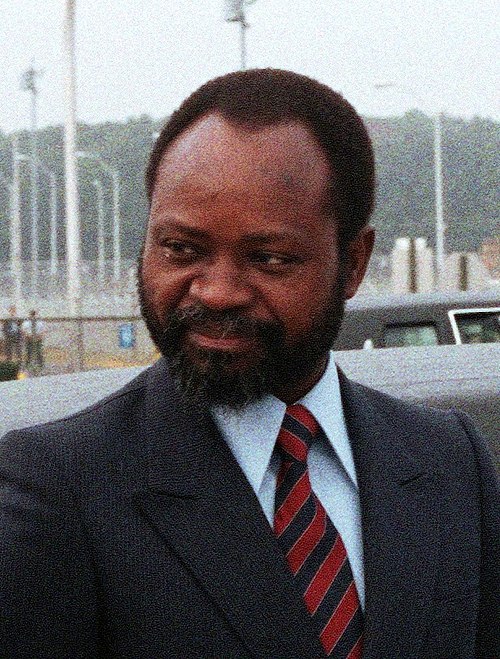
Biography
Introduction: The Architect of Mozambican Independence
Samora Moisés Machel stands as a towering figure in the history of southern Africa, a revolutionary leader who became the first President of the People's Republic of Mozambique. As the charismatic commander of the FRELIMO (Frente de Libertação de Moçambique) liberation front, he led a decade-long armed struggle against nearly five centuries of Portuguese colonial rule. His notable achievement was securing Mozambique's hard-fought independence on June 25, 1975, marking a pivotal moment in the collapse of Portugal's African empire. Samora Machel† was more than a political leader; he was a symbol of pan-Africanism, socialist aspiration, and the relentless pursuit of self-determination. His presidency, though cut tragically short, set the nation on a path of radical social transformation, leaving an indelible mark on the Politics & Government landscape of the continent.
Early Life & Education: Forging a Revolutionary Consciousness
Samora Machel was born in September 1933 in the village of Chilembene, in the southern province of Gaza, Mozambique. He was born into a family of farmers, part of the Shangaan ethnic group, and grew up under the harsh realities of the Portuguese colonial system, which relegated the indigenous population to forced labor (chibalo) and severe racial discrimination. This early exposure to systemic injustice planted the seeds of his future rebellion.
His initial education was provided by Catholic missionaries, but his ambitions led him to pursue nursing, one of the few professions available to Black Mozambicans at the time. He moved to the capital, Lourenço Marques (now Maputo), to train at the Miguel Bombarda Hospital. It was here, working in the city's wards, that Samora Machel† witnessed the vast disparities in healthcare and living conditions between the Portuguese settlers and the native population. These experiences profoundly shaped his political consciousness. His growing resentment towards colonialism was further fueled by the influence of emerging nationalist movements across Africa and his contact with members of clandestine anti-colonial groups. In 1963, driven by an unwavering commitment to liberate his homeland, he made the fateful decision to flee Mozambique and join the recently formed FRELIMO in Tanzania, trading his nurse's uniform for the life of a guerrilla soldier.
Career & Major Achievements: From Guerrilla to Head of State
Rise in FRELIMO and the Armed Struggle
Upon joining FRELIMO in Dar es Salaam, Samora Machel's natural leadership and dedication saw him rise rapidly through the ranks. He received military training in Algeria and quickly became a key military strategist. Following the assassination of FRELIMO's first president, Eduardo Mondlane, in 1969, the movement underwent a period of internal crisis. Machel emerged as a unifying figure, representing the militant, socialist wing of the movement. In 1970, he was appointed President of FRELIMO, taking full command of the liberation war.
Under his leadership, FRELIMO transformed from a fledgling rebel group into a disciplined guerrilla army. He expanded the war front, opening new fronts in central Mozambique, and combined military tactics with political mobilization, establishing "liberated zones" where FRELIMO administered schools, clinics, and people's courts. This dual strategy effectively eroded Portuguese control and built a foundation for future governance.
Independence and Revolutionary Presidency
The Carnation Revolution in Portugal in April 1974 overthrew the authoritarian Estado Novo regime and changed the course of history. The new Portuguese government agreed to decolonize, leading to the Lusaka Accord signed by Samora Machel† in September 1974. On June 25, 1975, he stood before a massive crowd in Maputo to proclaim Mozambique's full independence, becoming its first President.
His government embarked on an ambitious, radical program of socialist transformation. Major achievements and policies included:
- Nationalization: Key sectors like health, education, land, and major industries were brought under state control to break the power of colonial and foreign capital.
- Social Investment: Launching a massive literacy campaign and expanding healthcare access, famously declaring "Aluta Continua" (The Struggle Continues) for development.
- Foreign Policy: He provided unwavering support to liberation movements in Rhodesia (Zimbabwe) and South Africa, a stance that made Mozambique a target for destabilization by the apartheid and minority regimes.
This support came at a high cost. The white minority regime in Rhodesia, and later apartheid South Africa, created and backed the rebel group RENAMO (Mozambique National Resistance), plunging the country into a devastating civil war that would last over 15 years and cripple its economy.
Personal Life, Death & Legacy
Samora Machel was known for his charismatic oratory, austere personal habits, and unwavering commitment to his ideals. He was married to Graça Machel (née Simbine), a fellow freedom fighter and later an internationally renowned humanitarian, who would become the only woman in history to serve as First Lady of two nations (Mozambique and South Africa). His personal life was deeply intertwined with his political mission, often emphasizing sacrifice for the collective good.
His life ended in a tragedy that remains shrouded in controversy. On October 19, 1986, returning from a summit in Zambia, the presidential Tupolev Tu-134 aircraft crashed inside South African territory near the Mozambican border at Mbuzini. Samora Machel† and 34 others died. A South African inquiry blamed Soviet crew error, but widespread suspicion, including from an international investigation, pointed to deliberate sabotage by the apartheid security apparatus. His death was a catastrophic blow to Mozambique and the southern African liberation movement.
Samora Machel's legacy is complex and powerful. He is revered as the Father of the Nation and a symbol of dignity and resistance. His vision for a unified, educated, and healthy Mozambique continues to inspire, even as the country has since moved away from strict socialism. His name adorns streets, stadiums, and institutions across Mozambique, and his speeches remain a touchstone for discussions on sovereignty, pan-Africanism, and social justice. The circumstances of his death ensure he is also remembered as a martyr in the struggle against apartheid.
Historical Significance & Enduring Influence
While discussions of personal wealth are not applicable in the traditional sense for a revolutionary leader like Samora Machel†, his "value" lies in the profound political capital and ideological legacy he built. He rejected personal enrichment, championing a form of leadership rooted in service. His "venture" was the nation-state itself. Upon independence, his government inherited a bankrupt colonial economy. The major economic undertakings were state-led initiatives—large collective farms (aldeias comunais) and nationalized industries—aimed at wealth redistribution rather than personal accumulation. These policies, though ideologically driven, faced immense practical challenges from war, sabotage, and lack of expertise.
Ultimately, Samora Machel's life and work were dedicated to the collective project of building a new Mozambique. His historical significance is measured not in monetary net worth, but in his success in forging a national identity from a former colony, his unwavering stand against imperialism and racism, and the inspirational model of committed, ascetic leadership he embodied for revolutionaries worldwide. His story remains central to understanding the Liberation Era in Africa and the ongoing challenges of post-colonial development.
Further Reading & Sources: For more information on Samora Machel†, consider academic works on the Mozambican liberation struggle, FRELIMO's historical documents, and biographies such as Samora Machel: A Life by Sarah Lefanu. Reputable online resources include the Encyclopedia Britannica and the South African History Online archive.
Frequently Asked Questions
What is Samora Machel†'s estimated net worth?
Net worth details for Samora Machel† are currently being updated.
What is Samora Machel†'s role and nationality?
Samora Machel† is a First President & FRELIMO Leader from Mozambique.
How did Samora Machel† make their money?
Samora Machel† built their fortune primarily through Samora Machel died in 1986 and was a socialist revolutionary leader, not a business figure, so he did not accumulate personal wealth in the manner of contemporary billionaires..
How old is Samora Machel†?
Samora Machel† was born in 1933 (93 years old).
Which category is Samora Machel† listed under?
Samora Machel† is featured under the Politics & Government category on NetWorth Africa.
How is Samora Machel†'s net worth calculated?
NetWorth Africa estimates financial valuations using publicly available stock equity holdings, company ownership records, real estate assets, and verified market data.
Net Worth Analysis
Samora Machel died in 1986 and was a socialist revolutionary leader, not a business figure, so he did not accumulate personal wealth in the manner of contemporary billionaires.
Quick Stats
Related People
Aaron Motsoaledi
LP; Minister of Home Affairs • South Africa
Abane Ramdane†
FLN Leader & Strategist • Algeria
Abdalla Hamdok
Ex-Prime Minister • Sudan
Abdallah Kigoda
Ex-Minister of Natural Resources • Tanzania