Biography
Introduction: The Soldier-President of Upper Volta
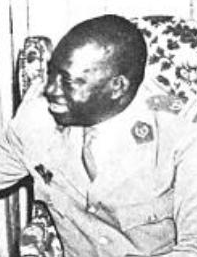
Saye Zerbo† remains a pivotal, if controversial, figure in the political and military history of West Africa. He is best known as the former military officer who served as the Ex-President of Burkina Faso—then known as the Republic of Upper Volta—from November 25, 1980, until his overthrow on November 7, 1982. His rise to power marked a significant moment in the nation's trajectory, representing the era of Military Rule that characterized much of the post-colonial period in the region. A career soldier with extensive training, Saye Zerbo† seized control through a bloodless coup, aiming to combat corruption and instill discipline in a nation plagued by economic hardship and political instability. His tenure, though brief, was a critical chapter in the volatile political landscape that would eventually lead to the revolutionary changes of Thomas Sankara. This biography delves into the life, career, and enduring legacy of this key player in Burkinabé history.
Early Life & Education: Forging a Military Path
Saye Zerbo† was born in 1932 in the town of Tougan, in what was then the French colony of Upper Volta, part of French West Africa. His early years were shaped by the colonial administration, which heavily influenced the educational and career opportunities available to Voltaics. Demonstrating academic promise and discipline from a young age, Zerbo's path led him toward a military career, a common avenue for advancement under colonial rule.
His formal military education began at the prestigious École des Enfants de Troupe (School for Soldiers' Children) in Kati, Mali, and later at the École Militaire Préparatoire de Saint-Louis in Senegal. These institutions were designed to train African soldiers and non-commissioned officers for service in the French colonial army, the Troupes coloniales. Zerbo excelled in this environment, which emphasized hierarchy, obedience, and tactical knowledge. His training continued in France, where he attended the École Spéciale Militaire de Saint-Cyr, the renowned French military academy. This elite education placed him among a small cadre of African officers with high-level military training, setting the stage for his future leadership role. These formative experiences instilled in him a strict, regimented worldview that would later define his approach to governance.
Career & Major Achievements: From Soldier to Head of State
Saye Zerbo's† professional military career advanced steadily following his education. He served with distinction in the French Army during the Algerian War, gaining practical combat and command experience. After Upper Volta gained independence in 1960, he became a senior officer in the new national army. His reputation as a competent and disciplined soldier grew, leading to his appointment as the Chief of Staff of the Voltaic Armed Forces in the 1970s.
The Coup of 1980 and Ascension to Power
By 1980, the civilian government of President Sangoulé Lamizana was facing severe crises: economic stagnation, widespread corruption, and social unrest. On November 25, 1980, Colonel Saye Zerbo† led a bloodless military coup, overthrowing Lamizana. He established the Military Committee of Recovery for National Progress (Comité Militaire de Redressement pour le Progrès National, CMRPN) and assumed the roles of Head of State and Government. His coup was initially met with some public optimism, as he promised to clean up the government and restore economic order.
Policies and Governance Under Military Rule
As President, Saye Zerbo† implemented policies reflective of his military background. His rule was characterized by:
- Austerity Measures: He attempted to tackle the country's dire financial situation through strict budget controls.
- Anti-Corruption Drive: The CMRPN launched campaigns against graft and mismanagement, though their effectiveness was debated.
- Political Repression: Zerbo dissolved the National Assembly, banned all political parties and trade unions, and suspended the constitution. He ruled by decree, emphasizing order over political freedoms.
- Focus on Discipline: His governance style was top-down and authoritarian, expecting civilian compliance similar to military obedience.
Despite his intentions, his regime failed to improve the living standards for most citizens. Economic conditions did not markedly improve, and his ban on political and union activities alienated students, labor groups, and even factions within the military itself. This growing discontent set the stage for his downfall.
Overthrow and Imprisonment
On November 7, 1982, junior military officers led by Major Dr. Jean-Baptiste Ouédraogo and Captain Thomas Sankara overthrew Saye Zerbo† in another bloodless coup. The CMRPN was dissolved, and Zerbo was arrested. He spent much of the next decade in detention, particularly during the revolutionary rule of Thomas Sankara (1983-1987). His imprisonment symbolized the turbulent cycle of military coups that defined Burkina Faso's early decades of independence.
Personal Life & Legacy: The Man Behind the Uniform
Outside of the political arena, Saye Zerbo† was known as a private and deeply religious man, a devoted Muslim. His personal demeanor was often described as stern and reserved, consistent with his military bearing. Following his release from detention after the fall of the Sankara regime, he largely retreated from public life, living quietly in Ouagadougou. He witnessed the continued political evolution of Burkina Faso, including the long rule of Blaise Compaoré.
The legacy of Saye Zerbo† is complex. Historians view his presidency as a typical example of the "corrective" military regimes that emerged in West Africa during the period—aiming to fix the ills of civilian rule but often failing to provide sustainable solutions. His tenure is a key case study in the challenges of Military Rule: the tension between the desire for order and the suppression of democratic expression. While his anti-corruption stance was noted, his authoritarian methods and inability to address core economic problems ultimately led to his rapid removal. In the broader narrative of Burkina Faso, Saye Zerbo's† rule is a crucial link between the first republics and the radical, transformative regime of Thomas Sankara that followed shortly after his ouster.
Net Worth & Business Ventures
As a career military officer and head of state during a period of significant economic constraint, Saye Zerbo† was not associated with vast personal wealth or major business ventures. His financial standing was likely consistent with that of a high-ranking military official and former president in one of the world's poorest nations. Unlike some leaders in the region, there are no widespread reports or credible evidence of him amassing significant personal fortune during or after his time in office. His post-presidential life appeared modest, and he did not engage in prominent commercial activities. In the context of Burkina Faso's Politics & Government, his legacy is tied to political and military power rather than financial empire-building. Any assessment of his net worth remains speculative and is generally considered to have been limited, especially given his extended period of imprisonment after his overthrow.
Note: This biography is compiled from historical records and reputable sources on West African political history. Key details are drawn from documented events of Upper Volta/Burkina Faso's political timeline. For further reading, consult academic works and historical archives on Burkina Faso's history and the life of Saye Zerbo†.
Frequently Asked Questions
What is Saye Zerbo†'s estimated net worth?
Saye Zerbo† has an estimated net worth of R 16.2 Million.
What is Saye Zerbo†'s role and nationality?
Saye Zerbo† is a Ex-President of Burkina Faso from Burkina Faso.
How did Saye Zerbo† make their money?
Saye Zerbo† built their fortune primarily through As a former military officer and head of state of a low-income country, his wealth is not publicly documented and is not on any billionaire list, suggesting modest personal assets..
How old is Saye Zerbo†?
Saye Zerbo† was born in 1932 (94 years old).
Which category is Saye Zerbo† listed under?
Saye Zerbo† is featured under the Politics & Government category on NetWorth Africa.
How is Saye Zerbo†'s net worth calculated?
NetWorth Africa estimates financial valuations using publicly available stock equity holdings, company ownership records, real estate assets, and verified market data.
Net Worth Analysis
As a former military officer and head of state of a low-income country, his wealth is not publicly documented and is not on any billionaire list, suggesting modest personal assets.
Quick Stats
Related People
Aaron Motsoaledi
LP; Minister of Home Affairs • South Africa
Abane Ramdane†
FLN Leader & Strategist • Algeria
Abdalla Hamdok
Ex-Prime Minister • Sudan
Abdallah Kigoda
Ex-Minister of Natural Resources • Tanzania