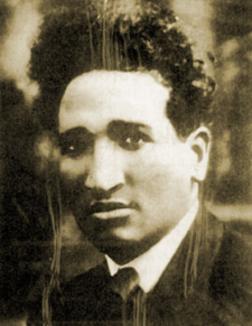
Biography
Introduction: The Architect of Modern Arab Music
In the pantheon of global Entertainment icons, few figures have shaped a nation's sonic identity as profoundly as Sayed Darwish†. Revered as the Father of Egyptian Popular Music and a true Folk Pioneer, Darwish's brief but explosive career in early 20th-century Egypt left an indelible mark on Arab culture. More than just a composer and singer, he was a social revolutionary who used music as a tool for national awakening. His genius lay in synthesizing classical Arabic maqamat (modes) with accessible folk melodies and Western musical influences, creating a vibrant, new popular sound. From the anthemic "Biladi, Biladi" (which later became Egypt's national anthem) to operettas that critiqued social injustice, Sayed Darwish† gave voice to the common Egyptian, forever changing the landscape of Middle Eastern music and earning his title as a foundational Pioneer.
Early Life & Education: The Seeds of a Musical Genius
Sayed Darwish† was born on March 17, 1892, in the Kom El-Dikka district of Alexandria, Egypt. Born into a modest family, his father was a carpenter, and financial constraints meant that formal musical education was a distant dream. Despite this, young Sayed's extraordinary talent was evident early on. He possessed a remarkable voice and a keen ear, memorizing complex Quranic recitations and absorbing the diverse soundscape of Alexandria—a bustling port city where Egyptian folk traditions mingled with Syrian, Greek, and Italian influences.
His initial education was in traditional religious schools (kuttabs), but his passion for music was irrepressible. To support his family after his father's death, he worked manual labor jobs, including as a mason and bricklayer—experiences that would later deeply inform his empathy for the working class. His break came when he was noticed by a prominent religious singer, prompting him to study music more seriously under the tutelage of musicians like Sami Efendi. In 1909, he formed a small musical troupe, but the struggle for recognition was arduous. A pivotal moment arrived in 1912 when a benefactor, impressed by his voice, funded his travel to Italy. Although the stay was short, this exposure to Western opera and composition techniques broadened his artistic horizons and equipped him with new tools he would later masterfully integrate into his Egyptian compositions.
Career & Major Achievements: A Meteoric Rise and National Awakening
The career of Sayed Darwish†, though spanning only about a decade from 1914 until his death in 1923, was a period of intense creativity and transformation for Egyptian music. He began by composing and performing adwar and taqatiq (traditional vocal forms), but quickly revolutionized them by simplifying their complex poetic language and making the melodies more direct and emotionally resonant. He moved to Cairo, the heart of the Entertainment industry, where his innovative spirit found its stage.
Theatrical Revolution and Social Commentary
Darwish's most significant contributions came through his work in musical theater. Collaborating with legendary figures like playwright Najib Al-Rihani and poet Badi' Khayri, he composed music for groundbreaking operettas that were both entertaining and socially critical. Works like "Al-Ashara Al-Tayyiba" (The Good Ten), "Shahrazad", and "El-Barooka" (The Top) used satire and humor to address issues of poverty, class disparity, and political corruption. He gave everyday Egyptians—the street vendor, the civil servant, the farmer—a starring role and a relatable voice in national art. His music for "Robaiki" and "El-Eish Wal Malh" (Bread and Salt) further cemented his role as the people's artist.
Musical Innovation and National Anthems
As a Folk Pioneer, Sayed Darwish† masterfully blended elements:
- Folk Roots: He incorporated rhythms and melodies from Egyptian folk music (mawwal, zajal), making high art accessible.
- Western Integration: He was among the first to successfully use Western instruments like the piano and violin within an Arabic ensemble and introduced structural concepts from operetta and symphonic music.
- Political Anthems: His songs became the soundtrack of the 1919 Egyptian Revolution against British occupation. Tracks like "Oum Ya Masri" (Rise, Egyptian) and "Salma Ya Salama" (adapted from a folk tune) fueled nationalist fervor. His composition "Biladi, Biladi, Laki Hubbi Wa Fuadi" (My Homeland, My Homeland) was so powerful it was adopted as Egypt's national anthem in 1979, decades after his death.
By the early 1920s, Sayed Darwish† had composed over 260 songs and 26 operettas, an astonishing output that defined the golden age of Egyptian musical theater and laid the groundwork for the future of Arab pop music.
Personal Life & Legacy: The Immortal Voice of the People
Despite his public fame, Sayed Darwish† remained closely connected to his humble origins. He was known for his generosity and often lived a bohemian lifestyle, more interested in artistic creation than material accumulation. His personal life was marked by intensity, and he struggled with the pressures of his prolific output. Tragically, his life was cut short on September 15, 1923, at the age of 31. The official cause was a heart attack, though speculation about the circumstances has persisted, adding a layer of myth to his story. His funeral was a massive public event, attended by thousands of mourning Egyptians from all walks of life—a testament to his status as a true folk hero.
The legacy of Sayed Darwish† is immeasurable. He transformed Arabic music from a rigid, elitist form into a dynamic, popular art. He is directly credited with mentoring and influencing generations of musicians, from Mohammed Abdel Wahab (who considered him his teacher) to later icons like Umm Kulthum. His work championed Egyptian dialect and colloquial speech in formal music, empowering a national identity. Today, streets, cultural centers, and awards bear his name across Egypt and the Arab world. Every time Egypt's national anthem plays, the spirit of Sayed Darwish†, the Father of Egyptian Popular Music, resonates, reminding the world of the power of art to inspire a nation.
Net Worth & Business Ventures: The Artist's Value Beyond Wealth
Assessing the net worth of a historical figure like Sayed Darwish† in modern terms is challenging and, in many ways, misses the point of his legacy. As an artist in early 20th-century Egypt, his financial life was far from stable. He earned income through commissions for theatrical works, public performances, and song sales. While he achieved significant fame and his works were highly popular, the economic structures for artists' rights and royalties were not well-established at the time. Historical accounts suggest he was not driven by wealth and often faced financial difficulties, channeling his resources back into his art and living a modest life.
His true "business" was cultural revolution. His venture was the modernization of Egyptian music itself. The commercial value he generated is incalculable, as it laid the entire foundation for the multibillion-dollar Arab music and film industry that flourished in the decades after his death. The enduring royalties from his vast catalog, including the perpetual use of the national anthem, now benefit his estate and the cultural heritage of Egypt. Therefore, while Sayed Darwish† may not have died a wealthy man, the cultural and economic empire he inadvertently built through his artistic Pioneering spirit is his ultimate and priceless valuation.
Sources: Historical records from the Egyptian Ministry of Culture, biographies by Egyptian musicologists, and academic works on the history of Arab music. His works are archived with the Egyptian Ministry of Culture and studied at institutions like the Arab Academy of Music.
Frequently Asked Questions
What is Sayed Darwish†'s estimated net worth?
Net worth details for Sayed Darwish† are currently being updated.
What is Sayed Darwish†'s role and nationality?
Sayed Darwish† is a Father of Egyptian Popular Music; Folk Pioneer; Pioneer from Egypt.
How did Sayed Darwish† make their money?
Sayed Darwish† built their fortune primarily through Sayed Darwish was a composer who died in 1923 and did not accumulate modern financial wealth; his legacy is cultural, not monetary..
How old is Sayed Darwish†?
Sayed Darwish† was born in 1892 (134 years old).
Which category is Sayed Darwish† listed under?
Sayed Darwish† is featured under the Entertainment category on NetWorth Africa.
How is Sayed Darwish†'s net worth calculated?
NetWorth Africa estimates financial valuations using publicly available stock equity holdings, company ownership records, real estate assets, and verified market data.
Net Worth Analysis
Sayed Darwish was a composer who died in 1923 and did not accumulate modern financial wealth; his legacy is cultural, not monetary.
Quick Stats
Related People

2Baba (Innocent Idibia)
Veteran Artist & Activist • Nigeria
Aar Maanta
Singer & Composer • Somalia

Abdel Aziz al-Mubarak
Oud Master • Sudan
Abdel Halim Hafez†
Legend; “Nightingale”; “The Dark-Skinned Nightingale” • Egypt