Financial Breakdown
Asset Distribution
Assets vs Liabilities
Assets
Disclaimer: These financial estimates are based on publicly available information and should be considered approximate. Last updated: 12/31/2025
Biography
Introduction: The Father of the Nation
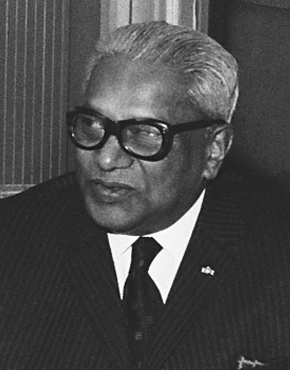
Sir Seewoosagur Ramgoolam†, often affectionately referred to as "Chacha" (Uncle) Ramgoolam, stands as the seminal figure in the modern history of Mauritius. As the island's First Prime Minister and widely recognized Father of the Nation, he was the principal architect who guided Mauritius from colonial rule to a peaceful, sovereign independence. His visionary leadership in the tumultuous era of decolonization laid the foundation for the stable, multi-ethnic democracy that Mauritius is today. A man of profound intellect and compassion, Seewoosagur Ramgoolam† championed universal suffrage, free education, and a welfare state, transforming a sugar-based colonial economy into a nascent nation with a distinct identity. His legacy is indelibly etched into the fabric of Mauritian society, from its political institutions to its commitment to social harmony.
Early Life & Education: From Plantation to Politics
Seewoosagur Ramgoolam was born on September 18, 1900, in the small village of Belle Rive, Flacq, Mauritius. He was the son of Indian indentured laborers, Moheeth Ramgoolam and Basmati Ramchurn, who had arrived on the island to work on the sugar plantations. This humble origin deeply influenced his lifelong commitment to social justice and the upliftment of the poor. Despite the limited opportunities for the children of laborers, his intellectual prowess was evident early on. After primary education locally, he attended the prestigious Royal College Curepipe.
A pivotal moment came in 1921 when, with the support of a benefactor, he traveled to London to study medicine. He enrolled at University College London and later at the Royal College of Physicians, qualifying as a medical doctor in 1935. His years in London were formative; he immersed himself in political thought, engaging with Indian nationalist leaders and Fabian socialist ideas. He co-founded the Indian Cultural Association and became involved with the London Indian Society, developing the political philosophy that would later guide Mauritius. Returning to Mauritius in 1935 as Dr. Ramgoolam, he began his medical practice but was soon drawn irrevocably into the struggle for workers' rights and political representation.
Career & Major Achievements: The Path to Independence
Upon his return, Seewoosagur Ramgoolam† quickly became a central figure in Mauritian political life. He joined the Mauritius Labour Party, founded by Dr. Maurice Curé, and became its leader in 1958. His early career was marked by advocacy for the laboring class, using his medical practice as a window into the hardships faced by the population. He became a member of the Legislative Council in 1940 and later served as Minister of Finance in the pre-independence government from 1959.
The Struggle for Independence
Ramgoolam's greatest challenge and triumph was steering Mauritius towards independence from British rule. The path was fraught with internal divisions, with some communities fearing marginalization. As Chief Minister from 1961, he skillfully navigated these tensions, advocating for a multi-ethnic, inclusive national identity. His government oversaw critical constitutional conferences in London in 1961 and 1965. Despite opposition, his persistent diplomacy and commitment to democratic principles prevailed. On March 12, 1968, Mauritius achieved independence, with Sir Seewoosagur Ramgoolam† sworn in as its first Prime Minister, a position he held until 1982.
Building a Nation: Key Policies and Vision
As Prime Minister, his government's achievements were transformative:
- Free Secondary Education (1976): A landmark policy that dramatically increased literacy and created a skilled workforce, pivotal for Mauritius's future economic diversification.
- Establishment of the Welfare State: He introduced old-age pensions, free healthcare services, and other social safety nets, improving the quality of life for thousands.
- Economic Diversification: While sugar remained important, he laid the groundwork for export processing zones (EPZs) in the 1970s, which began the shift towards manufacturing, particularly in textiles.
- Diplomatic Non-Alignment: He positioned Mauritius as a member of the Non-Aligned Movement, fostering relations with both Eastern and Western blocs, as well as with India and African nations.
- Cultural Foundations: He established the Mahatma Gandhi Institute and the Mauritius Broadcasting Corporation, promoting cultural unity and national dialogue.
His tenure was not without criticism, particularly concerning economic challenges in the late 1970s and restrictions on political dissent. However, his unwavering commitment to a peaceful, pluralistic society ensured that Mauritius avoided the ethnic strife that plagued many post-colonial nations.
Personal Life, Legacy, and Honors
Beyond politics, Sir Seewoosagur Ramgoolam was a noted philanthropist and patron of the arts. He had a deep love for literature and was an avid collector of books and Indian art. He married Sushil Ramgoolam in 1939, and they had two children, Sunita and Navin Ramgoolam, who would also become Prime Minister of Mauritius. His personal humility and accessibility earned him the enduring affection of the public.
The legacy of Seewoosagur Ramgoolam† is omnipresent in Mauritius. The country's main public hospital, the Sir Seewoosagur Ramgoolam National Hospital, and the international airport (SSR International Airport) are named in his honor. His portrait adorns Mauritian currency, and his mausoleum at the Pamplemousses Botanical Garden, next to that of his wife, is a site of national reverence. Perhaps his greatest legacy is the Mauritian nation itself: a vibrant, stable democracy where multiple ethnicities and religions coexist peacefully—a direct realization of his lifelong dream. He passed away on December 15, 1985, leaving a nation in mourning but firmly on the path he had charted.
Net Worth & Business Ventures
Unlike many political leaders, Sir Seewoosagur Ramgoolam† was not known for amassing significant personal wealth or engaging in major private business ventures. His life was dedicated to public service, first as a doctor serving the poor and then as a statesman. His financial standing was largely tied to his professional salary as a medical practitioner and later his official income as a minister and prime minister. Any assets he accumulated were considered modest for a head of government. His primary "venture" was the nation-building project of Mauritius itself. He channeled resources into national development rather than personal gain, a fact that bolstered his reputation for integrity among supporters. His estate and personal effects, including his valuable collection of books and art, were largely bequeathed to the nation or family, reflecting a life lived for public, rather than private, enrichment. This perceived financial disinterest further cemented his image as a leader truly devoted to his country's progress.
Sources & Further Reading: Key information is drawn from authoritative sources including the official biography from the Sir Seewoosagur Ramgoolam Foundation, historical records of the National Assembly of Mauritius, and academic works on Mauritian political history such as "Mauritius: The Politics of Change" by Larry W. Bowman. His contributions are also documented by the Commonwealth and UNESCO.
Net Worth Analysis
Sir Seewoosagur Ramgoolam was a political leader, not a business magnate, and his legacy is primarily political and social, not financial.
Quick Stats
Related People

Aaron Motsoaledi
LP; Minister of Home Affairs

Abane Ramdane†
FLN Leader & Strategist

Abdalla Hamdok
Ex-Prime Minister

Abdallah Kigoda
Ex-Minister of Natural Resources