Biography
Introduction: The Man Who Stole His Freedom Back
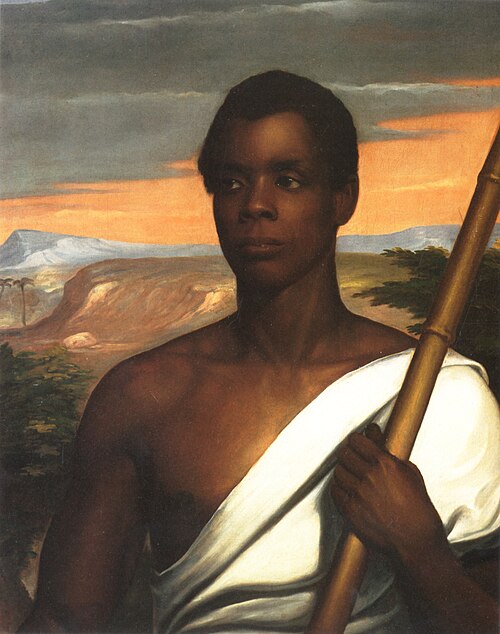
In the annals of history, few figures embody the raw, unbreakable spirit of resistance like Sengbe Pieh, known to the world as Joseph Cinqué. Born around 1814 in Sierra Leone, this Mende rice farmer was violently thrust into the heart of the Atlantic slave trade, only to orchestrate one of the most significant and successful shipboard rebellions ever recorded. His leadership aboard the Spanish schooner La Amistad in July 1839 did more than secure the physical freedom of 53 fellow captives; it ignited a monumental legal battle that resonated in the highest courts of the United States, challenging the very foundations of the illegal slave trade and galvanizing the abolitionist movement. The story of Sengbe Pieh (Joseph Cinqué)† transcends a mere historical account; it is a foundational narrative in the Entertainment category of human Resistance, a timeless epic of courage, justice, and the universal demand for liberty.
Early Life & Education: Roots in Mendeland
Long before he was known as Cinqué, Sengbe Pieh was a respected member of the Mende people in the village of Mani in modern-day Sierra Leone. Historical accounts suggest he was born circa 1814, and by his mid-twenties, he had established a life as a married rice farmer and trader, possibly with children of his own. His "education" was not formal but was rooted in the rich cultural and social structures of Mende society. He would have been educated in the traditions, governance, and survival skills of his community, which valued strength, oratory, and leadership. This formative background in a structured, autonomous society was crucial. It instilled in him a profound sense of identity and self-worth, concepts that the slave trade sought to obliterate. In early 1839, this life was brutally shattered when he was captured by African kidnappers, likely during a trading mission, and sold to a Portuguese slave trader at Lomboko. His journey through the horrors of the Middle Passage to Havana marked the end of his life in Africa but set the stage for his unimaginable act of defiance.
The Path to Captivity
The process that transformed Sengbe Pieh into a commodity was systematic and brutal:
- Capture (Early 1839): Taken by kidnappers and marched to the coast.
- The Lomboko Factory: Sold to Portuguese slave traders and held in a barracoon.
- The Middle Passage: Shipped aboard the Tecora to Havana, Cuba, a journey marked by extreme suffering.
- Illegal Sale: Despite the 1807/1808 abolition of the international trade, he was fraudulently sold as a "ladino" (a slave born in captivity) to Spanish planters.
Career & Major Achievements: The Rebellion and the Revolution in Court
The "career" of Sengbe Pieh is defined by a single, earth-shattering event and its protracted aftermath. On June 28, 1839, he and 52 other Mende people were loaded onto the schooner La Amistad for a coastal trip in Cuba. Four days into the journey, Sengbe Pieh, using a nail he had loosened from the deck, freed himself and his comrades. In a fierce struggle, they seized the ship, killing the captain and the cook. His major achievement was not just the rebellion itself, but his strategic leadership. He ordered the surviving Spaniards to sail east, toward the rising sun and Africa. For nearly two months, the Spaniards secretly sailed north and west at night, leading the ship into U.S. waters, where it was seized by the U.S. Navy off Long Island.
The Amistad Case: A Legal Landmark
What followed was a two-year legal odyssey. Captured in Connecticut, the Africans were charged with murder and piracy. Sengbe Pieh (Joseph Cinqué)† emerged as the undisputed leader and spokesman, even as they faced a language barrier. The case, United States v. The Amistad, ascended to the U.S. Supreme Court. With former President John Quincy Adams serving as co-counsel for the defense, the case hinged on the illegality of the Atlantic slave trade. In a landmark 1841 decision, Justice Joseph Story ruled in favor of the Africans, stating they were "born free" and had been kidnapped illegally. They had exercised their natural right to self-defense. This victory was a direct result of the rebellion Sengbe Pieh led, making it a pivotal moment in the use of international law against slavery.
Impact on Abolitionism
The achievements of the Amistad Rebellion Leader extended far beyond the courtroom:
- Media Sensation: The case and the Africans, especially Cinqué, were front-page news, humanizing the victims of the slave trade for a Northern public.
- Fundraising Success: Abolitionists used the case to raise funds and awareness, touring the Africans to gather support.
- Mobilizing Force: It united disparate factions of the abolitionist movement, providing a tangible and morally clear cause around which to rally.
Personal Life & Legacy: The Man Behind the Symbol
While history rightfully remembers him as a leader, the personal life of Sengbe Pieh was marked by profound tragedy and displacement. After his triumphant return to West Africa in 1842, he found his homeland ravaged by war. His village of Mani had been destroyed, and his family was missing, presumed dead or sold into slavery. He settled with the American Missionary Association in what became Freetown, Sierra Leone, working as an interpreter and trader. Accounts suggest he may have made at least one trip back to Jamaica as a missionary. His later years, however, remain somewhat obscure. He is believed to have died around 1879, far from the global spotlight that once shone on him. The legacy of Sengbe Pieh (Joseph Cinqué)† is multifaceted. He is a national hero in Sierra Leone, a symbol of resistance for the African diaspora, and a central figure in the long fight for human rights. His story has been immortalized in books, paintings, and most notably in Steven Spielberg's 1997 film Amistad, ensuring his narrative of courage continues to inspire within the realm of cultural Entertainment and historical education.
Net Worth & Business: The Economics of Freedom
Applying modern concepts like "net worth" or "business ventures" to Sengbe Pieh is anachronistic but reveals the economic dimensions of his struggle. As a free man in Africa, his "wealth" was tied to his social standing, family, and skill as a farmer-trader—all stolen from him. During and after the Amistad case, his value was paradoxically both immense and non-monetary. To the abolitionists, his story was priceless for fundraising; to his captors, his monetary value was as a commodity, priced around $450 in 1839. After the Supreme Court victory, the Amistad Committee raised funds for the Africans' repatriation and support. Upon return, Sengbe Pieh engaged in trading, likely in goods like tobacco and palm oil. While he never amassed material wealth by Western standards, he achieved something far greater: he reclaimed the ownership of his own life and labor, the ultimate form of human capital. His "business" was the business of survival, leadership, and securing freedom—a venture of incalculable worth.
Sources: Historical records of the Amistad case from the U.S. National Archives; abolitionist newspapers (e.g., The Emancipator); contemporary accounts by missionaries and lawyers; modern scholarly works on the Atlantic slave trade and slave resistance.
Frequently Asked Questions
What is Sengbe Pieh (Joseph Cinqué)†'s estimated net worth?
Net worth details for Sengbe Pieh (Joseph Cinqué)† are currently being updated.
What is Sengbe Pieh (Joseph Cinqué)†'s role and nationality?
Sengbe Pieh (Joseph Cinqué)† is a Amistad Rebellion Leader from Sierra Leone.
How did Sengbe Pieh (Joseph Cinqué)† make their money?
Sengbe Pieh (Joseph Cinqué)† built their fortune primarily through Sengbe Pieh (Joseph Cinqué) was a historical figure from the 19th century who led the Amistad rebellion and died in 1879, therefore he has no contemporary net worth..
How old is Sengbe Pieh (Joseph Cinqué)†?
Sengbe Pieh (Joseph Cinqué)† was born in 1814 (212 years old).
Which category is Sengbe Pieh (Joseph Cinqué)† listed under?
Sengbe Pieh (Joseph Cinqué)† is featured under the Entertainment category on NetWorth Africa.
How is Sengbe Pieh (Joseph Cinqué)†'s net worth calculated?
NetWorth Africa estimates financial valuations using publicly available stock equity holdings, company ownership records, real estate assets, and verified market data.
Net Worth Analysis
Sengbe Pieh (Joseph Cinqué) was a historical figure from the 19th century who led the Amistad rebellion and died in 1879, therefore he has no contemporary net worth.
Quick Stats

Related People

2Baba (Innocent Idibia)
Veteran Artist & Activist • Nigeria

Aar Maanta
Singer & Composer • Somalia

Abdel Aziz al-Mubarak
Oud Master • Sudan
Abdel Halim Hafez†
Legend; “Nightingale”; “The Dark-Skinned Nightingale” • Egypt